
Silicon Line launches 20 Gbps SerDes chipset for vision-dense systems
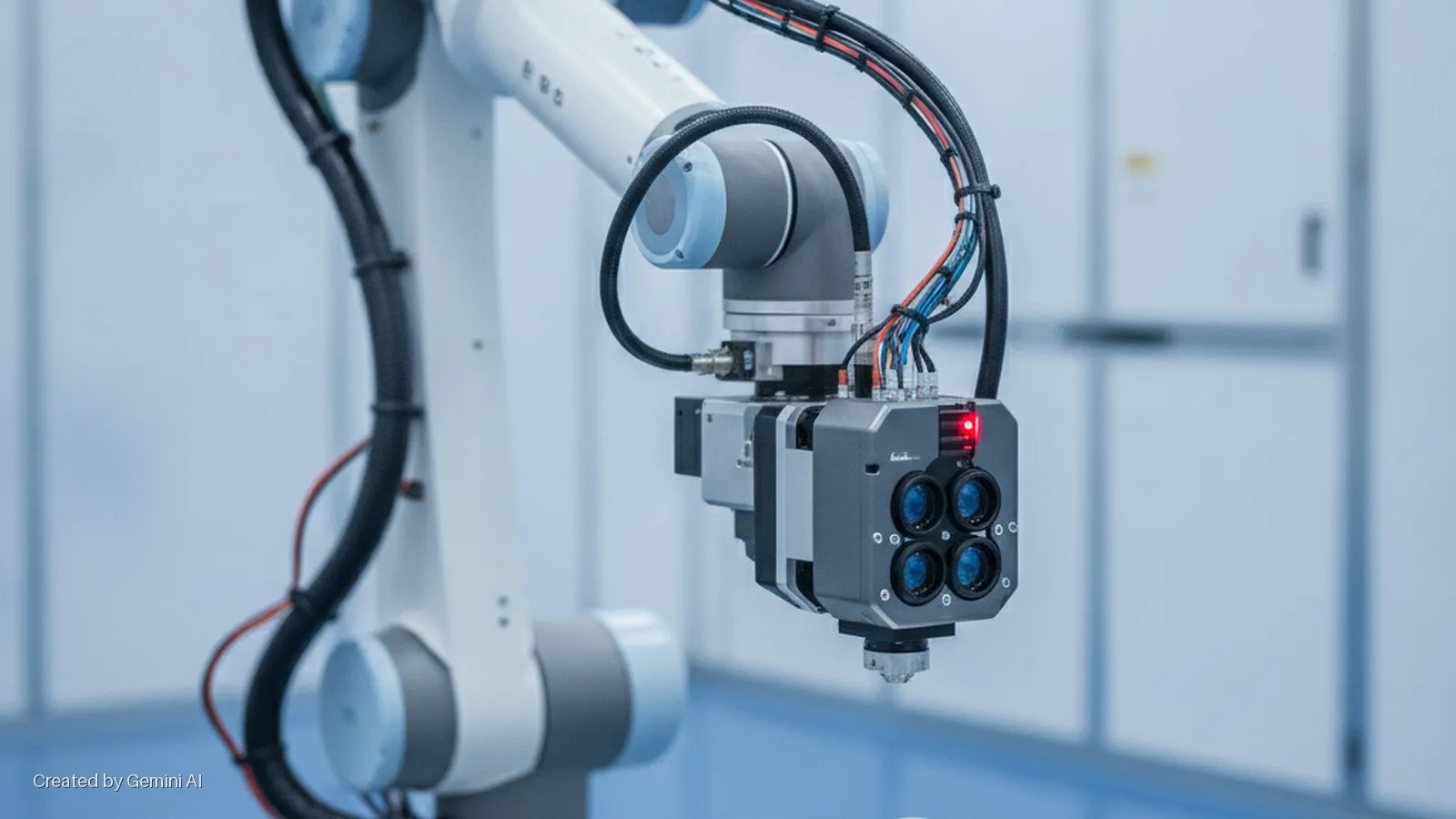
EverProX Technologies Munich GmbH, trading under its Silicon Line brand, has launched the MSDL 20G chipset, a serialiser/deserialiser (SerDes) pair designed to carry two simultaneous 10 Gbps MIPI camera streams across tens of metres of optical fibre or copper cable while consuming less than 100 mW per link. The announcement places a relatively niche interconnect product at the centre of a much larger strategic question: as intelligent machines multiply their sensor arrays, who controls the physical data layer that makes edge intelligence possible?
The launch targets a genuine bottleneck. Multi-camera platforms in surgical endoscopy, autonomous robotics, augmented-reality headsets, and unmanned aerial vehicles are all pushing camera counts and resolutions upward simultaneously. Traditional MIPI D-PHY copper cabling, the standard protocol for linking image sensors to processing silicon, degrades over short distances and is vulnerable to electromagnetic interference (EMI) in electrically noisy industrial or defence environments. Silicon Line claims MSDL 20G eliminates both constraints, supporting optical runs of tens of metres at just 71 mW per link in optical mode.
Physical AI and the bandwidth wall
The company's CEO and Managing Director, Yifeng Liann, frames the product around what he calls "physical AI", the proliferation of sensors, cameras, and distributed intelligence across devices. "As systems get smarter, moving high-bandwidth data between devices reliably and in real time becomes increasingly challenging," he said. "Engineers must balance the flexibility to connect across different subsystems, the reliability that mission-critical applications cannot always get from wireless, and the ultra-low power needed to make it all practical."
That framing is commercially astute. The robotics and autonomous-systems market is undergoing a structural shift: platforms that once relied on a single forward-facing camera now routinely deploy four, six, or more sensors for depth, thermal, and spectral imaging. Each additional stream compounds the cabling burden, the weight penalty, and the power draw, all critical constraints in battery-operated UAVs or slender surgical tools. MSDL 20G's integrated sideband SerDes, which carries control signals, audio, and sensor clocks alongside video data on the same link, reduces connector count and system complexity, a secondary benefit that matters as much to medical-device engineers as the headline bandwidth figure.
Cross-sector implications for robotics and defence procurement
The convergence angle here is not subtle. Silicon Line explicitly targets four application verticals, AR/VR, medical endoscopy, industrial robotics and machine vision, and defence and UAVs, that represent some of the most capital-intensive areas of current deep-tech investment. Defence procurement agencies in NATO member states are actively seeking lighter, more power-efficient sensor payloads for next-generation UAS platforms; a chipset that cuts cable weight and extends battery life addresses procurement criteria directly, not incidentally.
The broader industrial-robotics market is equally instructive. As robot platforms become more vision-dependent, particularly in the context of AI-driven machine vision for quality inspection and autonomous navigation, the interconnect layer becomes a system-level constraint rather than a commodity component. Startups and established OEMs building vision systems for factory automation are now evaluating SerDes solutions as a strategic rather than purely technical choice, since the reach, power, and EMI characteristics of the physical link directly determine what intelligence can be deployed at the edge.
EverProX is sampling MSDL 20G now with early-access customers in bare-die and compact 4x4 mm package formats, with evaluation kits available for link validation. The company is positioning MSDL 20G as the first product in a broader MSDL family, suggesting a roadmap that could extend into higher-bandwidth or lower-power variants as camera resolutions continue to climb. For investors tracking the sensor-to-silicon supply chain across robotics, defence, and medtech, the interconnect layer is quietly becoming a differentiation point, and a potential bottleneck, in the race to deploy physical AI at scale.