
Green Manganese joins RecycLiCo hub to speed critical minerals push
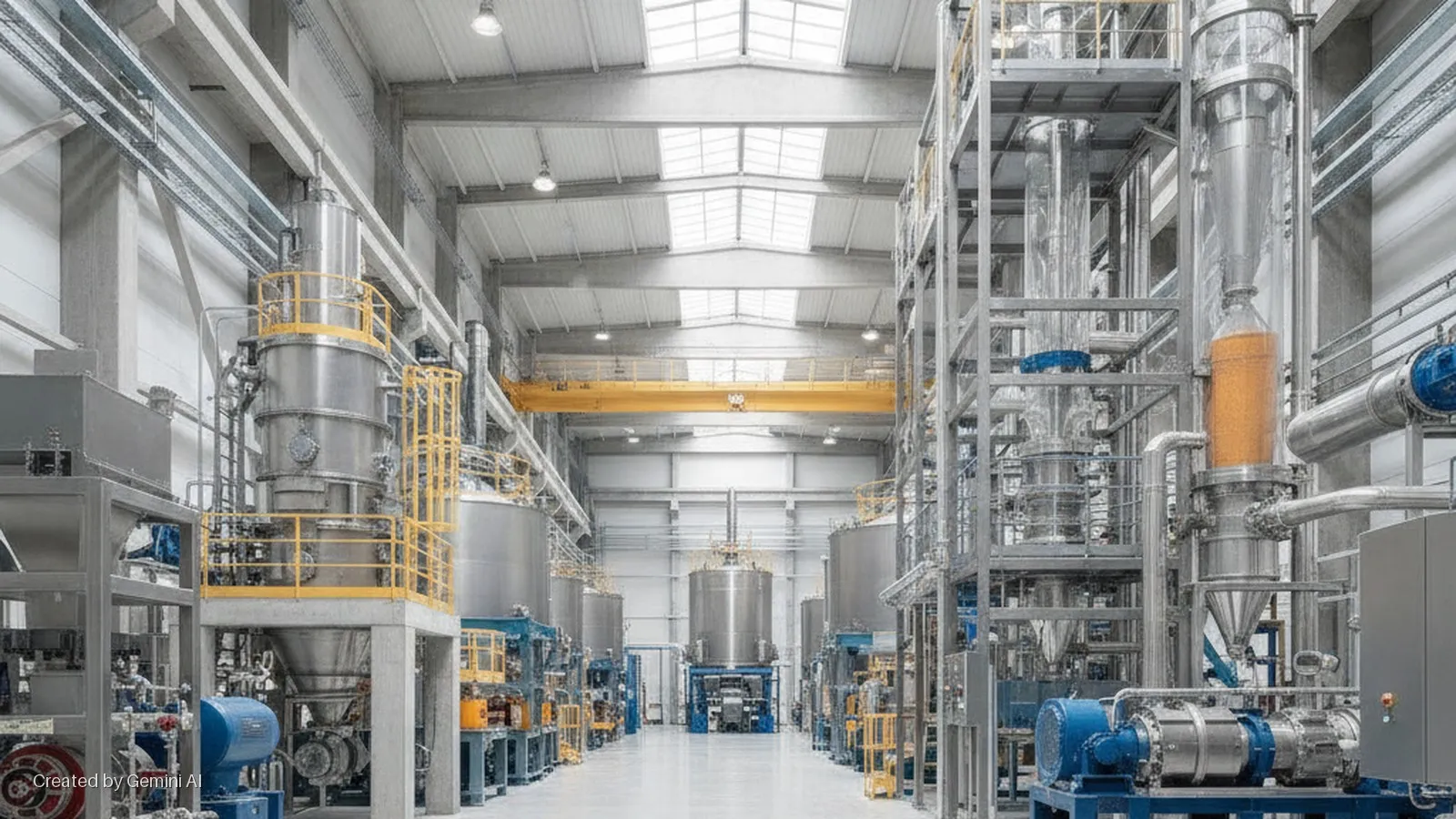
Green Manganese Technologies has relocated its research operations to the RecycLiCo Battery Materials Innovation Centre in Delta, British Columbia, under a fee-for-use arrangement that gives the host company a revenue stream while accelerating the tenant's path from laboratory bench to pilot plant. The move is a small but telling signal of how North America's critical minerals sector is consolidating infrastructure to reduce both capital risk and timeline drag.
The Innovation Centre, operated by TSX Venture-listed RecycLiCo (ticker: AMY), is designed around hydrometallurgical processing: the chemistry-intensive method used to dissolve and separate metal ions from ore, tailings, or spent battery cells. For Green Manganese, whose proprietary process targets high-purity manganese recovery from mining waste and industrial byproducts, access to industrial-grade lab and pilot plant equipment under one roof compresses what would otherwise be a multi-year facility build into a shared-cost model.
Why manganese, and why now
Manganese sits at an uncomfortable intersection for Western battery and steel supply chains. It is a critical input for cathode chemistries in lithium-ion batteries, particularly the lithium manganese iron phosphate (LMFP) formulations gaining traction as a cost-competitive alternative to nickel-heavy NMC cells. Yet North American processing capacity remains thin, with the bulk of refined manganese supply flowing from South Africa, Gabon, and, further up the value chain, China.
Green Manganese's pitch is explicitly about reshoring that dependency. Its low-carbon process is designed to recover manganese from local sources including mining tailings rather than virgin ore, which carries a lower environmental footprint and, in principle, a shorter permitting path than new mine development. RecycLiCo's CEO Richard Sadowsky described the fit as aligned with the Centre's mission to move critical minerals innovators "quickly from development to demonstration."
Green Manganese CEO Alexey Demykin said the relocation "enables us to accelerate our development timeline, validate our process at pilot scale, and take a major step toward commercialization."
Cross-sector read-across: battery supply chains and defence procurement
The convergence angle here extends beyond cleantech. Manganese supply chain security has begun to surface in defence-adjacent policy discussions, because LMFP and manganese-rich cathode chemistries are candidates for the next generation of military vehicle and portable power applications, where energy density and thermal stability trade-offs differ from consumer electronics. Any domestic processing capacity that removes a Chinese or single-region choke point carries dual-use strategic value.
On the capital side, the fee-for-use model RecycLiCo is running is itself a structural innovation worth watching. Rather than requiring each startup to raise the tens of millions needed to build pilot-scale hydrometallurgy infrastructure, a shared-facility model compresses early-stage capital requirements and may attract institutional investors who would otherwise baulk at the illiquidity and technical risk of a single-asset processing company. The arrangement mirrors the logic of shared biomanufacturing hubs in the life sciences, where contract development and manufacturing organisations (CDMOs) allow biotech startups to prove out processes before committing to owned plant. If the model scales, the RecycLiCo Innovation Centre could become a template for critical minerals incubation across Canada's resource corridor.
The immediate next milestone is Green Manganese's pilot plant deployment, for which no timeline or capital raise has been publicly announced. Investors watching the critical minerals incubation space will be looking for that announcement, as pilot-scale validation is typically the gating event for Series A or equivalent project-finance conversations in the processing sector.