
Aemetis dairy RNG scales 61% as tax-credit monetisation funds pivot
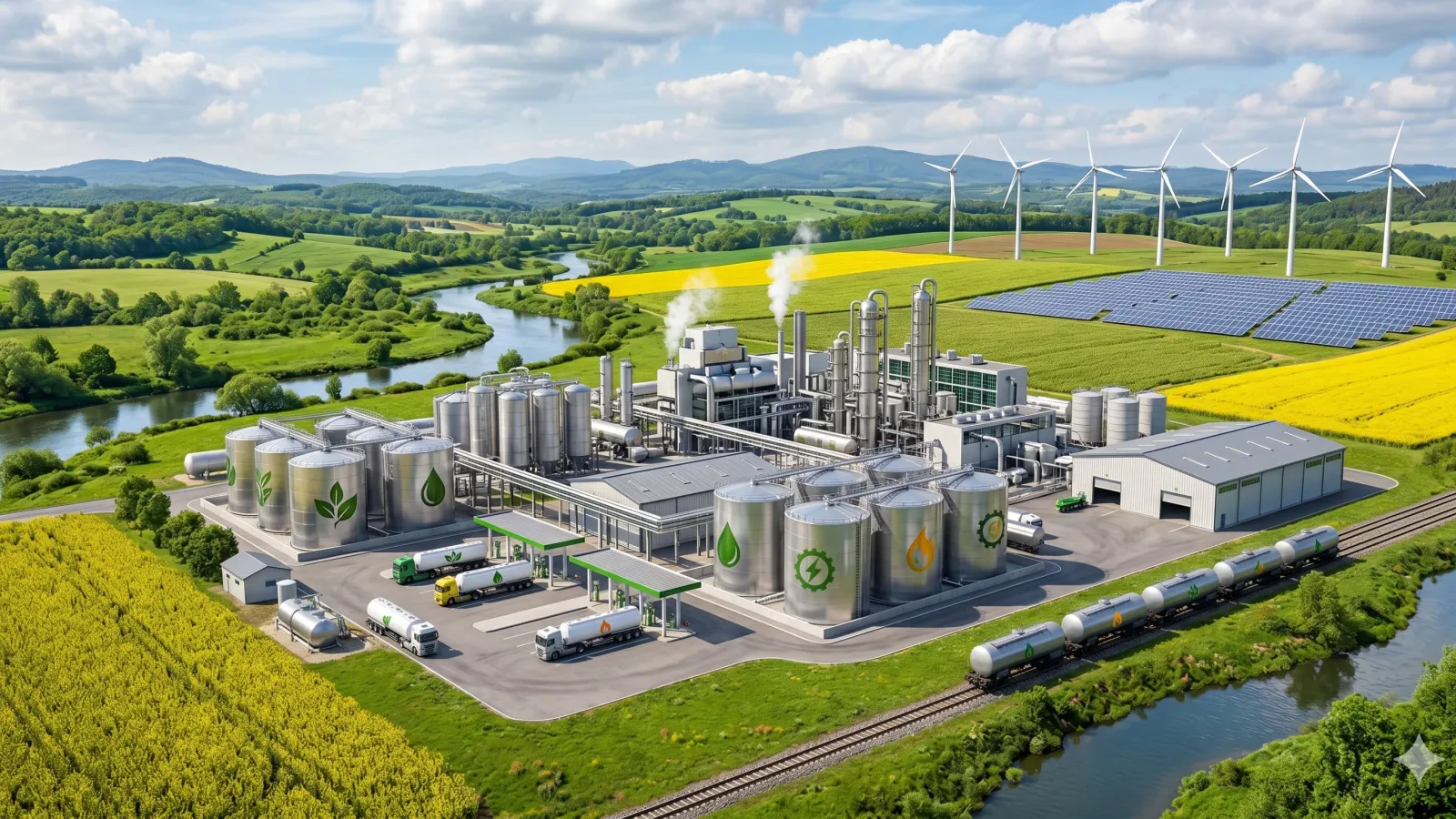
Aemetis (NASDAQ: AMTX), the California-headquartered renewable fuels company, has reported that its dairy renewable natural gas (RNG) segment delivered a 61% year-on-year production increase in Q4 2025, posting segment net income of $12.2 million for the quarter.
The results, covering the full year to 31 December 2025, illustrate how the convergence of agricultural waste infrastructure, federal clean-energy tax policy, and carbon-credit markets is beginning to change the economics of distributed biogas at scale.
Full-year revenues and production tax credits totalled $208 million, against a net loss of $77 million — an improvement on the $87.5 million net loss in 2024. The headline loss is largely a function of the company's $46 million annual interest burden, a legacy of the capital-intensive build-out phase. Underneath that, the dairy-biogas platform generated $9.6 million gross profit for the year, up from $5.4 million in 2024, and the 12-digester network produced approximately 405,000 MMBtu of RNG across the year.
Tax credits as a financing instrument
What makes the Aemetis model strategically legible for cross-sector observers is less the gas volumes and more the monetisation architecture sitting beneath them. The company generated $18 million in cash proceeds from the sale of investment tax credits on its digester projects during 2025, and a further $10.4 million from production tax credits in Q4 alone — an income stream that did not exist a year earlier. This mirrors a broader pattern in US clean-energy finance where the Inflation Reduction Act's transferable tax-credit provisions have effectively created a secondary market, allowing pre-profit infrastructure operators to sell federal credits to corporate tax buyers for immediate liquidity. For investors watching capital flows across the energy transition, Aemetis is an early case study in how that mechanism functions in practice at the agri-biogas tier.
The California Air Resources Board approved seven new Low Carbon Fuel Standard pathways for Aemetis RNG during 2025, lifting the average carbon intensity score from a default negative 150 to negative 380 — a figure that directly multiplies the value of each LCFS credit the company can generate. A signed $27 million construction agreement with NPL covers compression and hydrogen sulphide treatment units for 15 additional digesters, pointing to a second scaling phase in 2026.
Ethanol efficiency and the India wildcard
On the ethanol side, the company is midway through installing a Mechanical Vapour Recompression (MVR) system at its 65-million-gallon Keyes, California plant — a thermal-efficiency upgrade the company says will add approximately $32 million in annual cash flow from operations upon completion. CEO Eric McAfee cited California's legislative approval of year-round E15 blending in October 2025, which the company argues expands the in-state ethanol addressable market by 50%.
The India biodiesel segment tells a more complicated story: the 80-million-gallon-per-year facility operated at just 14% of nameplate capacity in 2025, down from 50% in 2024, after delays in state oil-marketing-company tender sales. Revenue fell by $63 million year-on-year to $29.7 million. The company has appointed a new CFO with IPO experience for the India subsidiary and is targeting a public listing there in 2026 — a capital-raising route that, if executed, would allow it to recycle proceeds into the California biogas buildout without adding further dollar-denominated debt to a balance sheet already carrying $279 million of current debt.
The broader convergence read-across here is the growing entanglement between agricultural infrastructure, carbon-credit market design, and government industrial policy. The LCFS and IRA tax-credit stacks are functioning as de facto infrastructure subsidies for distributed biogas — a model that European bioenergy developers and Gulf sovereign-wealth funds evaluating carbon-negative gas assets are watching closely. Whether the policy scaffolding holds under a changing US regulatory posture remains the central risk variable for anyone pricing the sector's next capital cycle.