
Nexans sheds €207m auto unit to become pure electrification player
Nexans, the Paris-listed cable and electrification group, has completed the sale of its automotive wiring harness business, Autoelectric, to Indian automotive components giant Samvardhana Motherson International Limited for an enterprise value of €207 million. The transaction, which closed on 1 July 2026, marks the end of a portfolio rotation the company first announced in 2021 and positions Nexans as what it describes as a "pure electrification player" focused exclusively on energy infrastructure.
Autoelectric is not a minor subsidiary. The unit generated approximately €708 million in annual sales in 2025 and employed nearly 13,000 people across its operations, roughly half the headcount Nexans retains globally after the deal. Its deconsolidation is excluded from the group's 2026 guidance, and it had been classified as a discontinued operation in Nexans' consolidated accounts since last year. At €207 million, the enterprise value implies a thin multiple against revenues, reflecting the structurally lower-margin, labour-intensive nature of automotive wiring harness manufacturing.
Nexans bets on the grid build-out
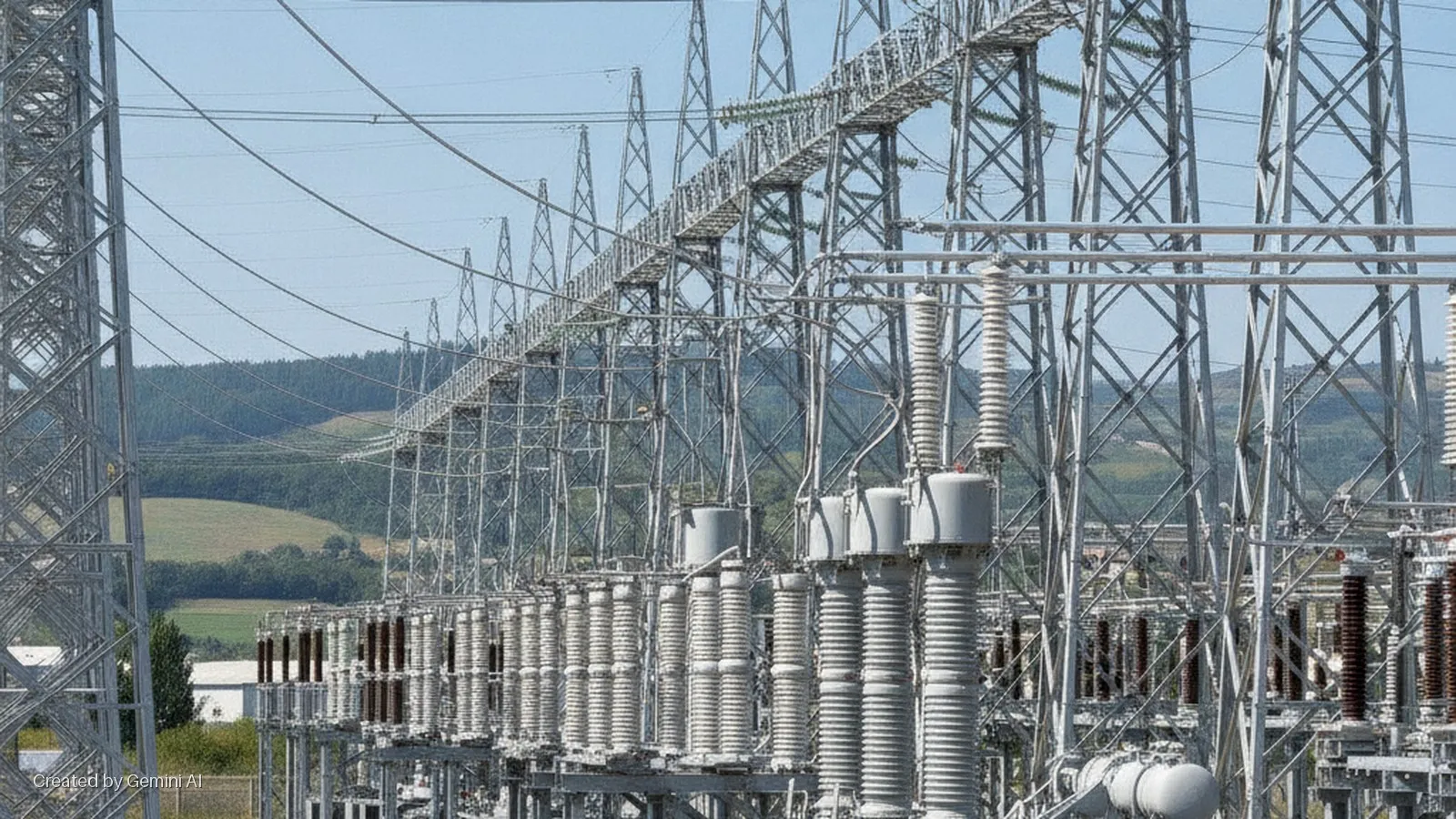
For Nexans, the logic is strategic clarity. The group operates three remaining divisions under a "PWR" umbrella: PWR Transmission (high-voltage cables for offshore and onshore power), PWR Grid (grid infrastructure), and PWR Connect (building and industrial cabling). Each sits directly in the path of the capital flowing into grid upgrades, offshore wind interconnection, and smart city infrastructure that governments across Europe, the US, and the Gulf are now accelerating. The automotive wiring business, however sophisticated, competed on labour arbitrage in a sector under acute margin pressure from Chinese competitors and electrification-driven redesign cycles.
CEO Julien Hueber framed the completion as a moment of strategic liberation: "The completion of the sale of Autoelectric marks the final step in Nexans' transformation into a pure electrification player. It strengthens our strategic focus, improves capital allocation discipline, and positions the Group to fully capture the opportunities of the global energy transition."
Motherson, the acquirer, brings a complementary rationale. Already one of the world's largest automotive component suppliers, the Indian conglomerate has been systematically acquiring European manufacturing assets to deepen its wiring harness capabilities and diversify its customer base beyond its legacy Tier 1 relationships. Adding Autoelectric's 13,000-strong workforce and established European footprint extends Motherson's reach into a segment where OEM sourcing decisions are increasingly driven by nearshoring preferences rather than lowest-cost geography.
A capital reallocation story with cross-sector implications
The broader significance for Disrupts readers lies in what this transaction signals about how industrial capital is repositioning around the energy transition. Nexans is one of several legacy industrials that have spent the first half of this decade carving out non-core assets to concentrate balance-sheet firepower on electrification infrastructure. Prysmian, its closest European rival, has made comparable moves. The result is a narrowing field of scaled, listed electrification specialists at exactly the moment when grid investment globally is accelerating: the International Energy Agency has repeatedly flagged that grid infrastructure spending needs to double by 2030 to keep pace with renewable energy deployment.
For cross-sector investors, the Nexans pivot raises a direct question about capital allocation across the energy and transportation verticals. Automotive supply chains are being remade by electrification from the vehicle side, while grid infrastructure is being remade by electrification from the supply side. Companies that historically straddled both are being forced to choose. Nexans has chosen the grid. Motherson, in absorbing Autoelectric, is doubling down on the vehicle. The divergence between these two bets will be tested as EV adoption curves, grid investment timelines, and sovereign industrial policy all continue to shift beneath both companies.
Nexans is listed on Euronext Paris. The group reported €6.1 billion in standard sales in 2025 across its 41-country operation and has committed to net-zero emissions by 2050 in alignment with the Science Based Targets initiative.