
Shenzhen Chamber eyes Europe solar push as China-EU energy ties deepen
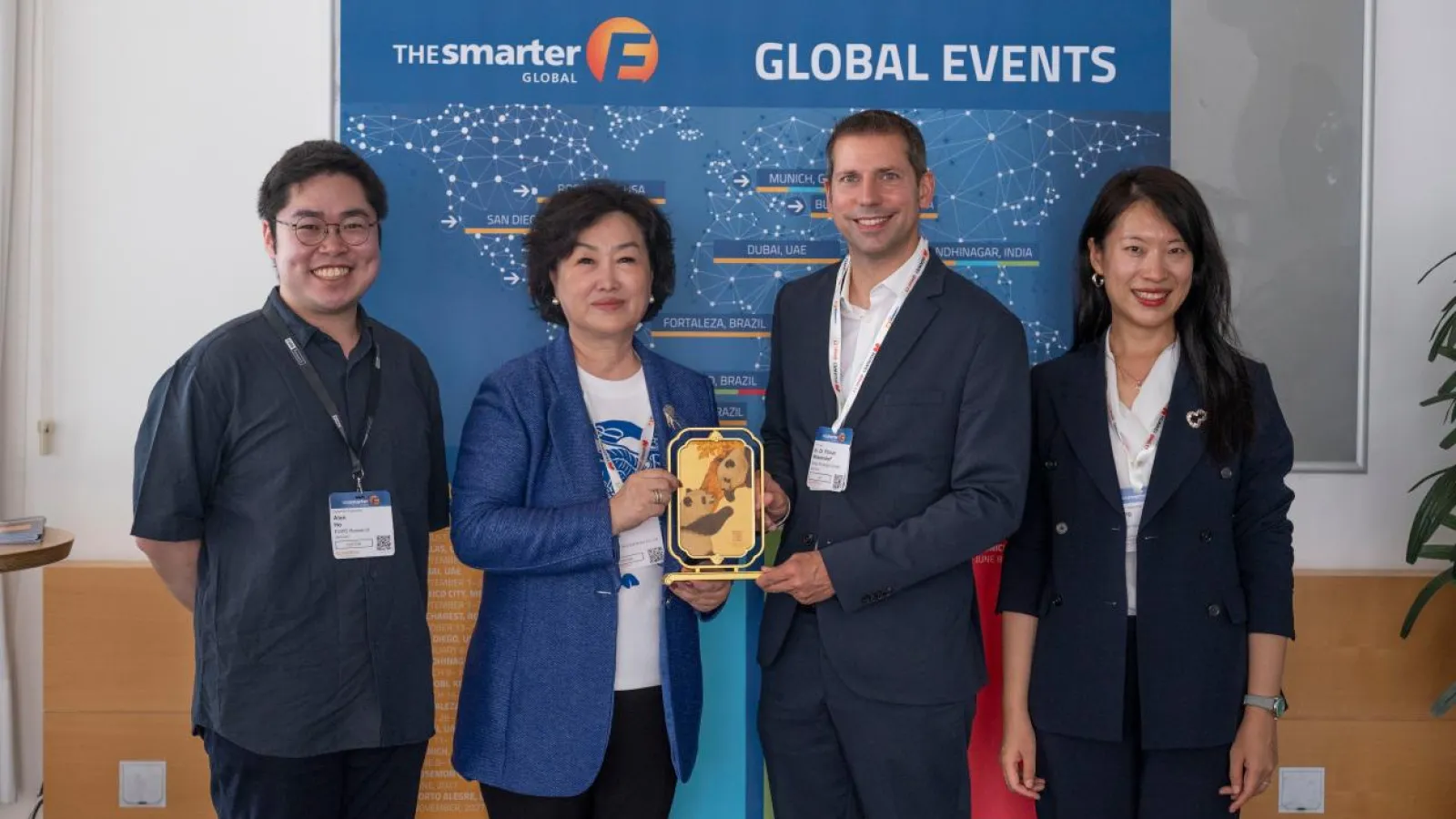
The Shenzhen Chamber of Commerce sent a delegation to Munich in late June for The smarter E Europe (Intersolar Europe), the continent's flagship new-energy trade show. President Lin Hui led the visit, meeting companies across photovoltaics, residential storage and digital energy management as part of a structured push to connect Shenzhen's manufacturing base with European market channels.
The trip was framed explicitly as a market-intelligence exercise. Meetings with BRC Solar covered distributed photovoltaic optimisation and module-level power electronics. Discussions at ATMOCE turned on residential storage systems and smart energy integration. A visit to Enpal, Germany's largest residential renewable-energy installer, gave the delegation a close look at vertically integrated home-energy models and the digital management layer sitting above them. Lin Hui also attended the EUPD Research Global EPC Awards, a networking event bringing together European energy associations, installers and research bodies.
A manufacturing powerhouse looking for market access
The delegation's logic is straightforward: Shenzhen holds structural advantages in solar module production, battery cell manufacturing and the supply chains that feed both. Europe, by contrast, has layered policy architecture around net-metering, grid interconnection and building-integrated renewables that Chinese manufacturers must navigate to sell into the region. The chamber is positioning itself as a bridge, offering Shenzhen companies structured access to European distribution and regulatory intelligence in exchange for technology and supply-chain depth.
That calculus is not new, but its urgency has risen. The European Commission's anti-dumping investigations into Chinese solar panels, and the broader EU Carbon Border Adjustment Mechanism coming into force, are raising the compliance cost for Chinese exporters. A chamber-led approach, building relationships through industry bodies and exhibition platforms rather than direct commercial pitches, is a softer entry strategy designed to pre-empt regulatory friction.
The convergence angle: energy, supply chains and geopolitical positioning
The Shenzhen-Munich corridor matters beyond bilateral trade. Europe is simultaneously trying to de-risk its solar supply chain from Chinese dominance while remaining dependent on Chinese-manufactured components for its own 2030 renewable targets. The International Energy Agency estimates that China accounts for roughly 80 per cent of global solar panel manufacturing capacity. Any meaningful European energy-transition acceleration runs through Chinese component supply, regardless of the political temperature between Brussels and Beijing.
For cross-sector investors, the dynamic is consequential. European utilities and infrastructure funds building out distributed solar and storage assets face a structural tension: sourcing diversification is policy-desirable but cost-prohibitive at scale. Shenzhen firms that can offer European-compliant products, local service models (as Enpal's integrated approach demonstrates) and competitive pricing occupy a strategically valuable position. The chamber visit is, at one level, a diplomatic soft-power exercise. At another, it is a supply-chain positioning move in a market where the cost of switching away from Chinese components is still prohibitive for most project developers.
The broader capital read-across is to energy storage. As European grid operators push behind-the-meter storage to manage intermittency, the residential storage market that ATMOCE and similar firms serve is expanding rapidly. Shenzhen's battery manufacturing ecosystem, anchored by companies in the CATL supply orbit, gives Chinese firms a structural cost advantage in that segment too. Whether European policy will allow that advantage to translate into market share, or whether further trade measures intervene, is the unresolved question that Lin Hui's delegation was clearly seeking to answer firsthand.
The chamber said it intends to deepen partnerships with European industry organisations and exhibition platforms, with further international cooperation events planned. No specific deal announcements or investment figures accompanied the visit.