
Rocket Lab wins three NASA launches for Sun and Earth science
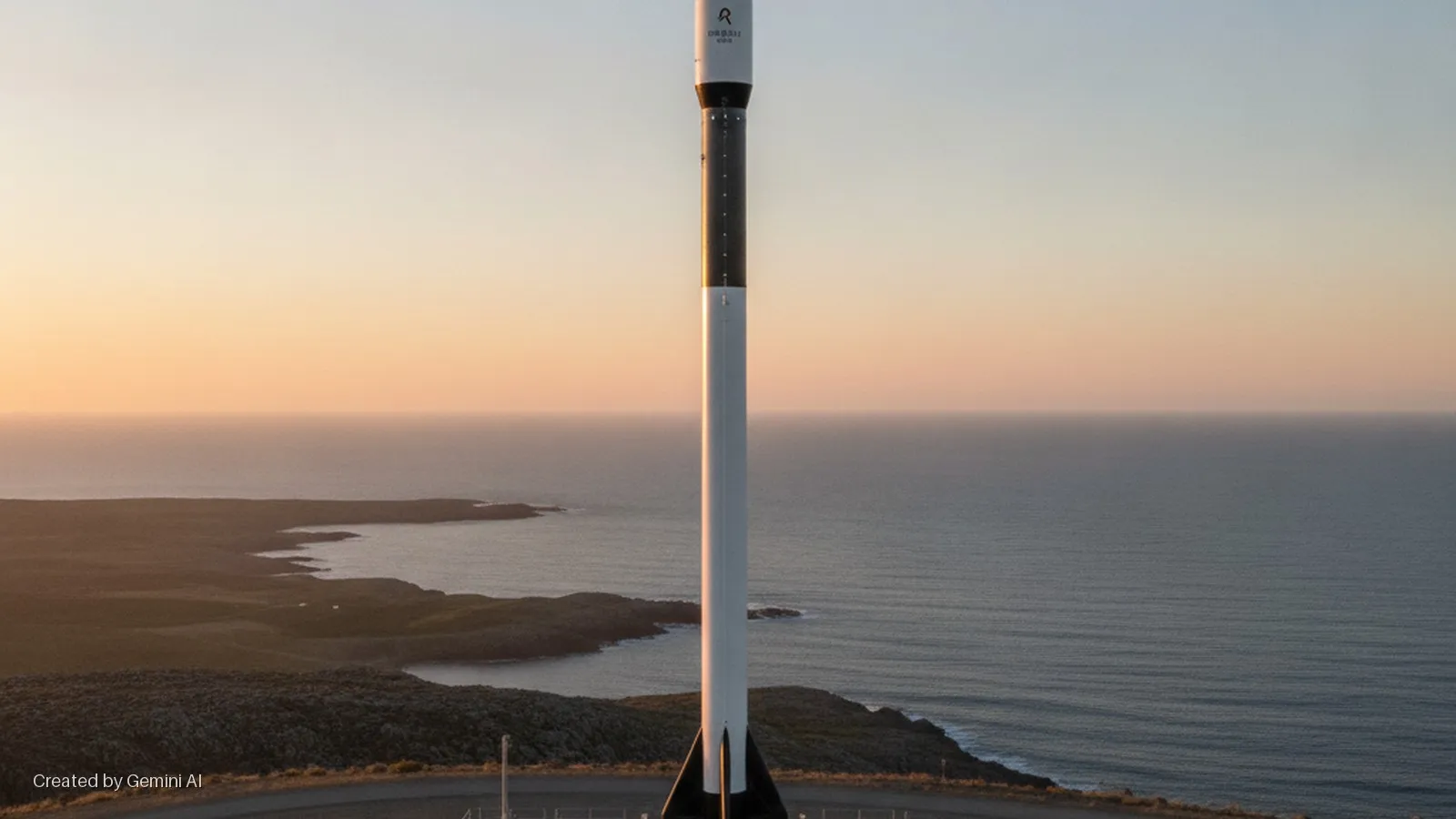
Rocket Lab (Nasdaq: RKLB) has secured contracts to provide three Electron rocket launches for two NASA science missions, with flights scheduled to begin from its Launch Complex 1 in New Zealand as early as January 2027. The awards cover the PolSIR ice-cloud sensing mission, requiring two sequential launches, and the TSIS-2 solar irradiance instrument. Together, they cement the Long Beach-based company's position as NASA's preferred small-lift partner at a moment when the small-satellite launch market is becoming a genuine strategic infrastructure layer for both government science and national security.
The selection is notable not just for the payload science, but for the procurement logic. NASA booked the TSIS-2 mission to fly within seven months of contract signing, a schedule that would be impractical on a shared rideshare manifest. That responsiveness is precisely what the dedicated small-launch model was designed to offer, and Rocket Lab's record of more than 90 Electron flights gives the agency the flight heritage confidence that newer entrants cannot yet match. The company also claims orbital deployment accuracy measured in metres rather than the industry-typical kilometre-scale tolerance, a distinction that matters specifically for the PolSIR mission, which requires two CubeSats in tightly controlled, non-sun-synchronous orbits to allow daily, seasonal, and annual comparisons of tropical ice-cloud behaviour.
What the missions actually do
PolSIR targets high-altitude ice clouds across the tropics and sub-tropics, gathering data intended to improve the Earth system models that underpin global weather forecasting. TSIS-2 measures solar brightness at the top of the atmosphere and maps how that energy is distributed across ultraviolet, visible, and infrared wavelengths. Both datasets feed into applied products with real economic weight: improved climate modelling affects agricultural commodity pricing, reinsurance loss models, and infrastructure planning for energy grids. Solar irradiance data informs ozone-layer recovery tracking and air-quality forecasts, outputs that increasingly sit at the intersection of environmental regulation and public-health policy.
Rocket Lab's own pipeline extends beyond these two awards. The company is separately scheduled to launch its Photon spacecraft on NASA's LOXSAT mission later in 2026, a demonstration of in-space refuelling technology with direct implications for the economics of cislunar and deep-space logistics. The Aspera astrophysics mission, studying galaxy formation, is also on the company's manifest. CEO Sir Peter Beck noted that Electron "has become synonymous with reliability, precise orbital accuracy, and on-demand launch capability" across nearly a decade of NASA work.
Convergence angle: small launch as sovereign infrastructure
The broader strategic reading matters for cross-sector investors. The global small-satellite launch market has transitioned from a boutique niche into a critical enabler for Earth observation, communications constellations, and national-security sensing networks. Governments are increasingly treating dedicated launch access as a form of sovereign capability rather than a commodity to be procured from the cheapest provider, a shift that benefits operators with proven flight heritage and non-US launch facilities such as Rocket Lab's New Zealand complex.
That geographic diversification is particularly relevant in the current geopolitical climate. Rocket Lab's ability to launch from outside the continental United States gives allied governments a launch option that is not subject to the same domestic bottlenecks affecting larger US providers. At the same time, the company's expanding spacecraft and satellite components division, which the release says has enabled more than 1,700 missions across commercial, defence and national security programmes, positions it as a vertically integrated space infrastructure player rather than a pure launch services firm.
For capital allocators who have been watching the commercial space sector consolidate, the Rocket Lab award pattern reinforces a clear thesis: NASA's small-mission cadence is accelerating, dedicated launch is winning over rideshare for time-sensitive science, and the operators with multi-launch records and agile ground infrastructure are pulling away from the competitive field. Rocket Lab's Neutron medium-lift vehicle remains in development, and its eventual entry would open a further tier of the market currently dominated by SpaceX's Falcon 9.