
Intuitive Machines wins $148m NASA deal to mass-produce lunar landers
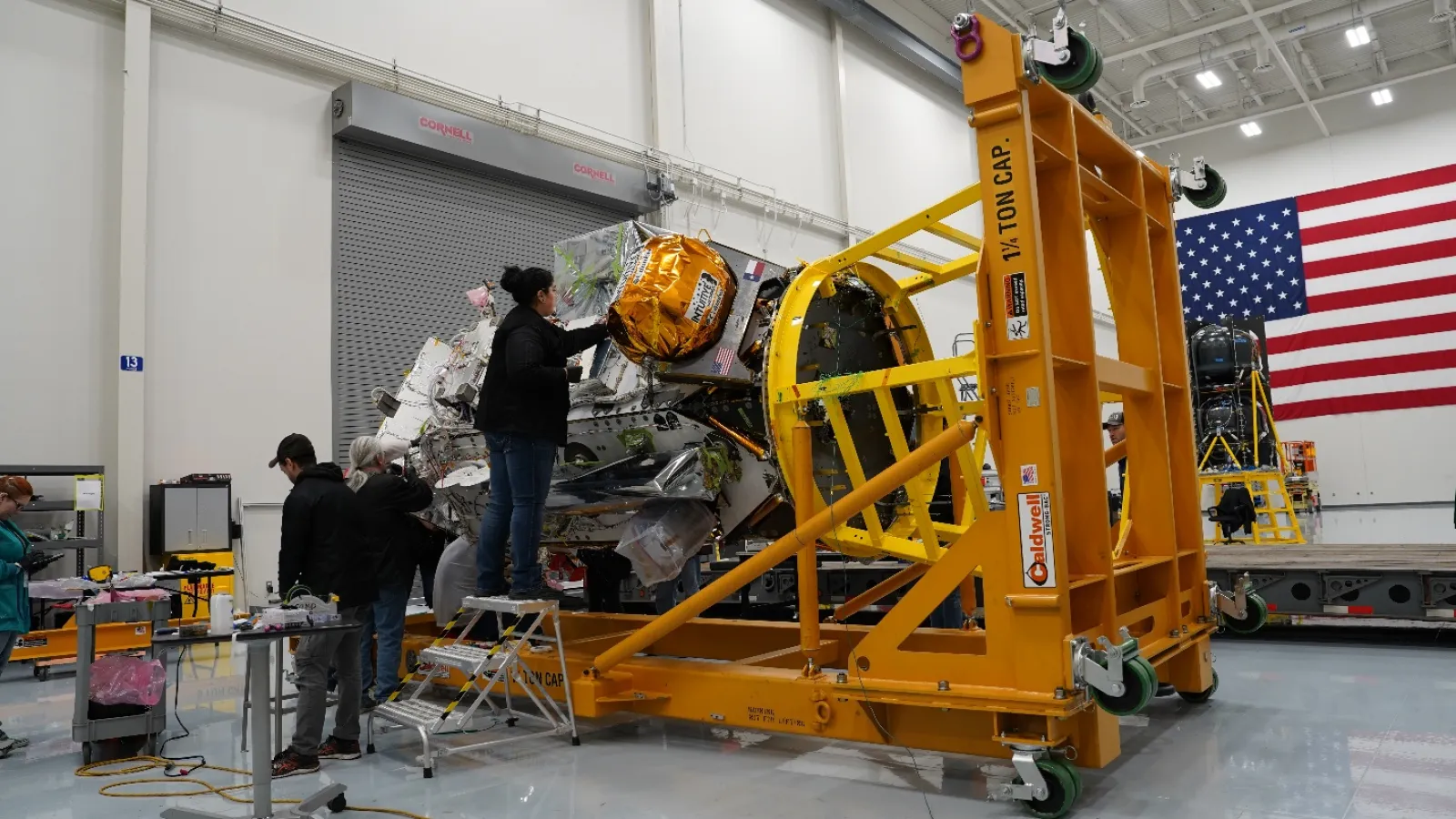
Intuitive Machines, the Houston-based space infrastructure company listed on Nasdaq as LUNR, has secured a sixth NASA Commercial Lunar Payload Services (CLPS) contract worth up to $148.3 million, with a mandate to deliver a production-qualified Nova-C lander to the lunar surface no later than 2028. The award, structured as a firm-fixed-price contract, marks a meaningful inflection in how the United States approaches lunar access: less bespoke spacecraft engineering, more repeatable industrial output.
The contract breaks into two tranches. A $68.6 million base covers mission execution using a lander with proven lunar flight heritage. A further $79.7 million in performance incentives is tied to demonstrating product-line qualification, essentially a contractual mechanism designed to guarantee rapid-turnaround lander supply at scale. That structure is notable: NASA is not simply buying a single delivery, it is procuring proof that a reliable commercial pipeline exists.
From Custom Engineering to Lunar Mass Production
"We are shifting the paradigm from custom aerospace engineering to commercial mass production of lunar infrastructure," said Steve Altemus, CEO of Intuitive Machines. The company says it is applying Industry 4.0 manufacturing principles, including parallel build-test-deploy cycles, to its Nova-C platform, which has already completed two lunar missions.
The payloads earmarked for this flight reflect the breadth of stakeholders now dependent on cislunar logistics. They include stereo cameras to study surface-plume interactions, a laser retroreflector array for precise cislunar positioning, and a radiation monitor to gather environmental safety data. The last two instruments in particular serve a dual function: scientific research today, operational infrastructure for crewed Artemis missions tomorrow.
With six CLPS task orders now in hand, Intuitive Machines describes itself as the primary commercial logistics pipeline to the lunar surface, serving civil, national security, and commercial customers under a single prime contractor model. That framing matters as much commercially as technically: the company is positioning itself as the lunar equivalent of a tier-one logistics operator rather than a boutique engineering house.
The Convergence Angle: Defence, Capital, and Cislunar Infrastructure
The strategic read-across beyond the space sector is significant. National security interest in cislunar space has grown sharply alongside NASA's Artemis programme, with the US Space Force and allied defence agencies increasingly treating the Earth-Moon corridor as contested operating environment. A commercially proven, high-cadence lander pipeline gives defence procurement officers an off-the-shelf logistics layer they would otherwise need to fund from scratch, reducing both cost and development timelines for military-adjacent lunar missions.
From a capital-allocation perspective, the CLPS programme exemplifies a broader pattern: sovereign and institutional capital flowing into space infrastructure through the medium of government contract certainty rather than pure venture risk. Intuitive Machines' fixed-price contract structure is directly analogous to how terrestrial defence primes derisk large programmes, and it provides the revenue visibility that public-market investors in LUNR require. The performance-incentive tranche also introduces an output-based financing logic more familiar to infrastructure investors than to traditional aerospace procurement watchers.
The wider competitive landscape is taking shape around this model. Firefly Aerospace and Astrobotic have both received CLPS awards; SpaceX's Starship looms as a potential heavy-lift alternative for bulk payload delivery. But none of the commercial providers yet matches Intuitive Machines' six-award track record or its stated ambition to operate cislunar navigation and connectivity networks alongside the landers themselves. Whether the company can sustain the manufacturing ramp within the cost envelope of a fixed-price regime will be the operational test that matters most to investors over the next 18 months.