
UAE ministry and NYU Abu Dhabi link research to industry via ScaleUp Hub
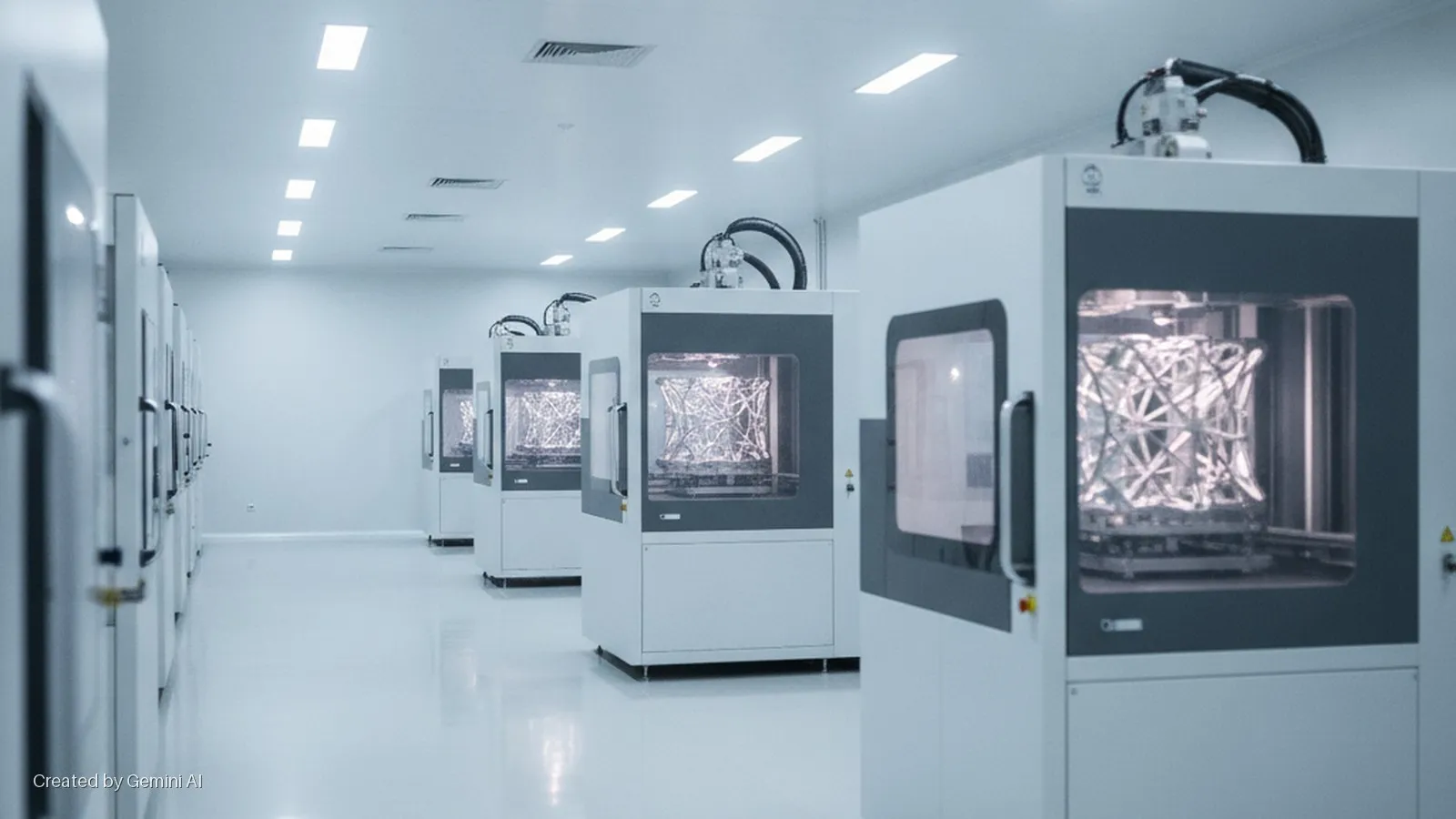
The UAE's Ministry of Industry and Advanced Technology (MoIAT) and New York University Abu Dhabi (NYUAD) have signed a Memorandum of Understanding to close the gap between academic research and industrial deployment, channelling work in robotics, automation, additive manufacturing, and smart materials through a newly launched ScaleUp Hub. The agreement places Abu Dhabi at the centre of a deliberate attempt to convert fourth-industrial-revolution research into commercially scalable products, with startups serving as the connective tissue between the university laboratory and the factory floor.
The MoU was signed by H.E. Osama Amir, Assistant Undersecretary for the Industrial Accelerator Sector at MoIAT, and Fabio Piano, Interim Vice Chancellor at NYUAD. The ScaleUp Hub itself is described as an integrated platform linking NYUAD's research labs with startups, anchor industrial partners, and investors. It is designed to carry technologies from concept through piloting and validation to market deployment, in direct support of the UAE's Operation 300bn strategy, which targets an AED 300 billion (approximately USD 82 billion) contribution from the industrial sector to national GDP by 2031.
From campus to supply chain
H.E. Hasan Jasem Nasser Al Nowais, Undersecretary of MoIAT, framed the partnership explicitly as an industrial localisation initiative. "By strengthening this connection between research, industry, and entrepreneurship, we are creating the pathways needed to translate innovation into real industrial capability and long-term economic value," he said. Fabio Piano added that NYUAD's research in robotics, AI, advanced materials, and applied sciences is "conducted in Abu Dhabi by researchers grounded in the UAE's industrial context and connected to NYU's global research network."
The breadth of focus areas signals ambition across multiple technology domains simultaneously. Additive manufacturing reduces dependence on imported precision components, a persistent vulnerability in Gulf industrial supply chains. Robotics and automation address a structural labour-cost equation that has historically disadvantaged the region's manufacturers relative to South and South-East Asia. Smart materials, meanwhile, intersect with defence and aerospace applications, two of MoIAT's own stated priority sectors.
The convergence angle: sovereign capital meets deep-tech commercialisation
This MoU reflects a pattern gaining momentum across the Gulf Cooperation Council. Governments are no longer content to fund world-class research universities and wait for spin-outs to emerge organically. Instead, they are engineering the commercialisation pathway itself, embedding structured industry-linkage mechanisms directly into the university operating model. Abu Dhabi's Mubadala and the broader Abu Dhabi Developmental Holding Company ecosystem have been active in seeding deep-tech ventures with patient capital; the ScaleUp Hub creates a formal pipeline that can feed those vehicles with de-risked, application-ready technologies.
For cross-sector investors, the convergence story here spans robotics, advanced manufacturing, and the wider Gulf industrial buildout that sovereign balance sheets are now prioritising. The UAE's stated ambition is to diversify industrial GDP away from hydrocarbons by the end of the decade. Platforms that structurally connect university IP to startup formation and anchor-partner validation are the scaffolding that ambition requires. The NYUAD tie-up also brings with it NYU's global research network across New York and Shanghai campuses, giving Abu Dhabi-based startups a credible bridge to international markets and investor communities beyond the GCC.
The immediate next steps will be the operationalisation of the ScaleUp Hub, the first cohort of startups selected for co-development programmes, and the launch of any joint innovation challenges referenced in the MoU. The partnership also signals further scope: mentorship programmes, global exchange participation, and broader startup creation support suggest a multi-year institutional commitment rather than a one-off research collaboration. Whether MoIAT can translate that commitment into measurable industrial GDP uplift before the 2031 Operation 300bn deadline will be the test investors and policymakers watch most closely.