
KBR's PureSAF wins first Asia commercial SAF plant licence
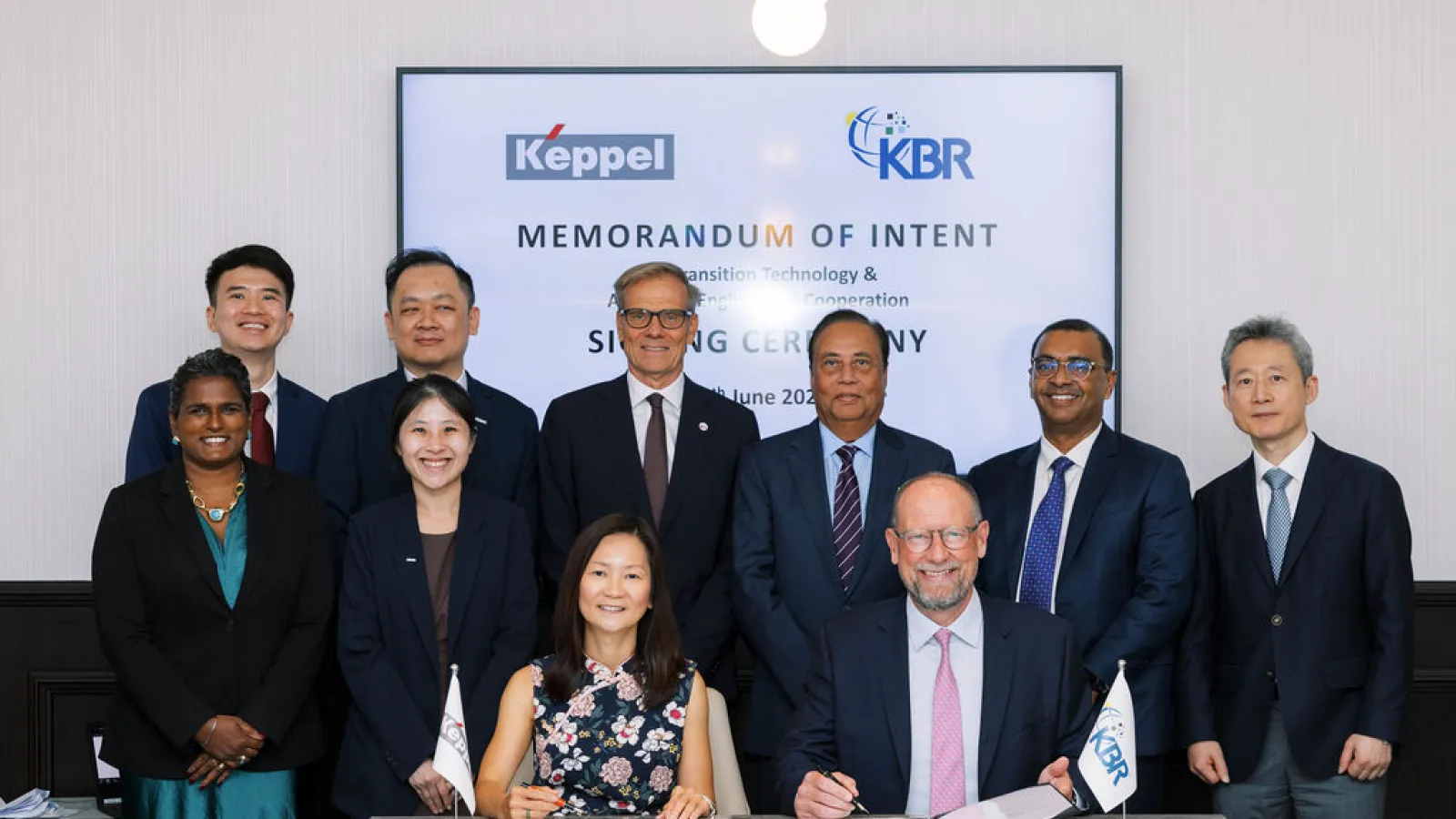
KBR, the Houston-listed engineering and technology group, has been selected by Singapore infrastructure conglomerate Keppel and specialty chemicals firm Aster Chemicals and Energy to provide technology licensing and front-end engineering design (FEED) services for what the parties say is Asia's first commercial-scale ethanol-to-jet sustainable aviation fuel (SAF) plant. The facility is slated for Jurong Island, Singapore's heavy-industry hub, and carries a planned production capacity of up to 100,000 tonnes of SAF per year, subject to a final investment decision and regulatory approvals.
The technology at the centre of the deal is KBR's PureSAF process, originally developed by Swedish Biofuels AB and subsequently commercialised and exclusively licensed worldwide by KBR. The company describes it as a feedstock-flexible, unblended drop-in jet fuel, meaning aircraft can run on it without the partial-blend workarounds that currently limit most SAF deployments. Stuart Bradie, KBR's president and CEO, said the project supports "Singapore's ambition of becoming Asia's leading SAF hub and advancing the ongoing efforts to decarbonise the country's aviation ecosystem."
Singapore as a SAF gateway
The choice of Jurong Island is strategically significant beyond the plant itself. Singapore handles roughly 7% of global air traffic by passenger movements and sits at the intersection of the major Asia-Pacific aviation corridors linking Southeast Asia, North Asia, South Asia, and Australasia. A domestic commercial-scale SAF supply chain would give Singapore's Changi Airport and regional carriers access to locally produced low-carbon fuel, reducing the logistics premium that currently makes imported SAF uncompetitive at scale across the region.
The Keppel-Aster partnership positions both companies ahead of incoming mandates. The European Union's ReFuelEU Aviation regulation already compels SAF blending at EU airports, and the International Civil Aviation Organisation's CORSIA offsetting scheme is tightening its carbon-intensity accounting. Asian aviation regulators have not yet mandated SAF, but Singapore's Civil Aviation Authority has signalled a policy trajectory towards blending requirements. First-mover production infrastructure locks in supply agreements and regulatory goodwill before mandatory blending targets crystallise.
Convergence of energy transition and aviation capital
Beyond the plant itself, KBR and Keppel have signed a Memorandum of Intent covering broader decarbonisation collaboration spanning waste-to-energy, plastic recycling, biofuels, SAF, and what the release terms "AI-driven digitalisation" of energy transition technologies. The breadth of that memorandum signals that both parties see this project as the anchor for a wider Singapore-based energy transition platform rather than a standalone licensing deal.
For cross-sector investors, the transaction reflects the deepening capital convergence between aviation and cleantech infrastructure. Airlines and airports globally are under mounting pressure from institutional shareholders and debt financiers to demonstrate credible SAF procurement pathways: both United Airlines Ventures and Air France-KLM have made direct equity investments in SAF producers to secure offtake. In the Asia-Pacific context, sovereign and conglomerate capital, Keppel is substantially owned by Singapore's state investment company Temasek, is playing the role that venture capital and strategic airline investment play in the West, anchoring the feedstock-to-fuel infrastructure layer that commercial aviation needs before it can seriously reduce its Scope 1 emissions.
The 100,000-tonne nameplate capacity is modest relative to global jet fuel demand but meaningful as a proof-of-concept for the ethanol-to-jet pathway in Asia, where sugarcane and other fermentation feedstocks are relatively abundant. If the FEED phase confirms commercial viability and the investment decision is taken, the plant would represent the most significant validation yet of the PureSAF process at scale, with potential licensing implications for similar projects across Southeast Asia, India, and the Gulf.