
sensiBel optical MEMS microphone targets robotics and drone detection
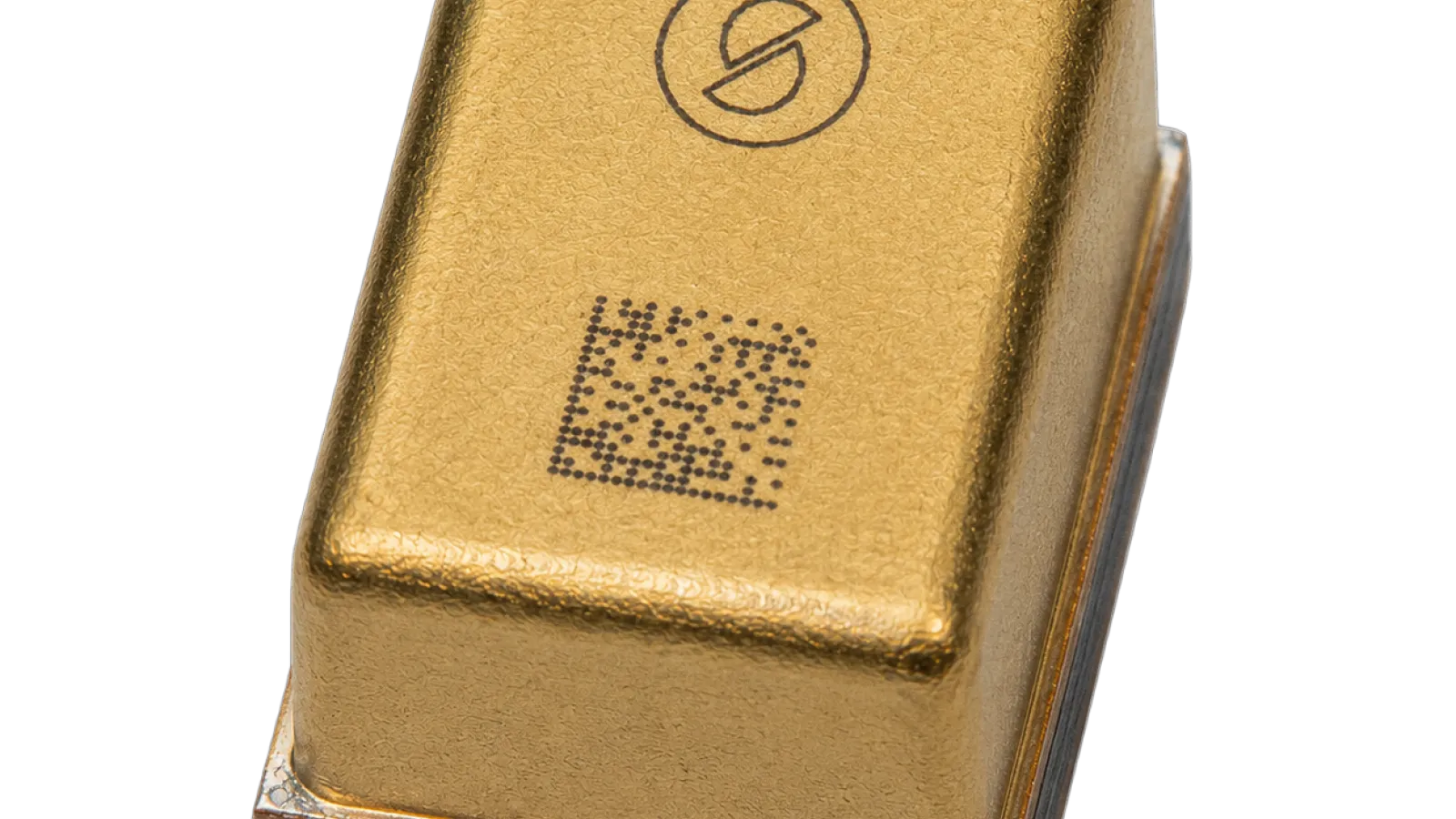
Norwegian deep-tech firm sensiBel has unveiled the SBM140B, an optical MEMS microphone the company says sets a new performance ceiling for the category: an 84dBA signal-to-noise ratio (SNR), a 146dB acoustic overload point (AOP), and a resulting 136dB dynamic range. The device is sampling to select customers now and is scheduled for full production in Q1 2027. The announcement matters less as a component story and more as an indicator of where precision sensing is heading across robotics, autonomous systems, and defence-adjacent acoustic intelligence.
Unlike conventional capacitive MEMS microphones, which struggle with large swings in sound pressure, sensiBel's optical architecture measures physical membrane displacement rather than capacitance change. That approach, the company says, allows the SBM140B to capture everything from near-silent background sounds to sudden, extreme acoustic events within a single hardware configuration, without clipping or dynamic compression.
Where the performance ceiling matters
The use cases cited in sensiBel's announcement map directly onto sectors that are scaling rapidly. Humanoid robotics platforms require spatial audio fidelity to interpret human speech in noisy industrial environments. Acoustic drone detection systems, increasingly deployed across critical infrastructure and military perimeters, depend on the ability to distinguish low-amplitude rotor signatures against loud ambient backgrounds. Beamforming microphone arrays, used in everything from autonomous vehicle sensor suites to AI-powered conferencing hardware, benefit directly from higher SNR because array-processing algorithms amplify noise as well as signal; a quieter microphone yields a cleaner beam.
"Offering the lowest noise and widest dynamic range in MEMS microphones, our newly announced SBM140B uniquely delivers precision audio recording in any soundscape," said Kieran Harney, CEO of sensiBel. "No capacitive MEMS microphone on the market comes close."
sensiBel's existing SBM100B, which achieves an 80dB SNR and 132dB dynamic range, is already shipping in customer applications. The SBM140B's four-decibel SNR improvement may appear incremental in isolation, but in logarithmic acoustic terms it represents a meaningful uplift for array-based systems where noise floors compound across multiple microphone channels.
Convergence read-across: sensing as the missing layer in agentic systems
The broader strategic context is that hardware sensing is increasingly the bottleneck constraining the deployment of AI inference at the edge. Large language and multimodal models have advanced faster than the physical sensors feeding them real-world data. A microphone with a wider dynamic range and lower noise floor is not just an audio upgrade; it is an improvement in the quality of the environmental data stream that acoustic AI models are trained and deployed against. As humanoid robot deployments accelerate across logistics and manufacturing, the sensor layer is attracting renewed attention from both hardware investors and system integrators who have historically focused on compute.
From a capital and geopolitical perspective, sensiBel sits in a Nordic deep-tech cluster that has attracted growing interest from European sovereign and institutional investors seeking hardware sovereignty in sensing and precision components. European defence procurement agencies are actively funding acoustic detection capabilities as drone threats to critical infrastructure intensify. A Norwegian optical MEMS company with measurable performance advantages over capacitive incumbents is precisely the kind of dual-use deep-tech asset that sits at the intersection of defence-readiness and industrial AI infrastructure investment. Whether sensiBel's roadmap includes a formal defence or industrial partnership announcement alongside the SBM140B commercial launch is not disclosed in the current release, but the application list it names makes the strategic direction clear.
The device's production timeline, Q1 2027, gives system designers a defined integration window. Companies can begin development today using sensiBel's AURORA and POLARIS evaluation platforms, which are compatible with both the SBM140B and the currently shipping SBM100B.