
HII expands ROMULUS USV network with Halimar Gulf Coast shipyard
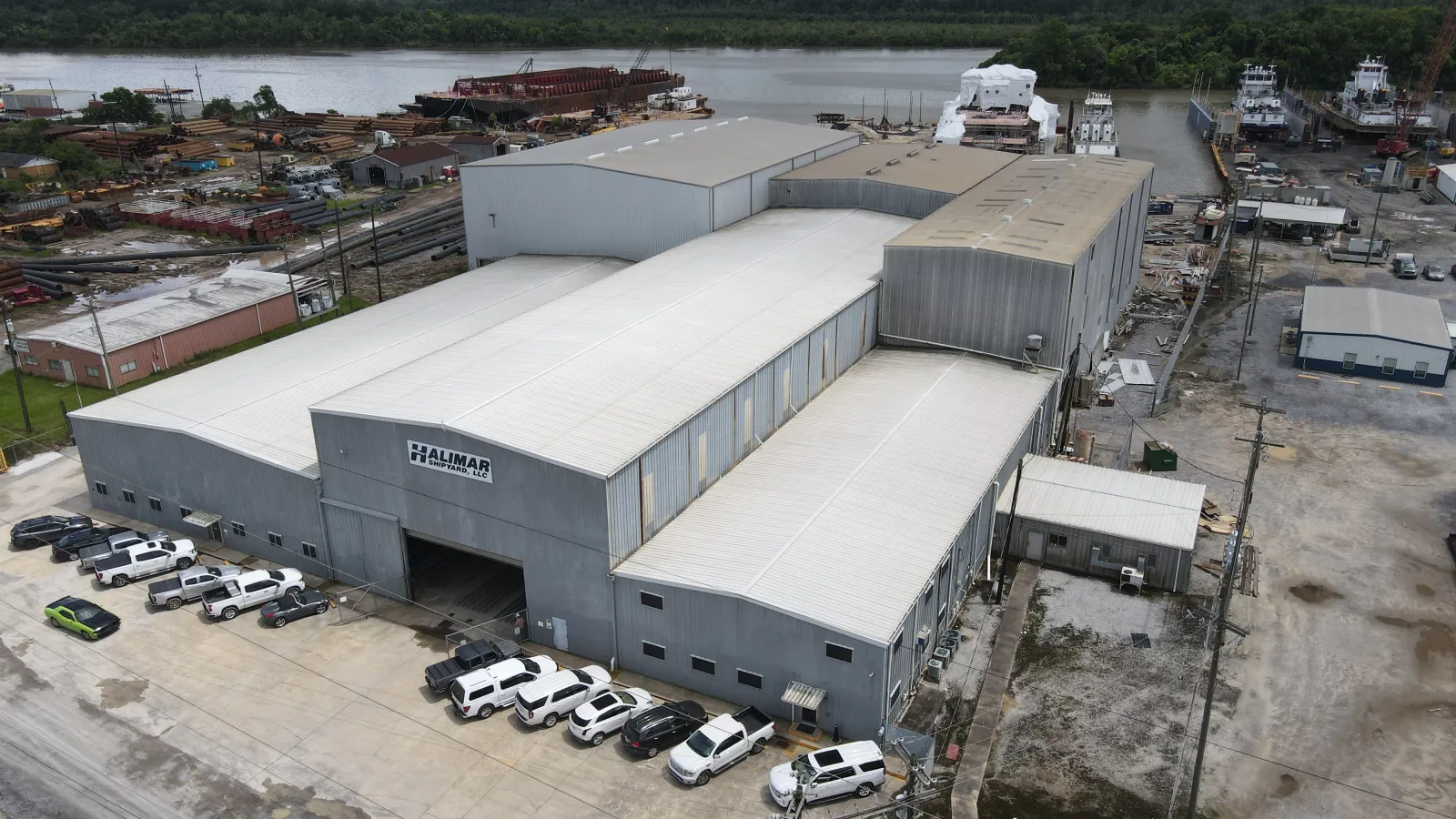
HII (NYSE: HII), America's largest military shipbuilder, has added Halimar Shipyard of Morgan City, Louisiana, to the production network behind its ROMULUS unmanned surface vessel (USV) family. The move extends a distributed manufacturing model already in motion across the Gulf Coast, where Breaux Brothers Enterprises is currently constructing five ROMULUS 151 vessels. Halimar will build complete ROMULUS 151 platforms and collaborate closely with Breaux Brothers on serial production.
The ROMULUS programme is designed around modular, AI-enabled autonomy. The vessel family is mission-configurable across intelligence, surveillance and reconnaissance, mine countermeasures, strike operations and the launch and recovery of both unmanned underwater vehicles and aerial drones. HII describes the common manufacturing architecture as deliberately engineered for repeatable, serial output rather than bespoke construction, reducing lead times and production complexity as fleet demand grows.
Distributed manufacturing as a defence doctrine
The Halimar partnership is less a routine supplier announcement and more an explicit restatement of industrial philosophy. By spreading ROMULUS production across multiple Gulf Coast yards, alongside fabricators such as Bayou Metals and design partners including Sydney-based Incat Crowther, HII is deliberately avoiding the single-point-of-failure model that has historically plagued large naval programmes. Andy Green, executive vice president of HII and president of its Mission Technologies division, framed the rationale in direct terms: "Halimar's proven shipbuilding expertise, skilled workforce, and strategic Gulf Coast location strengthen our ability to accelerate production, improve supply chain resilience, and provide affordable, mission-ready autonomous systems."
The distributed model also has a workforce dimension. The US naval-industrial base has faced persistent skilled-labour shortages, partly a legacy of post-Cold War consolidation that shuttered yards and retrained workers away from shipbuilding trades. Adding Halimar, a yard with decades of both commercial and government construction experience, brings an established workforce into the ROMULUS pipeline rather than requiring HII to grow capability from scratch at a single site.
Cross-sector and allied capital implications
The strategic read-across extends well beyond the immediate supply chain. ROMULUS is positioned to serve not only the US Navy but allied maritime forces, and the inclusion of Incat Crowther, an internationally recognised design consultancy headquartered in Australia, signals that the programme is already structured for a multi-nation procurement path. For allied navies examining autonomous surface vessels, particularly those in the Indo-Pacific, where maritime domain awareness is a live operational priority, a programme with proven serial-production infrastructure and a distributed supplier base is substantially easier to adopt than a prototype-stage platform.
For capital allocators, the broader USV sector is moving from demonstration phase to acquisition phase. The US Navy's unmanned surface vessel ambitions, articulated across successive budget cycles, are now creating genuine industrial pull rather than speculative push. HII's move to lock in production partners at scale, before full-rate production contracts are formally awarded, suggests the company is pricing in sustained demand and structuring its supply chain accordingly. Defence-specialist investors and sovereign procurement bodies evaluating the autonomous-maritime space will note that the competitive landscape is narrowing around a handful of integrators with credible manufacturing depth; the ROMULUS network is an explicit bid to claim that ground early.
What comes next
The immediate question is production tempo. Five ROMULUS 151 hulls are already in build at Breaux Brothers. Halimar's addition is intended to expand throughput and provide surge capacity, but HII has not published a public delivery schedule or total-fleet target in this announcement. The second-order signal is the portability of the distributed-yard model itself: if ROMULUS demonstrates that complex autonomous naval platforms can be serialised across regional industrial partners, it offers a template that other NATO-aligned shipbuilders, and their government customers, will be watching closely as unmanned maritime capability shifts from experimental to operational priority.