
Robinson Unmanned wins Nepal FMS deal for Blue UAS-cleared Spirit
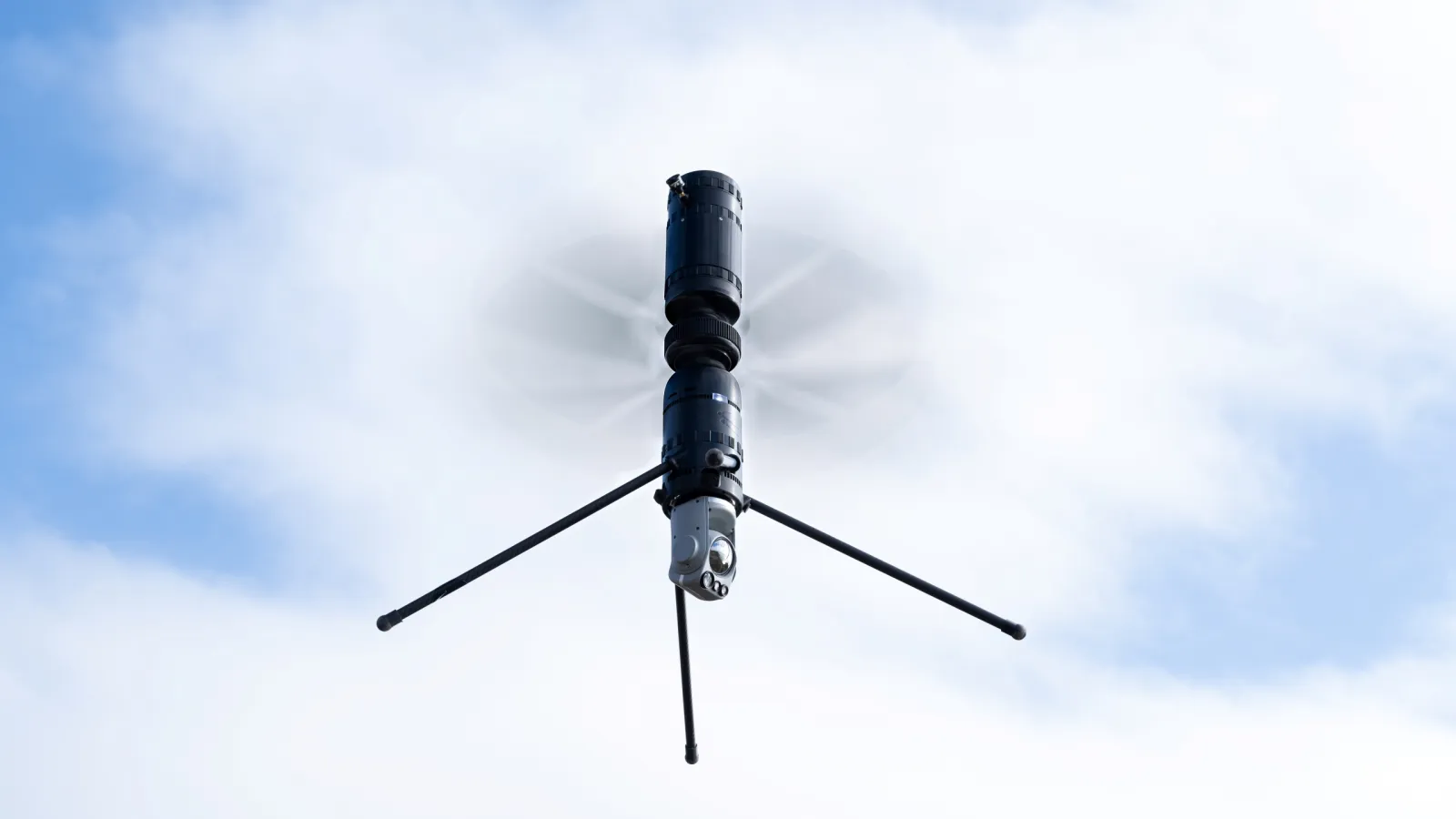
Robinson Unmanned, the uncrewed aircraft systems division of Robinson Helicopter Company, has secured a firm-fixed-price Foreign Military Sales (FMS) contract to supply its Spirit small UAS to the Nepali Army. The contract, routed through Naval Air Systems Command at Patuxent River, covers Spirit base kits, payload kits, spares, extended warranty coverage and operator training, extending what has been a primarily US-focused platform into a strategically notable South Asian market.
The Spirit is a Group 1 coaxial small UAS with a maximum operating altitude of 14,600 feet above mean sea level, an operating temperature range of minus 40°F to 130°F, and a wind tolerance above 40 mph. Those specifications make it directly relevant to Himalayan-terrain operations, conditions that disqualify many standard military small UAS platforms. It carries Blue UAS and NDAA-compliant status, the two benchmarks that now effectively gate international partner procurement through US FMS channels.
Modular architecture as a procurement argument
The Spirit's modular open system architecture (MOSA) is increasingly the decisive feature in contested small-UAS procurement. Rather than fielding a discrete aircraft for each sensor or mission type, MOSA allows operators to reconfigure sensing, communications and other payloads around a single airframe. That flexibility is not merely an engineering convenience: it significantly compresses the long-term logistics and training burden for partner-nation militaries, which typically lack the depth of support infrastructure available to US forces.
"For operators working in mountainous, remote and unpredictable environments, reliability isn't optional," said Paul Fermo, President of Robinson Unmanned. "SPIRIT was designed to give operators a rugged aircraft they can depend on while retaining the flexibility to adapt payloads and capabilities as the mission changes."
Robinson Unmanned draws on Robinson Helicopter Company's five-decade US manufacturing base, which provides vertical integration that has become a competitive differentiator as defence procurement tightens around supply-chain provenance. Blue UAS clearance, administered by the Defense Innovation Unit, effectively functions as a quality and security kite-mark that accelerates international procurement decisions by reducing the due-diligence overhead for partner nations.
The broader FMS and partner-nation UAS landscape
This contract sits within a markedly expanding FMS pipeline for small UAS. The US government has accelerated foreign military sales of NDAA-compliant drone platforms as a direct counter to the widespread fielding of Chinese-manufactured UAS by third-party militaries, a trend that raised acute supply-chain security concerns following operational evidence from multiple recent conflicts. Nepal, which shares borders with both India and China, occupies a sensitive position in the Indo-Pacific strategic calculus, and the procurement of US-sourced uncrewed systems carries a clear signal beyond pure military utility.
For investors watching the defence-tech convergence space, the Spirit deal illustrates a structural shift: small UAS platforms are graduating from niche ISR (intelligence, surveillance and reconnaissance) tools into standard-issue partner-nation kit, creating a recurring FMS revenue stream that mirrors the longer-established market for manned rotorcraft exports. Robinson Unmanned's parent has shipped thousands of civil helicopters internationally; applying that production discipline and distribution infrastructure to uncrewed platforms gives the unit a route-to-market that pure-play drone startups have struggled to replicate.
The broader read-across touches robotics and autonomy capital markets. As Group 1 and Group 2 UAS become commoditised through FMS channels, the competitive premium will migrate up the stack, toward autonomous mission management software, AI-enabled sensor fusion and electronic warfare resilience. Investors currently concentrated in hardware-layer drone primes may find the next value inflection point in the software and autonomy layers that MOSA architectures are designed to accommodate.