
Powerus lands $82m C-UAS order under US government IDIQ contract
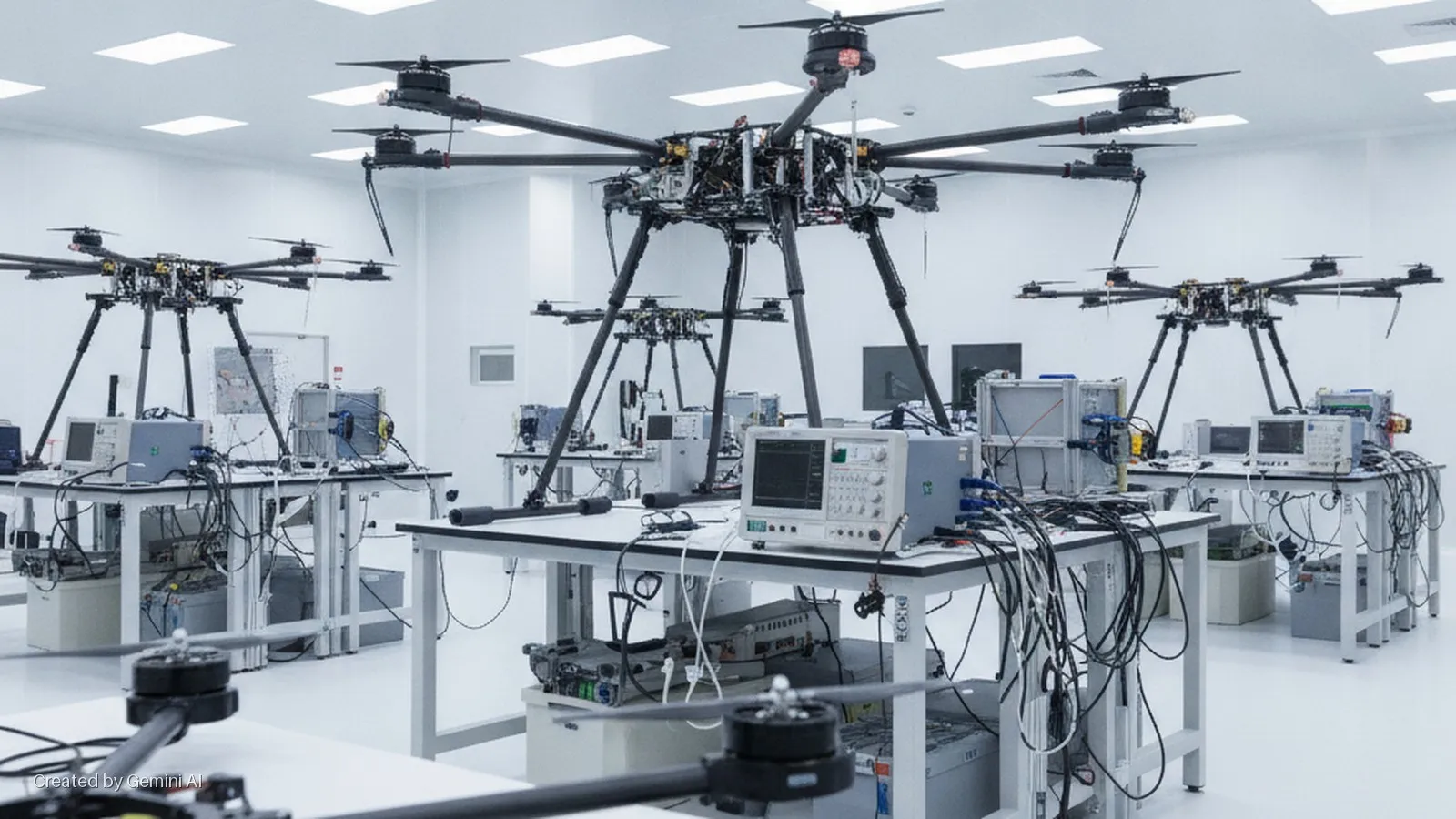
Powerus Corporation (Nasdaq: PUSA), a South Carolina-based defence technology company that completed its merger with Autonomous Power Corporation on 1 October 2026, has received an $82 million order for counter-unmanned aerial systems (C-UAS) from a US government customer. The order is the second placed under an existing indefinite-delivery/indefinite-quantity (IDIQ) contract, a procurement vehicle that allows the government to call off individual orders against a pre-agreed ceiling as operational requirements evolve. Deliveries are expected across several quarters.
The systems covered are manufactured in the United States using components compliant with the National Defence Authorisation Act (NDAA), which restricts the use of technology sourced from designated foreign adversaries, principally Chinese suppliers. That compliance requirement is increasingly a hard gate for US defence procurement, and Powerus positions its domestic manufacturing footprint as a structural competitive advantage in a market where supply-chain provenance is scrutinised at the component level.
A maturing C-UAS market
Counter-drone technology has moved from a niche capability to a mainstream procurement priority in the space of three years. The conflicts in Ukraine and the Middle East demonstrated at scale that commercial and military UAS platforms could be deployed cheaply and at volume, outpacing legacy point-defence architectures. The US Department of Defense has responded with accelerated C-UAS spending, including dedicated IDIQ vehicles that allow rapid re-ordering without full re-competition. Powerus's second call-off under the same contract suggests the customer is satisfied with initial deliveries and is scaling deployment, though the IDIQ structure means no guaranteed revenue beyond each individual order.
Beyond the order itself, the release notes that the contract also covers ancillary support equipment, operator training, and field service representative support. That services and training component is strategically significant: recurring revenue from training and field support typically carries higher margins than hardware alone, and it creates stickiness with the end user that pure-equipment suppliers lack.
Convergence lens: autonomous systems, supply-chain sovereignty, and capital markets
The Powerus story sits at the intersection of three macro-structural forces that Disrupts readers should track together. First, the rise of autonomous and unmanned systems as a primary vector of both offensive and defensive military capability is pulling significant R&D and procurement capital into defence-tech, competing directly with the same sensor, compute, and battery supply chains that feed commercial robotics and electric-vehicle manufacturing. NDAA-compliance pressure is accelerating the fragmentation of those supply chains along geopolitical lines, with implications for any industrial company sourcing advanced components from East Asia.
Second, the domestic-manufacturing imperative embedded in US defence procurement is quietly reshaping where defence-tech companies locate their production. The friend-shoring logic that drove CHIPS Act semiconductor policy is now visible in C-UAS, UAS, and autonomous maritime procurement. For cross-sector investors, this signals a durable tailwind for US-based advanced manufacturing capacity, particularly in states with existing defence-industrial clusters.
Third, Powerus's own corporate structure is a useful data point on the current state of the defence-tech capital market. The company completed its merger with Autonomous Power Corporation just five days before this announcement, and its predecessor entity, Aureus Greenway Holdings, owned and managed two golf courses in the Orlando region, suggesting the merged entity is a recent pivot into defence technology rather than a legacy prime contractor. That profile, a newly assembled Nasdaq-listed vehicle pursuing government IDIQ contracts, reflects a broader pattern of small-cap and SPAC-adjacent structures attempting to capture defence-tech spending that the larger primes have been slower to address at the tactical-edge layer.
Brett Velicovich, Co-founder and President of Powerus, framed the company's proposition in direct terms: "Build it here, build it well, and deliver on schedule." For a market where delivery credibility under IDIQ structures is the primary differentiator, execution on this contract will matter more than the announcement itself.