
Leonardo DRS lands $500m C-UAS radar IDIQ as drone threat escalates
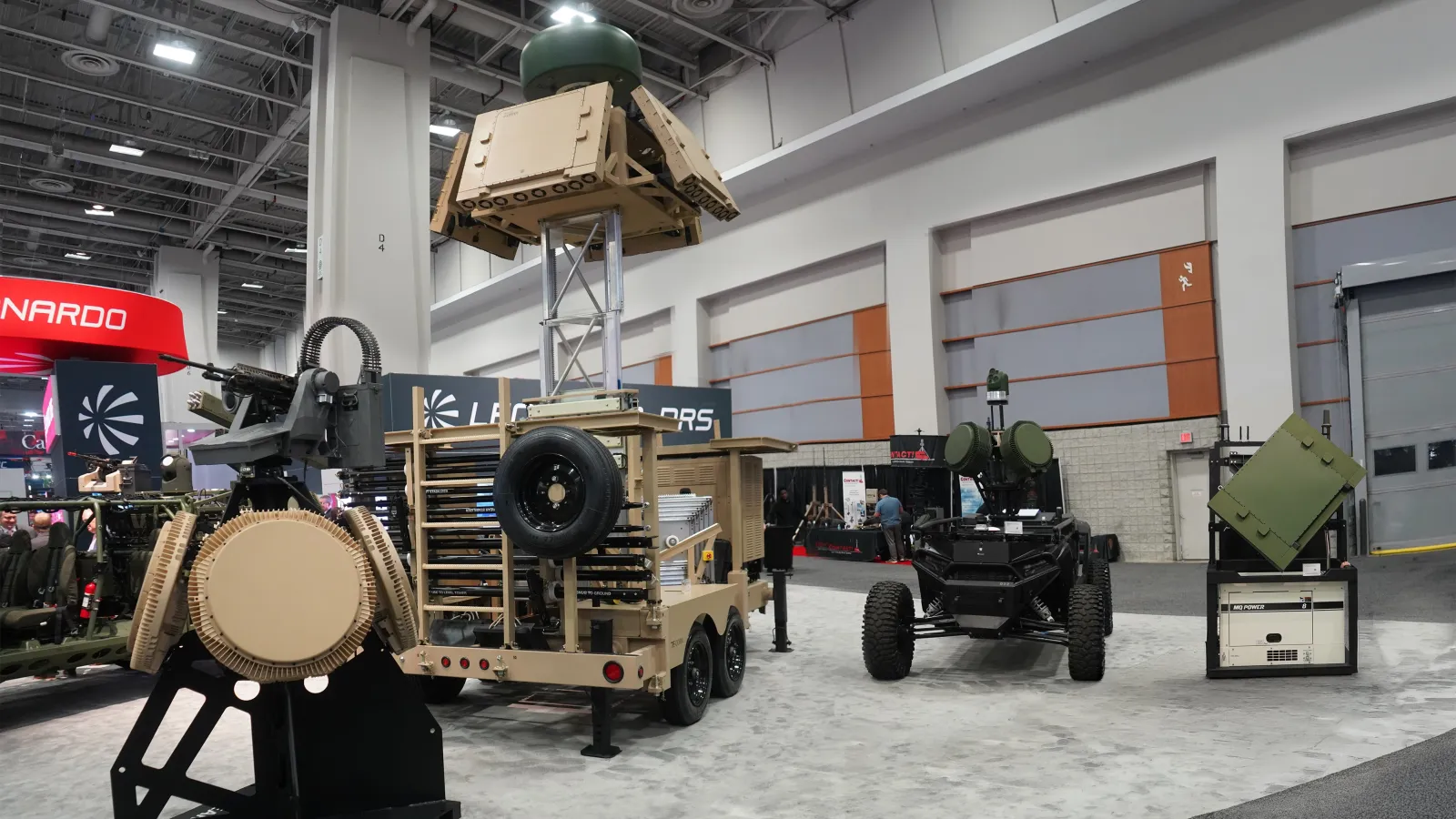
Leonardo DRS, the Nasdaq-listed defence electronics group, has secured a $500 million ceiling indefinite-delivery/indefinite-quantity (IDIQ) contract from the Joint Interagency Task Force 401 (JIATF-401), positioning the company to compete for task orders focused on counter-unmanned aerial systems (C-UAS) sensing capabilities. The three-year contract covers the rapid fielding of integrated radar and detection systems for force protection and low-altitude air defence missions, and reflects an accelerating shift in how US defence procurement is being structured around the drone threat.
IDIQ contracts of this type set a ceiling value and a period of performance, but do not guarantee revenue until individual task orders are placed. The $500m figure represents the maximum eligible value across all competing contractors under the vehicle. That said, the award confirms Leonardo DRS as a vetted supplier to JIATF-401, a task force specifically created to accelerate C-UAS technology delivery to field operators, compressing the traditional procurement timeline significantly.
Radar at the centre of the C-UAS stack
The DRS portfolio relevant to this contract centres on tactical expeditionary radar, including systems developed through its RADA Technologies business unit. Max Cohen, senior vice president and general manager of that unit, described the systems as "combat-proven" in operational environments, covering detection, tracking, and force protection across counter-UAS, counter-rocket, counter-artillery, and counter-mortar mission sets. The emphasis on expeditionary and rapid-fielding capability is deliberate: the threat landscape is being shaped by low-cost commercial drones adapted for military use, a dynamic that has made speed of deployment as strategically important as raw sensor performance.
Chief executive John Baylouny framed the award in terms of operational tempo rather than technology alone, noting that customers "need proven capabilities delivered at operational speed." That framing is significant: it signals that the procurement bottleneck in C-UAS is no longer primarily a technology gap but a delivery and integration challenge, one that favours contractors with manufacturing depth and an established supply chain over pure-play startups.
The drone threat and its second-order implications
The macro context is difficult to overstate. The proliferation of low-cost UAS platforms, demonstrated at scale in Ukraine and across Middle Eastern theatres, has exposed a structural vulnerability in Western ground-force doctrine: legacy short-range air defence systems were designed for a different threat class. Procurement vehicles like JIATF-401 are a direct institutional response to that gap, prioritising speed over the longer competitive cycles typical of major defence programmes.
For investors and cross-sector strategists, the C-UAS buildout carries read-across implications beyond pure defence budgets. The sensing stack required for effective counter-drone operations, covering radar, electro-optical systems, signals intelligence, and AI-assisted tracking, overlaps substantially with the sensor architectures being developed for autonomous vehicles, smart-city infrastructure, and critical-facility protection. Companies with dual-use sensor portfolios are increasingly well positioned to draw capital from both defence and commercial verticals. Leonardo DRS's parent, the Italian aerospace and defence group Leonardo SpA, has been explicit about that dual-use ambition in its strategic planning. Meanwhile, the broader C-UAS market is attracting venture and growth capital into adjacent startups working on software-defined detection, directed-energy countermeasures, and mesh-sensor networks, suggesting that the tier-one prime contract vehicle is only part of a larger capital story unfolding across the sector.
The next milestone to watch is the pace and scale of individual task orders placed under the JIATF-401 IDIQ. Those awards will reveal both the operational urgency of the C-UAS mission and the competitive position of DRS relative to other vetted suppliers on the vehicle.