
KULR wins $1m+ drone battery orders under US Drone Dominance Program
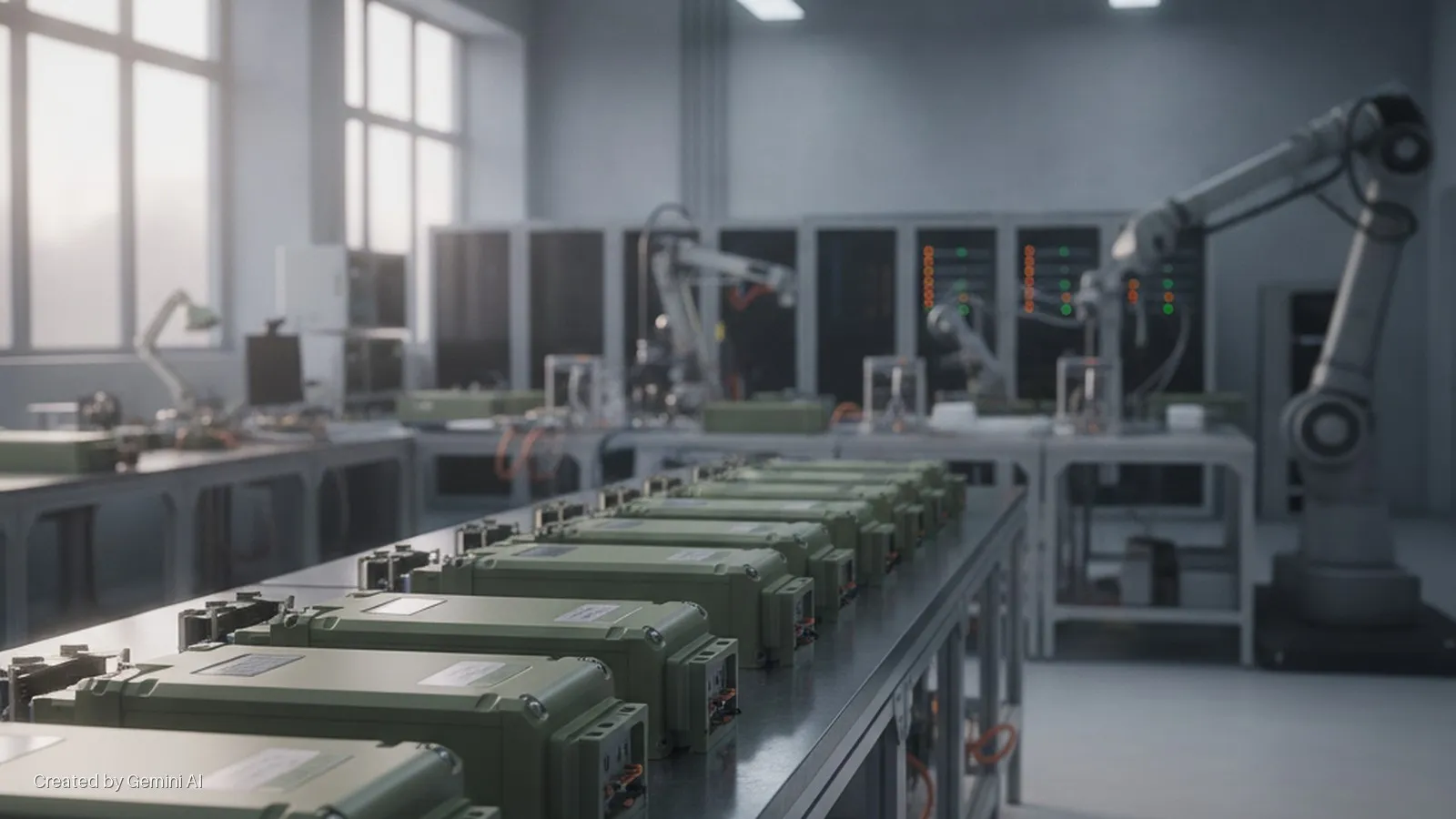
Houston-based KULR Technology Group has secured more than $1 million in production purchase orders for high-performance battery systems supporting the US Department of War's Drone Dominance Program, with deliveries scheduled to begin this month and complete by the end of November 2026. The contracts mark KULR's transition from qualification-stage supplier to volume manufacturer within a $1.1 billion multi-phase federal initiative focused on accelerating the procurement and fielding of small unmanned aerial systems (UAS).
The awards validate KULR's Forge 2 facility in Houston, a purpose-built manufacturing site designed to scale domestic battery production in compliance with National Defence Authorisation Act (NDAA) sourcing requirements. The first DoW compliance deadline falls in 2027, giving domestic suppliers a narrow window to demonstrate capacity before programme volumes expand further.
Power as the UAS bottleneck
Behind the headline figure lies a structural story: as the US military accelerates its drone procurement, battery performance is emerging as a constraint that is just as strategically significant as the airframe or the autonomy software stack. Endurance, thermal safety, and power density determine mission parameters more directly than almost any other subsystem. By positioning at the battery level rather than at the platform level, KULR is placing a bet that it can capture recurring revenue across multiple drone programmes regardless of which airframe manufacturer wins any given contract.
Chief Executive Michael Mo framed the orders explicitly in terms of execution scale: "Our focus is execution, building and delivering advanced battery systems at the volumes our customers require. As US drone production scales, successful execution positions KULR to support larger requirements and additional platform opportunities."
Convergence read-across: energy systems meet defence autonomy
The KULR story sits at the intersection of three converging pressures that cross-sector investors should watch together. First, the US government's publicly stated ambition to field large numbers of autonomous systems rapidly is pulling domestic energy-system manufacturers into defence supply chains that were, until recently, dominated by integrated prime contractors. Second, NDAA compliance requirements are functioning as a de facto industrial policy instrument, ring-fencing battery procurement for US-based producers and creating a protected but competitive domestic market. Third, the same battery architectures that serve defence UAS platforms are also in demand across AI data-centre backup power, electric aviation, and robotics, meaning companies like KULR are building cross-sector energy infrastructure rather than a single-programme revenue stream.
That capital read-across matters for investors allocating across the autonomy and energy-storage landscape. The Drone Dominance Program alone is a $1.1 billion envelope, and KULR's current orders represent a fraction of potential programme value if the company can sustain delivery performance and win positions on additional platforms. The broader US defence-drone market, energised by congressional pressure following close observation of UAS use in recent conflicts, is drawing in specialist suppliers across sensors, communications, propulsion, and power.
What comes next
The near-term test is straightforward: KULR must execute on the October-to-November delivery window without quality or supply-chain disruptions. A clean delivery record would strengthen its case for larger follow-on orders as more drone platforms advance through the Drone Dominance Program's qualification pipeline.
Beyond the immediate contract, the strategic question is whether KULR can use Forge 2 to become the de facto domestic reference supplier for defence UAS battery systems before the 2027 NDAA deadline triggers a broader compliance reckoning across the programme. If it succeeds, the company's Energy-as-a-Service model across data centres, robotics, and electric aviation gives it optionality that a single-market defence supplier would lack. The convergence of physical AI and autonomous systems means energy architecture is no longer a commodity input; it is increasingly the strategic layer on which everything else depends.