
Galvion backs Paleblue to modernise soldier battery systems
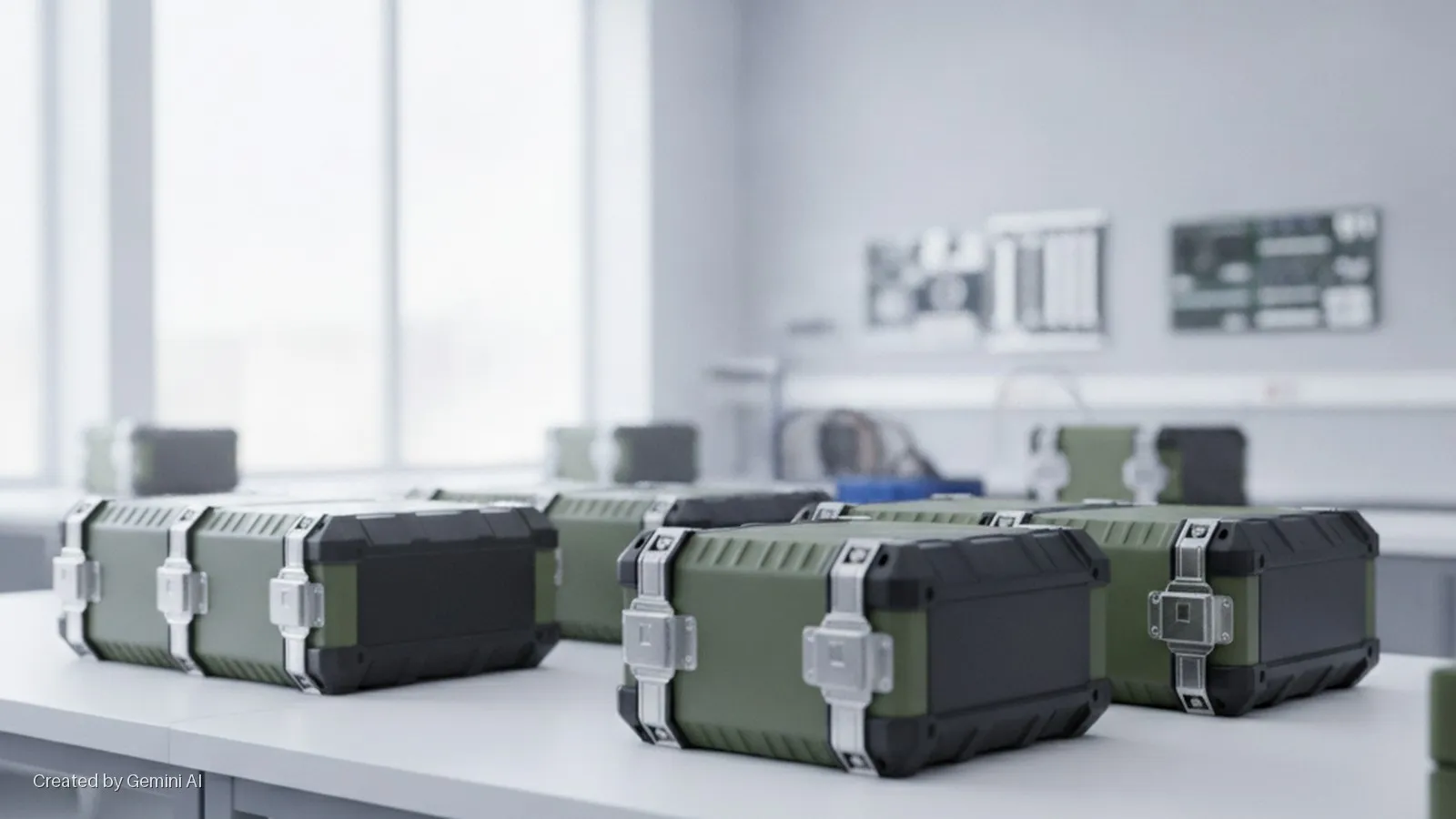
Galvion, the privately held integrated soldier-systems company with facilities across the US, Canada, UK, and Poland, has made a strategic investment in Paleblue, a Utah-based developer of USB-rechargeable lithium-ion batteries for consumer and defence markets. The deal signals a broader shift in how defence supply chains think about portable power: not as a commodity consumable, but as a mission-critical system component that must keep pace with the rapidly expanding electronic load carried by the modern warfighter.
The financial terms of the investment were not disclosed. But the strategic rationale is clear. Galvion's portfolio spans protective head systems, torso armour, and its SoloPack™ intelligent power and data management platform. Paleblue brings single-cell rechargeable battery technology that the two companies say can be integrated across that SoloPack family and into broader defence platforms, reducing dependence on disposable alkaline batteries in field conditions.
The power problem at the tactical edge
The trigger is straightforward: soldiers are carrying more electronics than ever. Night-vision devices, communications systems, GPS units, biometric sensors, and body-worn computing all draw from the same finite portable power budget. Legacy single-use batteries were designed for a simpler loadout. "With the explosion of power requirements due to additional equipment and devices, more elaborate integration networks and extreme weather environments, the time for inventive solutions is now," said Jonathan Blanshay, Founder and Executive Chairman of Galvion.
Paleblue is already embedded in US defence development structures. The company is working with the Defense Innovation Unit (DIU) and the US Army, under the FAStBat programme, to produce a military-grade AA-equivalent lithium-ion cell (a 14500-format battery) designed to power tactical accessories, aviation equipment, and ground systems. That programme provides Paleblue with institutional validation that a purely commercial supplier would lack, and it gives Galvion confidence that its new partner can meet the qualification thresholds defence procurement demands.
Cross-sector read-across: energy density meets defence procurement
The convergence angle here extends beyond a bilateral investment. The drive to electrify the soldier's personal area network mirrors dynamics playing out simultaneously in the broader energy and defence-industrial sectors. NATO member states are accelerating electrification of light vehicles and dismounted systems as part of wider operational-energy strategies designed to reduce fuel logistics exposure. Battery technology that proves itself in the extreme-temperature, shock-resistant demands of military service tends to migrate rapidly into adjacent markets: industrial robotics, emergency services, and eventually commercial energy storage.
For capital allocators watching the defence-energy intersection, Paleblue's dual-market positioning (consumer sustainability messaging alongside defence-grade qualification) is a structurally interesting model. The company's stated mission to "end single-use" portable power connects an ESG-legible consumer brand narrative to a defence-procurement thesis, potentially broadening its investor base beyond pure defence-tech specialists.
The Galvion investment also highlights a consolidation dynamic forming around soldier-system integration. As the warfighter's electronics ecosystem grows more complex, platform integrators like Galvion are under pressure to own or partner across more of the power stack, rather than rely on generic battery suppliers. Expect further strategic tie-ups between soldier-systems primes and specialist battery or power-electronics firms as NATO procurement cycles accelerate through 2027.
Paleblue, founded in 2019, remains early-stage by defence-industry standards. Its credibility will rest on whether the FAStBat-derived 14500 cell secures full military qualification and achieves programme-of-record status. That milestone, rather than this investment, will be the signal for the broader defence supply chain to take note.