
Embraer flies first Brazil-built Gripen E, expanding Saab's global line
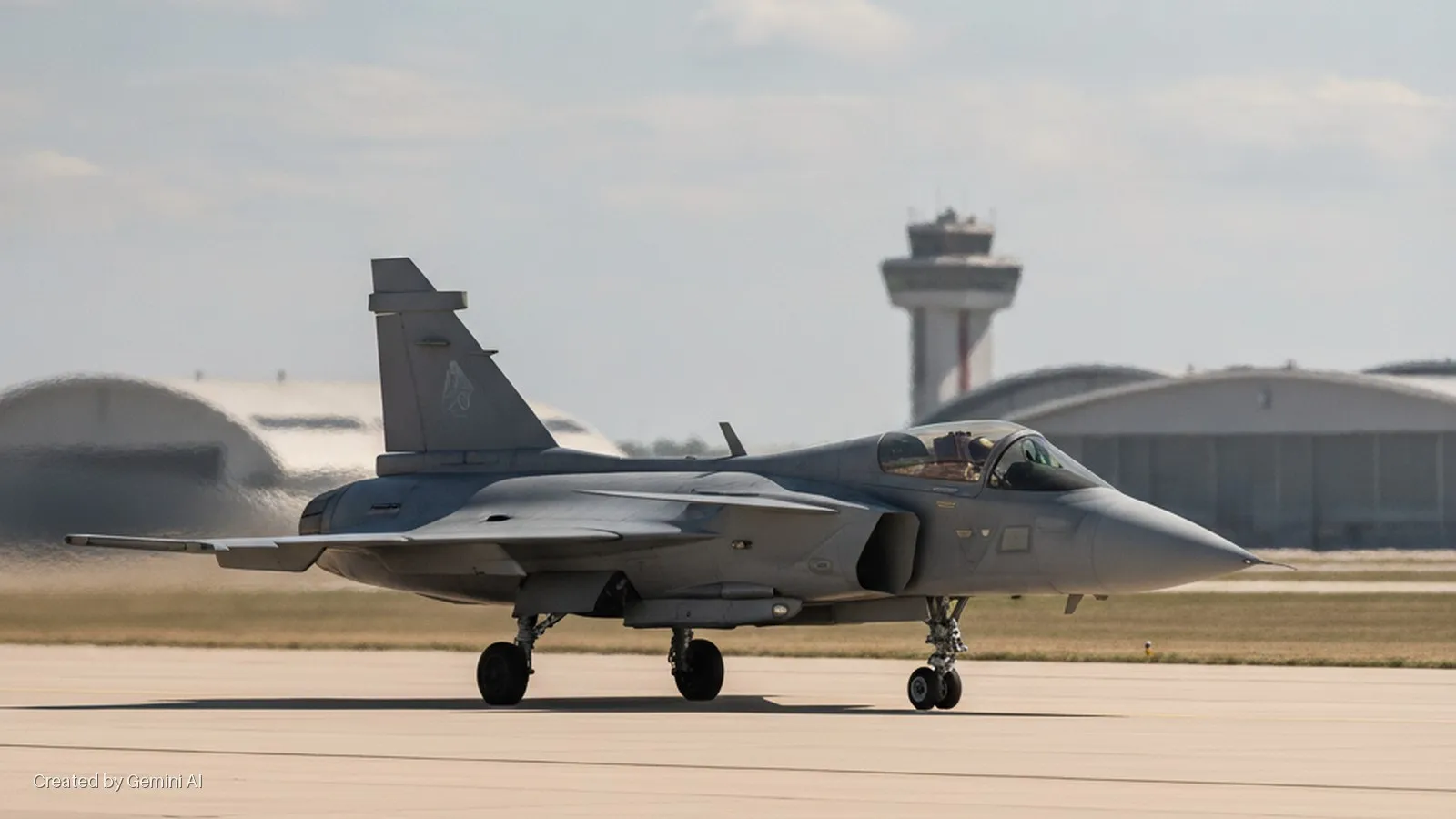
Embraer and Sweden's Saab have completed the maiden flight of the first Gripen E fighter aircraft assembled in Brazil, marking a structural shift in how Western defence supply chains are being architected beyond their traditional home nations. The aircraft lifted off from Embraer's industrial complex in Gavião Peixoto, São Paulo State, on 7 October, validating the site as a fully operational node in Saab's global Gripen production network, the only such facility outside Linköping, Sweden.
The flight is not simply a programme milestone. It is the clearest proof point yet that a middle-income emerging economy can absorb, internalise and operationalise the full manufacturing stack for a next-generation combat aircraft, from final assembly through integrated flight testing. For strategists tracking the geopolitics of defence-industrial capacity, the implications extend well beyond Brazil.
From technology transfer to sovereign capability
The Gripen programme in Brazil traces back to a 2014 government contract covering 36 aircraft: 28 single-seat Gripen E and eight two-seat Gripen F variants. Deliveries began in 2020, and ten aircraft have been handed to the Brazilian Air Force to date. What distinguishes this programme from a straightforward procurement is the depth of the technology transfer embedded in the deal. Brazilian engineers and technicians have worked alongside Saab teams across development, manufacturing, integration and flight testing, progressively converting transferred knowledge into what Embraer Defence and Security CEO Bosco da Costa Junior describes as "real and proven industrial capabilities."
The Gavião Peixoto aircraft is the first of 15 units planned under the current programme scope. A Heads of Agreement signed in July 2026 between Embraer and Saab frames a potential further 20 aircraft, with options for additional expansion, assembled at the same facility for both domestic use and export opportunities.
The macro read: distributed defence manufacturing as strategic doctrine
The Gripen Brazil story sits at the intersection of three converging macro-currents that Disrupts readers are tracking closely.
First, the acceleration of defence-industrial friend-shoring. NATO members and aligned states are under growing pressure to diversify production away from single-country chokepoints. The Saab-Embraer model, in which a Swedish OEM effectively delegates a full production line to a Brazilian partner, offers a template for how Western primes might scale capacity in geopolitically stable, cost-competitive jurisdictions without ceding IP control.
Second, the contest for emerging-market defence relationships. Brazil's adoption of the Gripen placed it firmly in the Western-aligned procurement orbit at a time of intensifying competition from Russian and Chinese platforms for defence contracts across Latin America, Africa and South-East Asia. A Brazilian Gripen with export potential from Gavião Peixoto would carry significant strategic signalling value in those markets, potentially giving Saab a price-competitive offer point that a Sweden-only production line cannot match.
Third, the broader question of sovereign industrial policy as a geopolitical asset. Brazil structured this deal explicitly around long-term national competency-building rather than off-the-shelf procurement. That model is now being replicated, or attempted, across semiconductors, space launch, and advanced materials in countries from India to Saudi Arabia. The Gripen maiden flight is evidence that the strategy can work at the level of the most complex manufactured artefact: a front-line combat aircraft.
For capital allocators watching defence-sector exposure, the programme also hints at a maturing Embraer Defence and Security division with ambitions beyond regional jets. Saab, meanwhile, faces growing order books from European re-armament, the Gavião Peixoto line provides surge capacity that Linköping alone cannot supply. The next indicator to watch is whether the July HoA converts into a binding contract and whether any of the potential export customers are named publicly before year-end.