
Dassault and Harmattan AI fly NAMIB EW payload with Rafale fighter
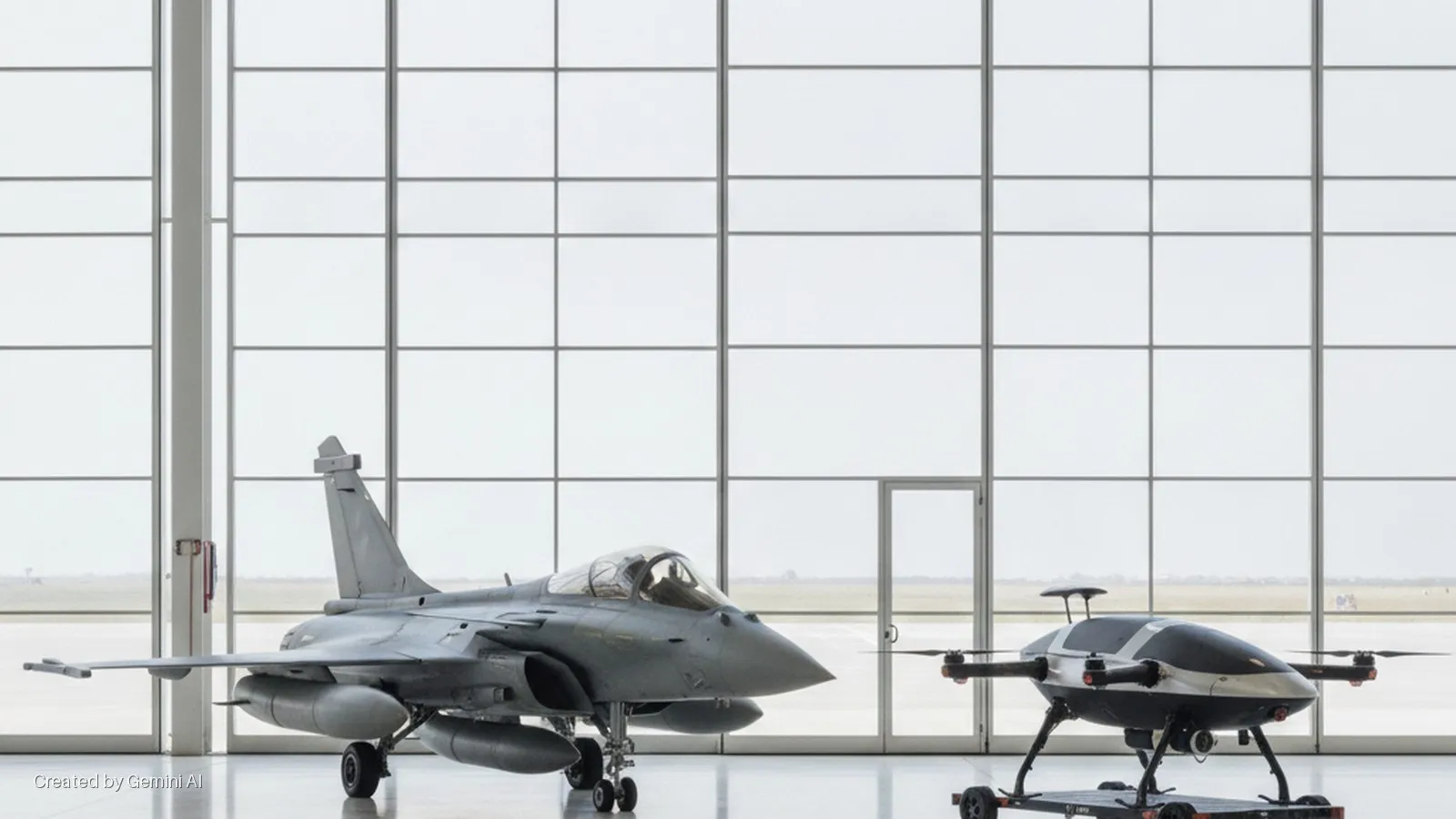
Dassault Aviation and defence-AI startup Harmattan AI have demonstrated the first collaborative in-flight engagement between a Rafale F4 combat jet and an unmanned aerial system carrying NAMIB, a jointly developed electronic warfare (EW) payload. The test, completed in July 2026, saw NAMIB detect and precisely geolocate an air-defence radar at a range of several dozen kilometres, with that targeting data transmitted directly to the Rafale, which then simulated a strike. The development programme began only in January 2026, making the six-month timeline from inception to live flight test notably compressed.
NAMIB is designed to be modular across platform types, fitting tactical quadcopters as well as longer-endurance fixed-wing drones. Its core function is the passive detection, identification, and geolocation of electromagnetic emissions, particularly radar signatures from air-defence networks. That combination makes it a tool for suppression of enemy air defences (SEAD), one of the most contested and capability-defining missions in modern high-intensity conflict.
From high-low mix to collaborative combat architecture
Dassault Chairman and CEO Eric Trappier framed the test as validation of the Rafale F4 standard's broader interoperability design, noting that its architecture "enables seamless communication with a very broad range of operational assets, including ground forces." His reference to the "high-low mix" doctrine is significant: rather than investing exclusively in expensive exquisite platforms, Western air forces are increasingly pairing them with cheaper, attritable autonomous effectors that extend reach and complicate adversary targeting.
Harmattan AI CEO Mouad M'Ghari characterised EW as "a decisive factor in achieving operational superiority" and described the test as proof that previously platform-bound EW capabilities can now be deployed on lightweight autonomous systems operating close to the threat. That shift in scale and accessibility matters: EW packages that once required a dedicated fast-jet or a large maritime patrol aircraft can now be distributed across drone swarms that are cheaper to field and harder to suppress.
Defence procurement and the autonomy investment wave
For capital allocators tracking the defence-technology convergence, the Dassault-Harmattan partnership illustrates a broader pattern. Legacy prime contractors with deep platform pedigrees are increasingly acquiring or partnering with AI-native startups rather than building autonomy stacks in-house. The rationale is speed: Harmattan AI, which operates across the United States, Europe, and the Middle East and Africa, compressed a complex multi-domain EW integration into six months, a timeline a traditional defence programme office would struggle to match.
That structural dynamic is driving a reallocation of venture and sovereign capital toward dual-use autonomous-systems companies. European defence-tech investment has accelerated sharply since 2022, and the pipeline of SEAD-capable drone programmes is growing across NATO member states facing procurement pressure to counter advanced integrated air-defence systems fielded by near-peer adversaries. For institutional investors, the Dassault imprimatur on a startup's technology effectively de-risks the regulatory and export-control pathway, since Rafale is already cleared across more than 90 countries and nine export customers.
The broader convergence angle reaches into procurement budgets well beyond France. As NATO allies race to field collaborative combat architectures before the next defence review cycle, the demand signal for interoperable EW payloads that slot into existing fourth-generation and fifth-generation fleets is likely to expand. Harmattan AI's ability to demonstrate a working system integrated with one of Europe's premier fighter platforms positions it as a credible supplier in a market where validated flight-test evidence is the primary barrier to entry.
The next milestones to watch are whether NAMIB attracts a French government programme-of-record contract and whether export interest from Rafale operator nations, which span Europe, the Gulf, and South Asia, translates into early orders for the payload. A formal procurement announcement would confirm whether the January-to-flight-test timeline was a one-off demonstration sprint or the leading edge of a repeatable rapid-integration model.