
Beam Global acquires ScoutDI to build US drone platform for defence
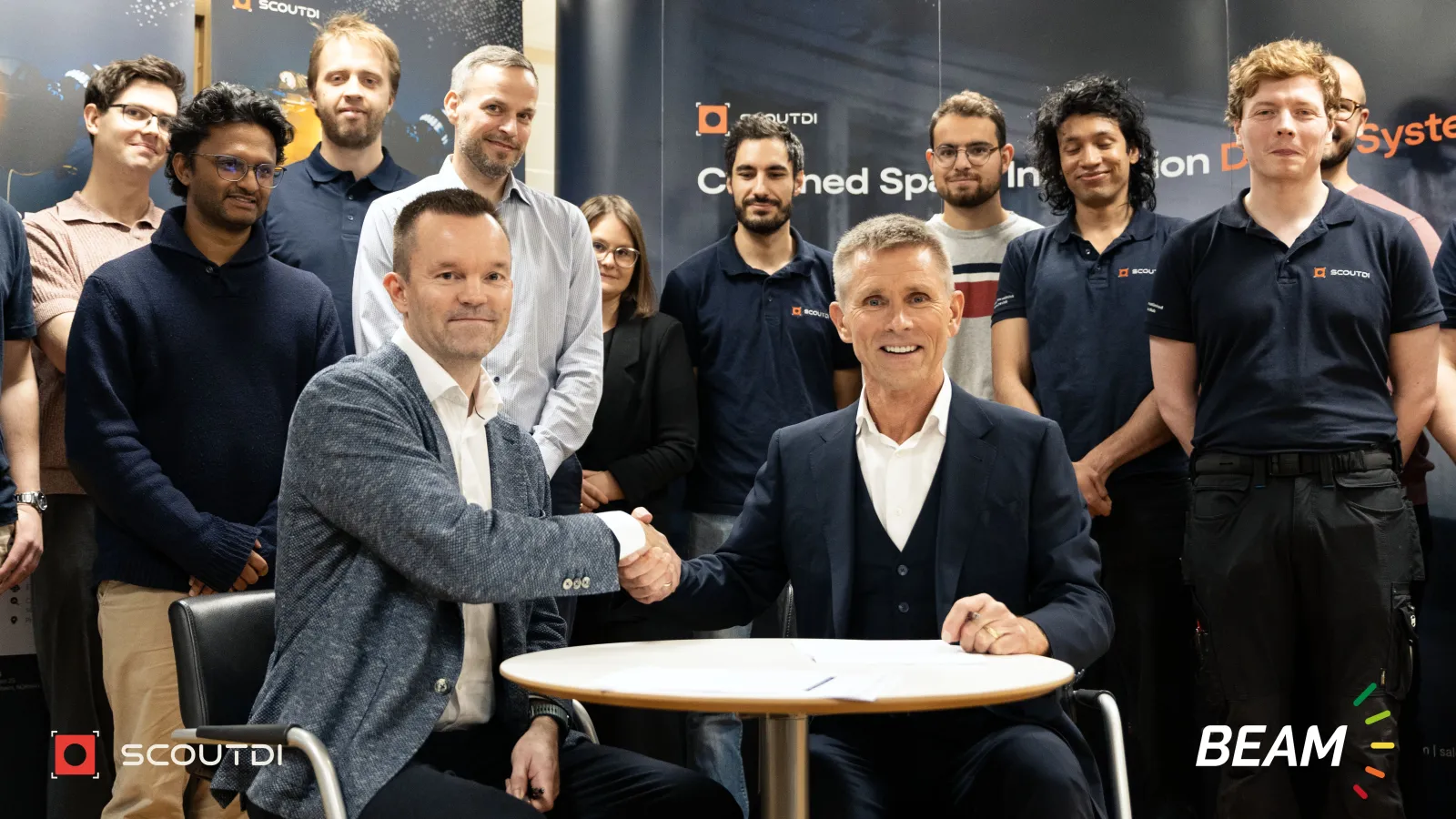
Beam Global, the Nasdaq-listed sustainable infrastructure company, has signed a definitive agreement to acquire Norwegian drone specialist ScoutDI for approximately $24 million, paid in a combination of cash and Beam common stock. The deal positions Beam as what the company claims could be the only vertically integrated drone manufacturer in the United States that also produces its own batteries, a combination that opens a direct route into defence procurement channels now explicitly prioritising domestic supply chains.
ScoutDI's Scout 137 Gen3 is among the first four drone systems globally to receive Conditional Approval from the US Department of Defense, and has been exempted by the FCC from its Covered List, which restricts the use of drones from certain foreign manufacturers in federal applications. Beam intends to manufacture ScoutDI's systems at its existing US facilities following close, expected in November 2026, aligning the combined entity with requirements under the American Security Drone Act and the Blue UAS programme.
Industrial roots, defence ambitions
ScoutDI's core product is a confined-space inspection drone used by asset owners and inspection service providers in maritime, oil and gas, and energy sectors. Its customer list reads like a roll-call of global energy majors: ExxonMobil, Chevron, Shell, Petrobras, Equinor and Ørsted are all active users, alongside international testing and certification firms including DEKRA and Applus+. The company currently operates across 30 countries, generating recurring subscription revenue through its Scout Portal software platform. ScoutDI's lead shareholders, DNV, Equinor Ventures and Klaveness, will become Beam stockholders on completion.
Beam's strategic logic is layered. Its existing customer base spans oil and gas majors, mining, utilities, border patrol, and US and European defence departments, a natural cross-sell universe for ScoutDI's inspection systems. Beyond that, Beam's patented BeamFlight technology, which enables remote drone recharging without fixed grid infrastructure, adds an operational range differentiator that could prove material in defence and public safety deployments where grid access is not guaranteed.
"ScoutDI already has an established global drone and software business with impressive margins and recurring revenues," said Desmond Wheatley, Beam's chairman and CEO. "Our U.S. factories and skilled team are well positioned to deliver the domestic manufacturing that the approval requires without material increases in capital or operating expenditure."
The policy tailwind and capital landscape
The acquisition lands against a powerful regulatory backdrop. The "Unleashing American Drone Dominance" executive order, signed in June 2025, directs federal agencies to prioritise US-manufactured unmanned aircraft systems over foreign-built alternatives, and instructs the Department of Defense to favour Section 848-compliant domestic producers. For a company with existing US manufacturing, defence relationships and federal procurement channels, the timing is deliberate.
The macro picture for the sector is sizeable. The global drone market is estimated at $96.4 billion in 2026, up nearly 15% year-on-year, and a Grand View Research report projects it to more than double by 2033. North America accounts for roughly 40% of that market, Europe for 27%. Investors tracking this space will note that Beam's earn-out structure, tied to ScoutDI hitting 150% and 160% of 2025 drone revenues in 2026 and 2027 respectively, reflects genuine confidence in near-term commercial acceleration rather than a distant option on growth.
The convergence angle here extends beyond the company-level transaction. The pairing of industrial-inspection drone capability with sovereign defence procurement preferences, energy-sector customer relationships, and proprietary battery manufacturing reflects a broader structural shift: the drone industry is being reshaped less by pure technology competition and more by supply-chain provenance, regulatory compliance, and vertical integration. Capital flowing into the sector is increasingly bifurcating between Chinese-linked platforms facing export restrictions and Western-manufactured alternatives that can credibly serve both commercial and government buyers. Beam's move places it squarely in the latter camp, and the retention of ScoutDI's Norwegian engineering base alongside new US manufacturing could offer a template other dual-use drone developers look to replicate.