
Amaero prices Nasdaq IPO to fund US refractory powder scale-up
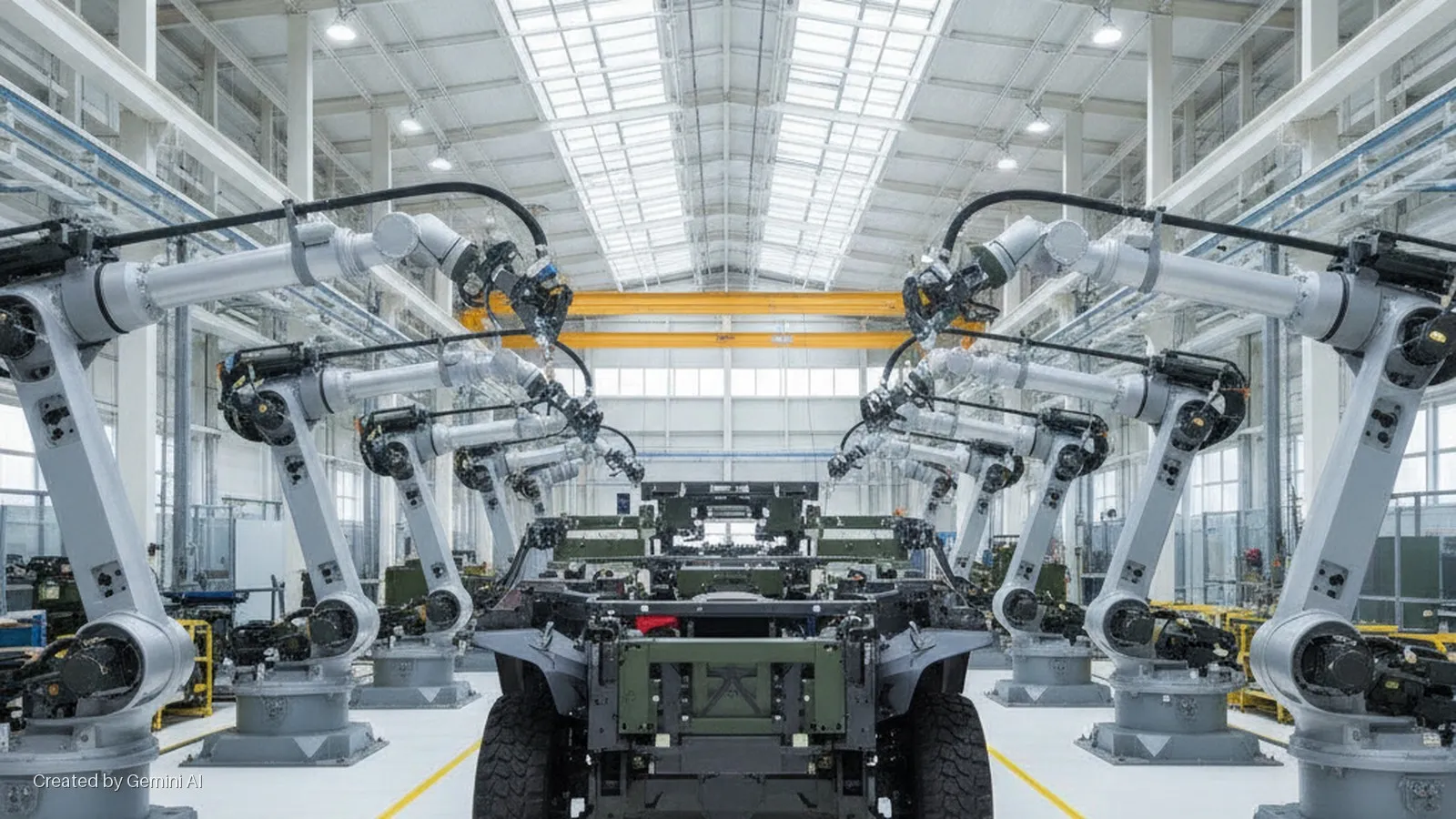
Amaero Inc., a Tennessee-based producer of refractory and titanium alloy metal powders for additive manufacturing, has priced its US initial public offering at $4.25 per share, selling 4,705,883 shares on the Nasdaq Capital Market under the ticker "AMRO." The offering, which is expected to close on 16 October 2026, values the raise at roughly $20m before any exercise of the underwriters' 30-day overallotment option for a further 705,882 shares. Lead bookrunner Baird and co-manager Lake Street managed the book.
The company, which also carries an ASX listing as 3DA, intends to deploy up to $10m of the net proceeds on capital equipment over the next twelve months. Remaining funds will cover working capital, operating expenses, and research and development. The dual-listed structure signals that Amaero has been drawing institutional attention from both US and Australian markets, where appetite for advanced-manufacturing and critical-materials plays has grown steadily alongside sovereign-supply-chain anxiety.
Reshoring advanced materials at the defence-manufacturing nexus
Amaero's core product set sits at a strategically sensitive junction. Refractory metal powders, those with extremely high melting points, such as tungsten, molybdenum, and rhenium alloys, are essential feedstocks for components used in aerospace engines, hypersonic platforms, and nuclear applications. Titanium alloy powders underpin structural parts across both commercial aerospace and defence programmes. Amaero also produces large near-net-shape components via Powder Metallurgy Hot Isostatic Pressing (PM-HIP), a process that compresses metal powder under high heat and pressure to form dense, complex parts closer to final geometry than traditional casting, reducing waste and machining time.
The company's own positioning language, describing itself as occupying "a strategically critical position at the intersection of US national security priorities, AM technology, and the domestic reshoring of imperative US supply chains," maps directly onto a policy environment that has become increasingly favourable. The CHIPS Act and its supply-chain-adjacent executive actions have normalised federal support for domestic materials production. The Pentagon's Defence Production Act investments in additive manufacturing and critical minerals have created a procurement tailwind that small-cap producers in this space are actively trying to capture.
Cross-sector read-across: from powder beds to geopolitical capital flows
The Amaero listing arrives as capital markets are reassessing the investability of critical-materials producers as a distinct asset class, separate from both traditional mining and pure-play defence contractors. Cross-sector investors who have tracked the rare-earth and semiconductor supply-chain debates of the past three years are now turning the same geopolitical lens on specialty metal powders. A US-manufactured titanium powder supply chain has implications not only for the defence prime contractors (Lockheed, Northrop, RTX) that source these materials, but also for the commercial aerospace OEMs, Boeing and Airbus both have additive manufacturing programmes scaling up, and for the space-launch economy, where refractory alloys go into nozzles and heat shields.
For macro investors, the Amaero IPO is a data point in a broader pattern: niche advanced-materials companies that would historically have sought private equity or strategic-partner funding are now turning to public markets, partly because the reshoring narrative gives retail and institutional investors a legible geopolitical story to underwrite. The size of this raise is modest. At roughly $20m gross, it is seed capital by the standards of deep-tech fundraising. The strategic significance, however, is disproportionate to the ticket size: a publicly traded, SEC-registered domestic refractory powder supplier removes one node of foreign-supply dependency from US defence and aerospace manufacturing at a moment when allied governments are actively auditing exactly those nodes.
The next indicator to watch is whether Amaero's $10m capital-equipment deployment translates into expanded production capacity in time to qualify for defence-programme supply agreements, where qualification cycles typically run 12 to 24 months. If it does, a secondary raise at a materially higher valuation is a plausible next step.