
ParaZero scales counter-drone production as defence demand surges
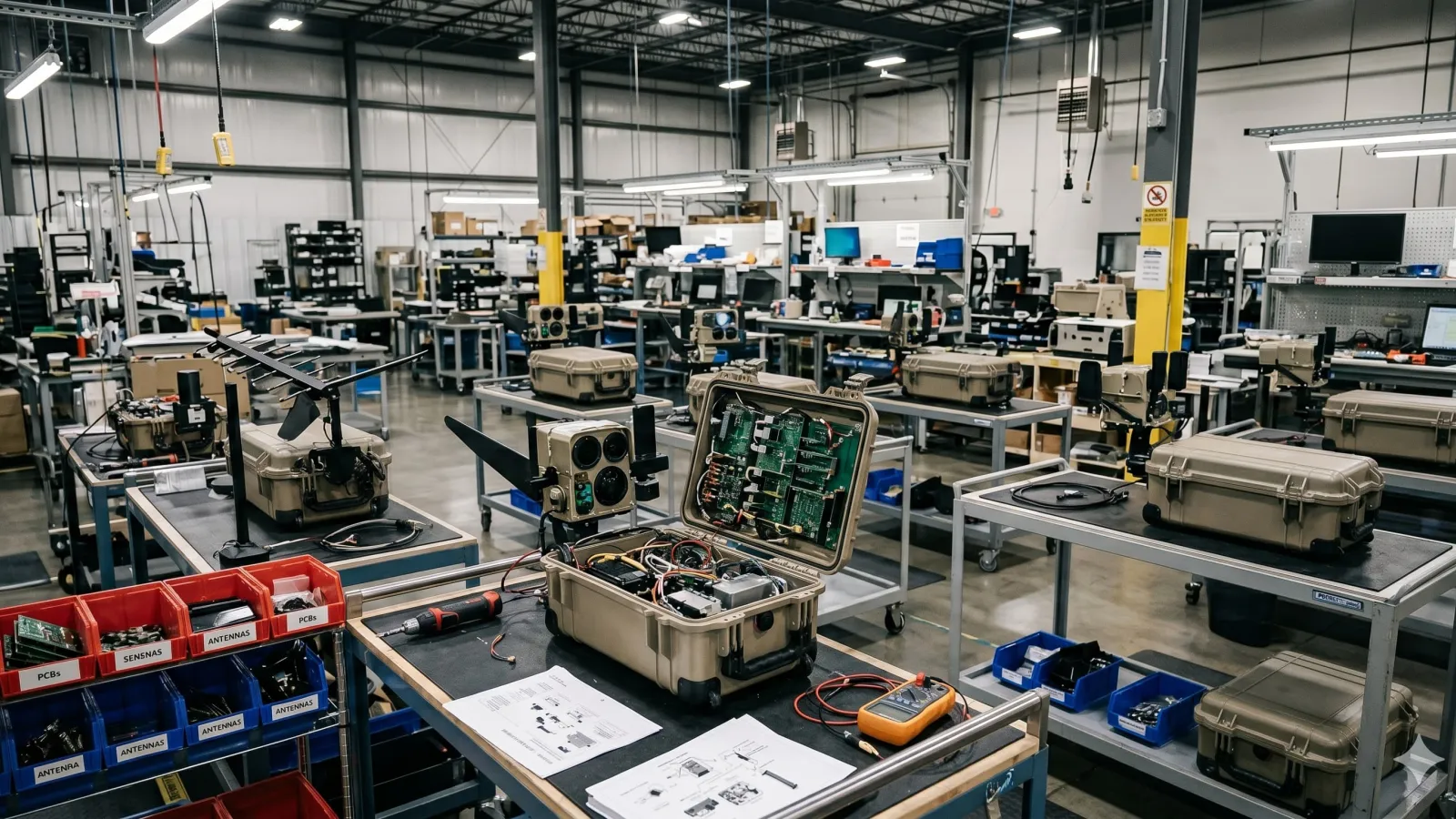
ParaZero Technologies (Nasdaq: PRZO), the Israeli aerospace-defence firm behind the DefendAir net-pod system, has engaged a subcontractor to establish full-scale production capacity for its counter-UAS product line.
The announcement marks a shift from prototype-and-pilot mode to something closer to industrial-scale delivery, a threshold that separates niche defence startups from credible programme-of-record contenders.
DefendAir uses patented net-launching technology to physically intercept hostile drones without explosives, making it suitable for environments where kinetic countermeasures are impractical or legally constrained — urban settings, stadium security, critical energy infrastructure, and airport perimeters among them. The new production line covers manufacturing, assembly, and delivery across both man-operated and autonomous configurations of the system.
From lab to line: the industrialisation of counter-UAS
The counter-UAS market has expanded rapidly on the back of battlefield evidence from Ukraine and the Middle East, where commercially available drones have demonstrated asymmetric strike capability at a fraction of the cost of the systems defending against them. That dynamic has pushed procurement priorities up the chain in NATO member states, Gulf Cooperation Council defence ministries, and a growing cohort of non-state critical-infrastructure operators — ports, data centre campuses, power generation sites — who are now treating drone interdiction as a baseline security requirement rather than a speciality capability.
ParaZero CEO Ariel Alon framed the scale-up in operational terms: "As demand for physical counter-drone interception solutions continues to grow, securing scalable production capacity is critical to our ability to deliver DefendAir systems to customers and partners." The company, founded in 2014 and listed on Nasdaq, has historically been best known for its SafeAir parachute recovery systems for commercial UAS compliance — a very different risk profile from active-intercept defence hardware. The DefendAir pivot reflects a broader pattern of drone-safety companies repositioning toward higher-margin, higher-urgency defence contracts.
Convergence read-across: where drone defence meets AI and infrastructure
The counter-UAS space sits at the intersection of several macro investment themes that Disrupts readers will recognise from adjacent sectors. First, autonomy: the move to autonomous-configuration DefendAir systems mirrors the wider push in defence procurement toward AI-enabled engagement — where human-in-the-loop requirements are being progressively relaxed for lower-risk interception decisions, a regulatory and ethical frontier the sector has not yet fully resolved.
Second, critical infrastructure protection is increasingly being treated as a convergence market in its own right. Data centre operators building out hyperscale campuses — particularly in the GCC and across Southeast Asia — are factoring drone-threat mitigation into site-security budgets alongside physical barriers and cyber perimeter defence. That opens a non-military procurement channel for companies like ParaZero that sits outside traditional defence contracting and closer to the enterprise security and facilities-management supply chain.
Third, from a capital perspective, the counter-UAS segment is attracting attention from dual-use defence-tech funds and sovereign wealth vehicles that are simultaneously invested in the commercial drone ecosystem — a structural tension that makes the sector's investment narrative genuinely complex. Pure-play counter-drone firms are, by definition, betting against the commercial drone operators that many of the same institutional LPs back on the other side of their portfolio.
For a micro-cap Nasdaq-listed company, the subcontractor production deal is as much a financial signal as an operational one: it allows ParaZero to scale unit volume without the full capital expenditure burden of owned manufacturing, preserving balance-sheet flexibility during a demand ramp that is real but still lumpy. Whether thousands of units annually translates into meaningful revenue depends on contract structures and average selling prices the company has not yet disclosed — a gap that editors and investors should note.
The broader question for the sector is whether physical-intercept solutions like DefendAir can hold share as directed-energy and electronic-warfare counter-UAS systems mature. For now, the non-explosive, low-collateral-damage proposition keeps net-based intercept in the conversation wherever rules of engagement are tight.