
Vivan Therapeutics begins AI oncology trial at Abu Dhabi cancer centre
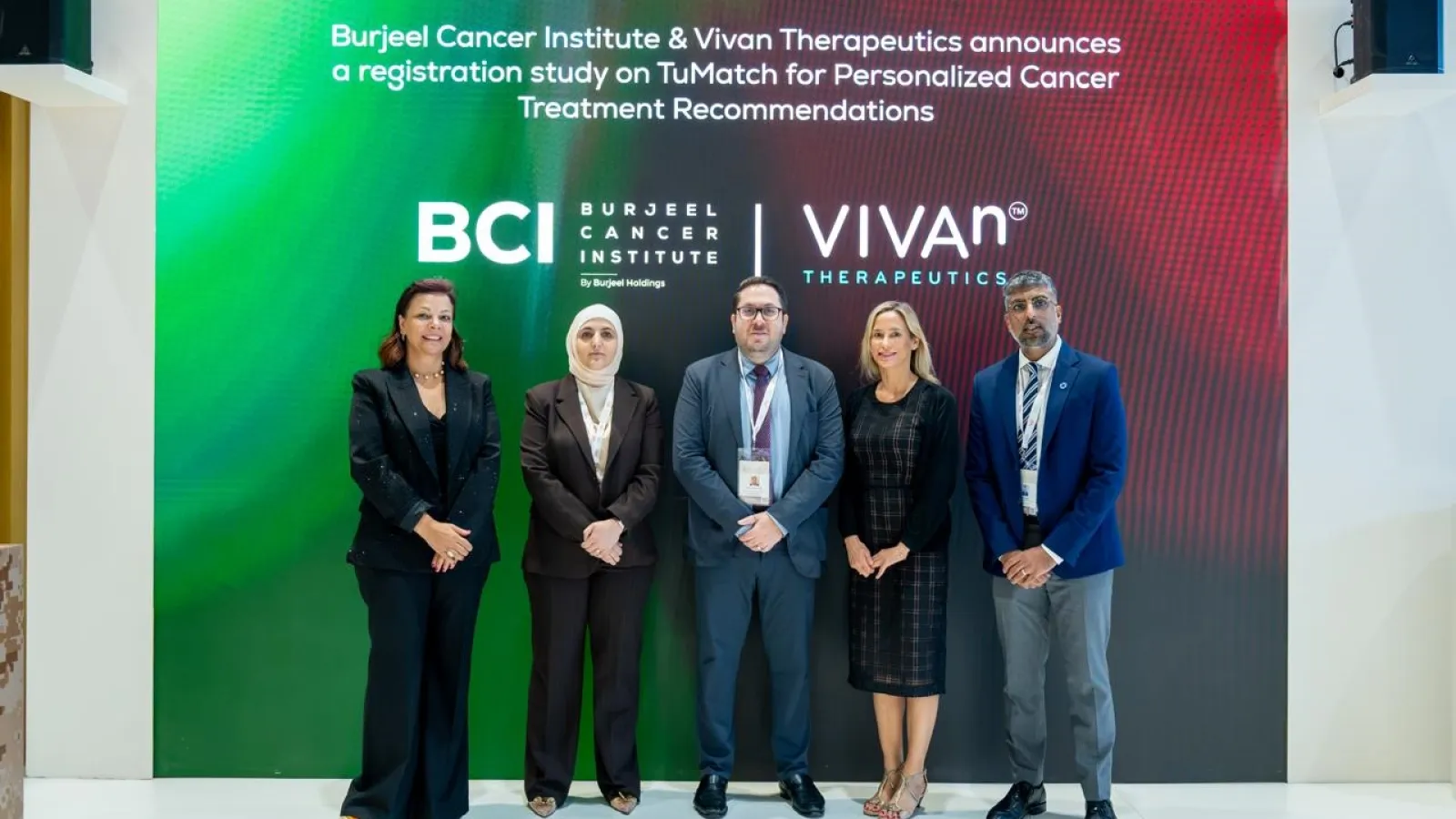
Vivan Therapeutics, a precision oncology startup backed by Abu Dhabi's Hub71 tech ecosystem, has received all regulatory approvals to begin a clinical registration study of its TuMatch platform at Burjeel Cancer Institute in Abu Dhabi. The study targets colorectal cancer patients and is one of the first regulatory clearances in the emirate for AI-enabled clinical decision support software in oncology, a milestone that positions the UAE as an active trial geography, not merely a deployment market.
TuMatch analyses a patient's tumour genomic profile against Vivan's proprietary drug-response dataset, cross-referenced with published clinical evidence. That dataset was built using an in-vivo Drosophila "avatar" screening method developed with Mount Sinai Medical Center, in which fruit-fly models are used as biological proxies for individual tumour behaviour. The output is a ranked list of therapeutic options for the treating oncologist, aimed specifically at patients who have exhausted standard-of-care regimens. Colorectal cancer presents with particular urgency in the UAE, where the disease is both more commonly diagnosed and frequently identified at a younger age or later stage than in Western populations.
From validated platform to live clinical decision-making
The prospective study will enrol at least ten patients and will be led by Prof. Humaid Al Shamsi, CEO of Burjeel Cancer Institute. Alongside clinical outcomes, the trial is explicitly designed to capture health economics and value-based care data. That is significant: the evidence generated is intended to support reimbursement discussions with payers and to shape how AI decision-support tools are adopted across the broader UAE health system. As Laura Towart, Vivan's founder and CEO, put it: "This approval takes TuMatch from a validated platform to a tool being used in live clinical decision-making. The evidence we generate will underpin our regulatory and reimbursement pathway well beyond the UAE."
The Abu Dhabi study sits within a wider clinical programme that includes a planned multicentre trial in pancreatic and other gastrointestinal cancers, with sites in Europe and the GCC. Data from both programmes will feed Vivan's CE mark application and its FDA submission for TuMatch, making the UAE trial a structural building block for global regulatory clearance rather than a standalone regional exercise.
Gulf health economics as a global regulatory lever
The cross-sector read-across here runs deeper than a single oncology trial. Abu Dhabi is deliberately constructing an innovation infrastructure, through Hub71, the Abu Dhabi Global Market financial free zone, and anchor clinical institutions such as Burjeel, that can compress the distance between AI model development and regulatory-grade clinical evidence. For precision medicine companies, that is a genuinely attractive combination: a younger, genomically distinct patient population generating novel outcomes data, a regulatory environment willing to be a first-mover on AI software approvals, and a payer landscape motivated by long-term health economics rather than short-cycle reimbursement politics.
That dynamic has broader implications for capital allocation in the biotech-AI convergence space. Sovereign-wealth-aligned ecosystems in the Gulf are increasingly being used not only to attract companies but to generate the clinical and health-economics datasets that underpin regulatory submissions in Europe and the US. In that framing, the Vivan trial is less a regional pilot and more a deliberate strategy to use Gulf infrastructure as a route to accelerate global regulatory timelines. Investors watching the pipeline of CE mark and FDA applications from AI-in-oncology companies should note how often Abu Dhabi now appears as a study site in the supporting evidence packages.
For the wider AI-in-healthcare sector, the reimbursement data dimension is the most consequential element of this announcement. Clinical efficacy evidence for AI decision-support tools has been accumulating for several years; the bottleneck is now health-economics evidence capable of satisfying payers in multiple jurisdictions. Studies designed from the outset to capture that data, as Vivan's is, represent a structural shift in how AI healthcare companies are building their market-access cases.