
Qatar Insurance Group Reinvents Insurance with Agentic AI
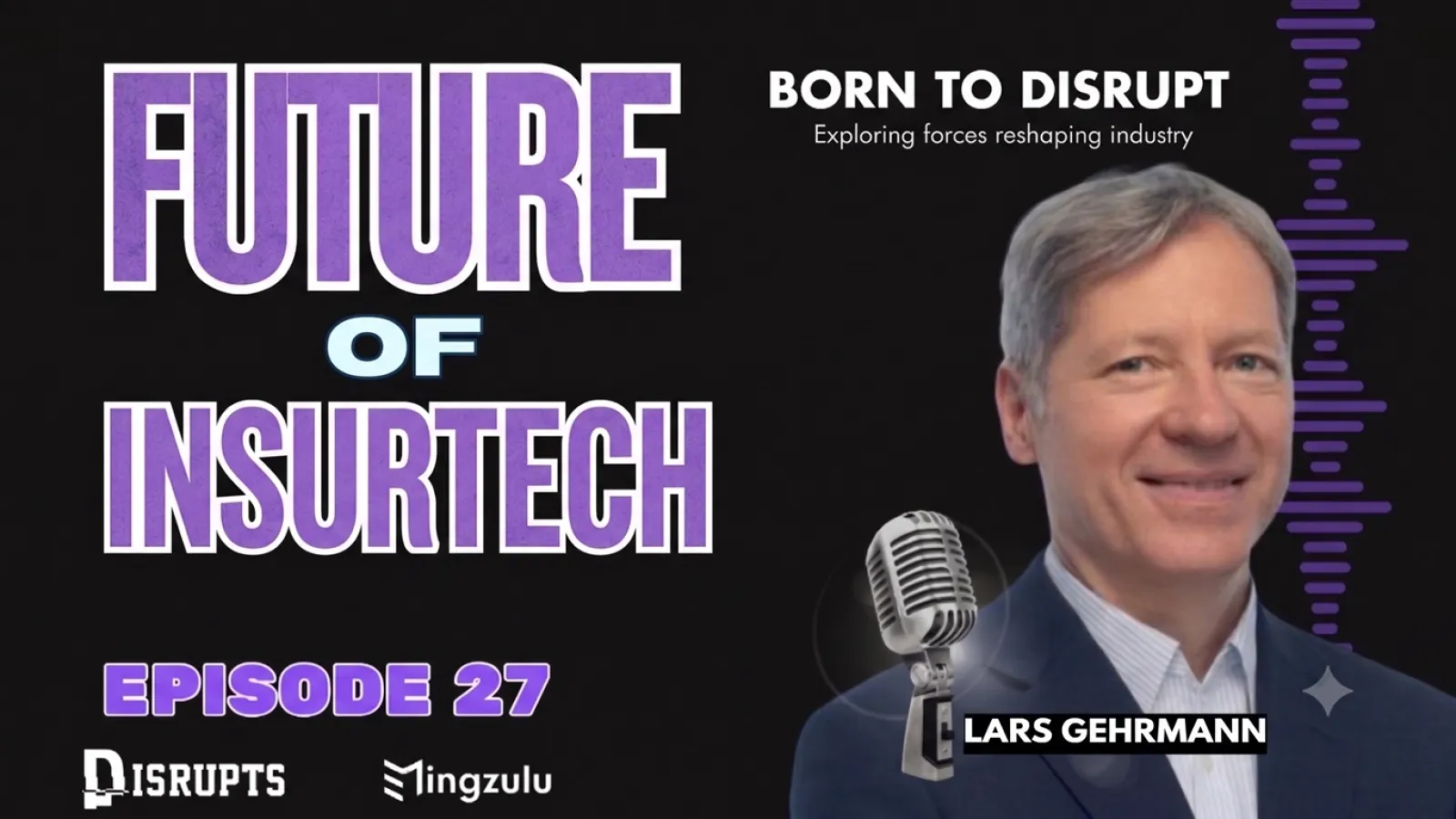
Lars Gehrmann , former Group Chief Digital and AI Officer at Qatar Insurance Group, is driving a structural shift across the Middle Eastern insurance sector by transitioning corporate operations from generative AI testing to a fully agentic architecture. Speaking on the Born to Disrupt podcast, Gehrmann (former QIC Group Chief Digital and AI Officer) revealed a vision where a human-in-the-loop autonomous ecosystem could allow a lean team of ten professionals to manage hundreds of millions in Gross Written Premium. The approach marks a profound evolution in how incumbents utilize machine learning to manage risk exposure, optimize back-office efficiency, and launch next-generation products in highly fragmented regional markets.
The transition comes at a time when the broader seven-trillion-dollar global insurance sector faces intense scrutiny regarding its innovation velocity relative to traditional financial technology providers. While industry critics often claim InsurTech lags several years behind FinTech, Gehrmann dismissed the comparison as fundamentally flawed due to contrasting product dynamics. FinTech operates as a high-engagement pull category with frequent daily interactions, whereas insurance remains a low-touch push product typically engaged only once or twice a year. Consequently, sustainable innovation within the sector requires a fundamental redesign of underwriting logic and embedded models rather than the mere deployment of consumer-facing mobile applications.
To bridge this gap, corporate strategy at QIC Group during his tenure has evolved beyond localized value pockets like automated claims processing or digital distribution channels. While the organization heavily utilized machine learning before the current wave of large language models, the true shift lies in multi-agent orchestration. Gehrmann noted that the industry is experiencing a "transformational change of the way how insurance is operating" as corporate strategy embraces agentic workflows. By embedding human-in-the-loop safeguards, the emerging model redefines operational capacities, enabling a tiny operational core to oversee vast volumes of business without compromising regulatory compliance or underwriting integrity.
Implementing these systems requires an aggressive expansion of organizational capability across infrastructure, technology, and people. The group, during his tenure, scaled enterprise tools including Microsoft Copilot alongside cognitive models like Gemini, Claude, and ChatGPT to build over fifty distinct artificial intelligence agents at varying stages of maturity. The result is an unprecedented acceleration in development cycles. Gehrmann explained that the journey from an initial business concept to a production-ready application has compressed from months to a matter of days or weeks, transforming corporate innovation from isolated experimentation into a scalable organizational muscle.
Despite the rapid pace of technical execution, scaling autonomous systems within the region requires navigating complex geopolitical and regulatory realities. Chief among these is the strict data residency requirements enforced by regional authorities. Historically, localized data mandates combined with infrastructure constraints created an implementation bottleneck, with businesses occasionally limited because there are "not enough GPUs in the region" to satisfy standard business users. However, Gehrmann indicated that the landscape has shifted due to the maturity of smaller, highly optimized models capable of delivering advanced cognitive results on modest local server infrastructure, effectively satisfying compliance parameters while preserving local data integrity.
This balance between technological autonomy and regulatory compliance directly influences ongoing debates regarding workplace automation and the global financial talent pool. While tech executives globally express concern over shifting job dynamics, the reality inside specialized financial institutions presents a different narrative. Gehrmann explained that the insurance sector simply does "not have enough skilled workers in the sector," meaning talent is frequently burdened with manual overhead. Rather than displacing human labor or closing off entry-level pipelines for university graduates, autonomous agents serve to strip out repetitive friction. Freeing skilled personnel allows their cognitive focus to shift entirely toward complex risk calculation and proactive business creation, creating a net positive expansion in commercial output.
This operational efficiency underpinned the broader investment thesis of QIC Group’s corporate venture capital arm, QIC Digital Venture Partners. As an active institutional investor in the regional ecosystem, the group backs established digital platforms like Amenli, Waada, and WellX, while establishing strategic relationships with top-tier global insurers. The focus centers on deploying embedded and parametric insurance structures that trigger automatic payouts based on verified data points, reaching previously underserved demographics through microinsurance lines, income protection, and lifestyle risk products.
While the regional ecosystem benefits from massive national transformation programs across the Gulf, geographic fragmentation prevents a seamless cross-border scale model similar to pan-African mobile money networks. Regulatory variances between individual states mean that regional startups are more likely to expand deeply within the Middle East rather than exporting infrastructure to the global north. Gehrmann concluded that while the regional market remains specialized and structurally distinct, the deployment of agentic models will fundamentally alter how incumbents calculate risk exposure, control internal costs, and deploy capital over the long term.