
ParaZero lands first US Tier-1 defence order for drone-intercept pods
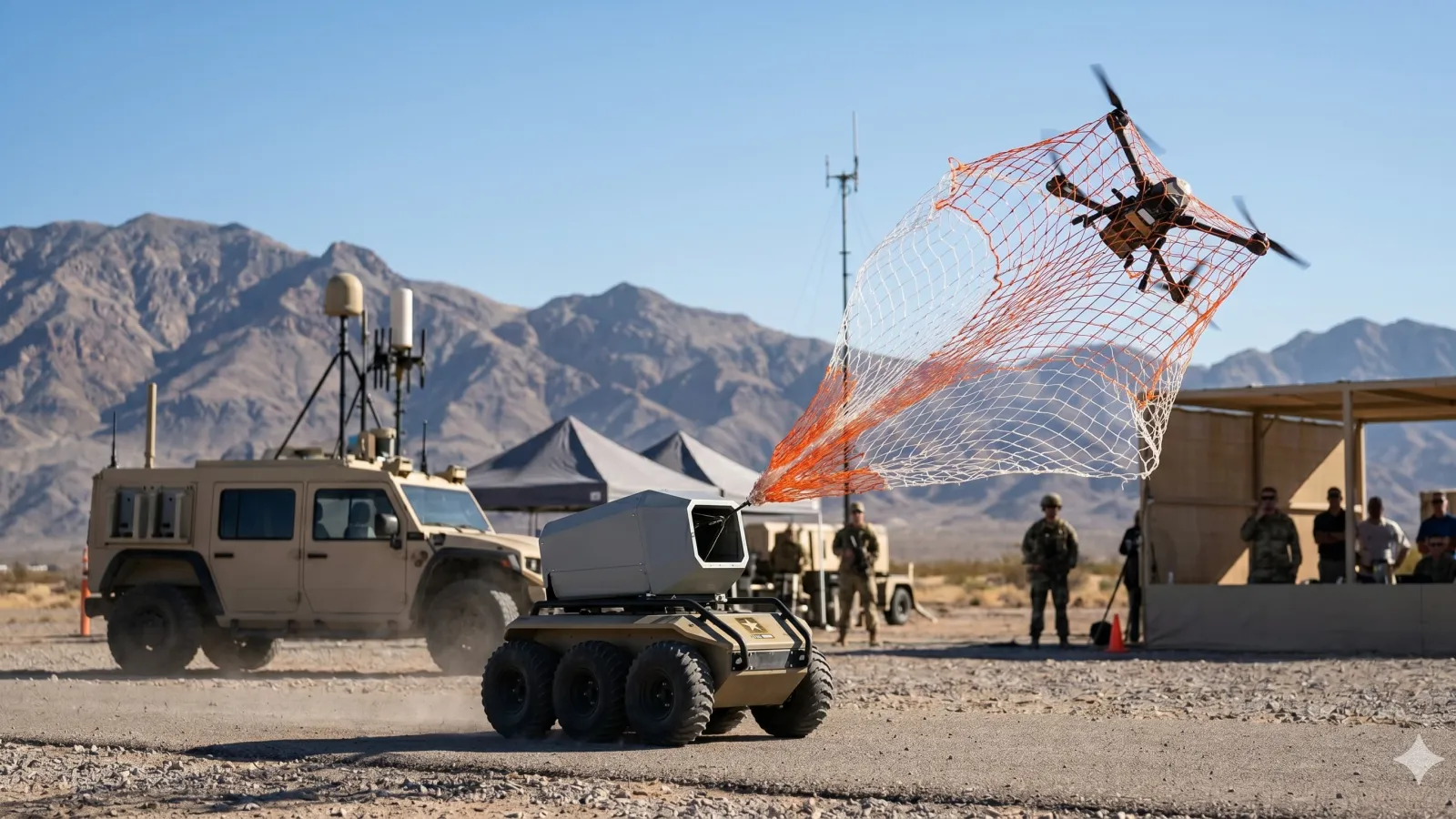
ParaZero Technologies, the Nasdaq-listed Israeli aerospace-defence firm, has received its first order from a US-based Tier-1 defence corporation for its DefendAir Net Pods — compact, net-launching interception modules designed to physically capture hostile drones rather than destroy them. The unnamed customer intends to integrate the pods into autonomous defence platforms, marking a meaningful step for a company that has, until now, operated largely at the commercial and governmental fringes of the counter-UAS (uncrewed aerial systems) market.
The size and value of the order were not disclosed, and the customer identity was withheld — standard practice in US defence procurement, where prime contractors routinely obscure supply-chain relationships for operational security reasons. What the announcement does confirm is that a major US defence integrator has evaluated and selected a non-kinetic, non-explosive intercept layer for autonomous platform deployment, a choice that carries strategic weight in its own right.
A New Intercept Paradigm Enters the Procurement Stack
DefendAir's core proposition is precision without blast radius. Where conventional hard-kill counter-UAS systems — radio-frequency jammers, directed energy weapons, or explosive interceptor missiles — risk collateral damage in dense or urban environments, net-based physical capture trades speed for safety. The approach is particularly relevant in scenarios where downed-drone forensics matter (intelligence value of intact hardware) or where civilian proximity makes kinetic solutions legally or politically untenable.
Ariel Alon, ParaZero's CEO, said the order represents "a significant step forward in penetrating the world's largest Counter-UAS market," adding that autonomous net-based interception will play "an increasingly important role in layered Counter-UAS defence, particularly in environments where precision and reduced collateral risk are critical." The language of layered defence is deliberate: no single intercept technology dominates the threat spectrum, and procurement strategies at the Tier-1 level increasingly reflect that reality by assembling complementary kill-chain components from multiple vendors.
Convergence Context: Autonomous Platforms, AI-Guided Threat Response
The broader significance of this order sits at the intersection of autonomous systems and the accelerating drone-threat landscape that has been stress-tested in conflicts from Ukraine to the Red Sea. Counter-UAS is no longer a niche procurement category: the US Department of Defense has publicly flagged small uncrewed systems as one of its fastest-growing threat priorities, and allied governments across Europe and the Gulf have followed with their own programme accelerations.
For cross-sector investors, the story is partly about the supply-chain topology of this emerging market. The counter-UAS ecosystem spans semiconductors (for onboard processing and RF sensing), robotics and autonomous systems, defence primes, and increasingly AI-inference platforms that enable real-time threat classification and intercept sequencing. Companies like ParaZero — small-cap, IP-focused, Nasdaq-listed but Israel-headquartered — occupy a classic dual-use position: their technologies are validated in genuine operational environments (Israeli defence proximity is itself a proving ground) but their commercial scaling depends on cracking the US prime-contractor supply chain. This first Tier-1 order is precisely the credentialing event that de-risks that path.
The timing also intersects with a broader reconfiguration of Western defence procurement following years of under-investment. NATO member commitments to raise defence spending towards and beyond 2% of GDP are translating into expanded programme budgets, and autonomous systems — both offensive drones and the counter-measures against them — are absorbing a disproportionate share of incremental spend. For smaller specialist vendors, the window to establish approved-supplier status with Tier-1 primes is arguably narrowing as the primes consolidate their preferred ecosystems.
Whether this initial order converts into a sustained, scaled programme remains to be seen. ParaZero's forward-looking disclosures are carefully hedged, and a single undisclosed-volume order does not, on its own, validate the commercial thesis. But it establishes the technology in a procurement context that opens doors to follow-on integration across multiple platforms — and that is the signal cross-sector defence-tech investors will be watching.