
Turkish Airlines seals 600-engine CFM deal with MRO hub in Türkiye
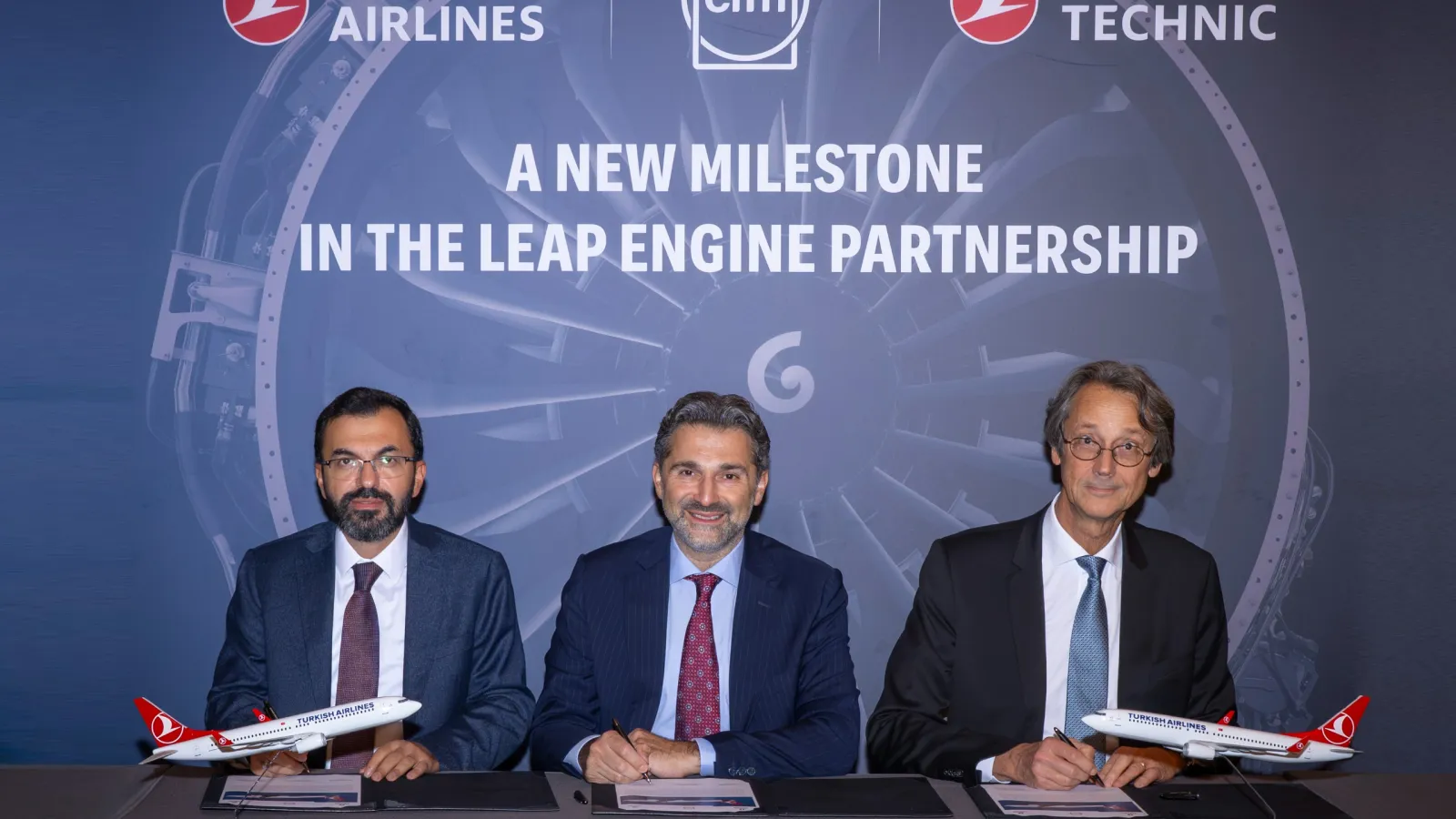
Turkish Airlines and CFM International have signed a Memorandum of Understanding covering more than 600 LEAP-1B engines, folding in a long-term services agreement and a commitment to establish a new engine maintenance, repair and overhaul (MRO) facility on Turkish soil. The deal, announced in Istanbul on 16 October, extends a partnership stretching back nearly four decades and locks in the propulsion supply chain for the carrier's expanding Boeing 737 MAX programme.
The MoU builds on a fleet order disclosed in September, when Turkish Airlines announced 100 firm and 50 option 737 MAX aircraft. The latest agreement adds more than 300 new LEAP-1B engines, including spares, to the roughly 300 already in service or on order across the airline and its low-cost subsidiary AJet. All of those engines, totalling more than 600 units, will now fall under a single integrated services umbrella. CFM is a 50/50 joint venture between GE Aerospace and Safran Aircraft Engines; the MoU was signed by Turkish Airlines chairman Murat Şeker, Turkish Technic chief executive Mikail Akbulut, and Safran CEO Olivier Andriès.
Fleet strategy meets industrial policy
The agreement is notable not only for its scale but for its industrial dimension. The MRO facility component means Turkish Technic, already one of the world's larger third-party maintenance providers with a workforce of roughly 11,650, will extend its engine-level capabilities to the LEAP platform. For Türkiye, the move sits within a broader pattern of using flagship state-linked enterprises to anchor high-value aerospace manufacturing and services domestically, reducing dependency on foreign MRO capacity for a fleet that will number well over 150 narrow-bodies on the LEAP type alone.
Andriès framed the deal in terms of supply-chain philosophy as much as bilateral partnership: "The MoU demonstrates our broader commitment to an open MRO ecosystem, which provides airlines with flexibility and competitive services to improve operational performance and manage costs effectively." That framing matters at a time when engine OEMs face scrutiny over aftermarket pricing power; CFM is positioning the LEAP network as competitively maintainable, in contrast to some rival programmes where proprietary MRO lock-in has become a flashpoint with regulators and airline finance teams.
Convergence of geography, capital and supply chain
The macro-level read for cross-sector investors is straightforward: Istanbul is becoming a more deliberate node in the global aerospace supply chain. Turkish Airlines flies to more countries than any other carrier, a network breadth that generates disproportionate maintenance demand across multiple aircraft types. Anchoring LEAP MRO capability domestically converts that demand into a local industrial asset, one that can be offered to third-party operators in the region, generating fee income that sits outside the airline P&L.
For capital allocators watching aerospace services, the deal also signals that the post-pandemic MRO capacity crunch, which drove engine shop-visit costs sharply higher between 2022 and 2025, is now attracting long-term structural investment rather than pure spot-market arbitrage. CFM notes that its LEAP fleet has accumulated more than 100 million flight hours across more than 10,000 delivered engines; the high-pressure turbine durability upgrades and reverse bleed systems being rolled out across that fleet extend time-on-wing, but they also raise the technical complexity of maintenance events, creating a higher barrier to entry for independent MRO operators. Turkish Technic's ability to serve that work in-region, at competitive cost, is therefore both a commercial and a geopolitical asset for Türkiye as it deepens its position in the aerospace services economy. Investors in the wider aviation services space should note that similar MRO hub investments are emerging across the Gulf and South-East Asia, suggesting a structural shift in where engine maintenance value is captured globally.