
GE Aerospace acquires CPP in $11.75bn castings capacity bet
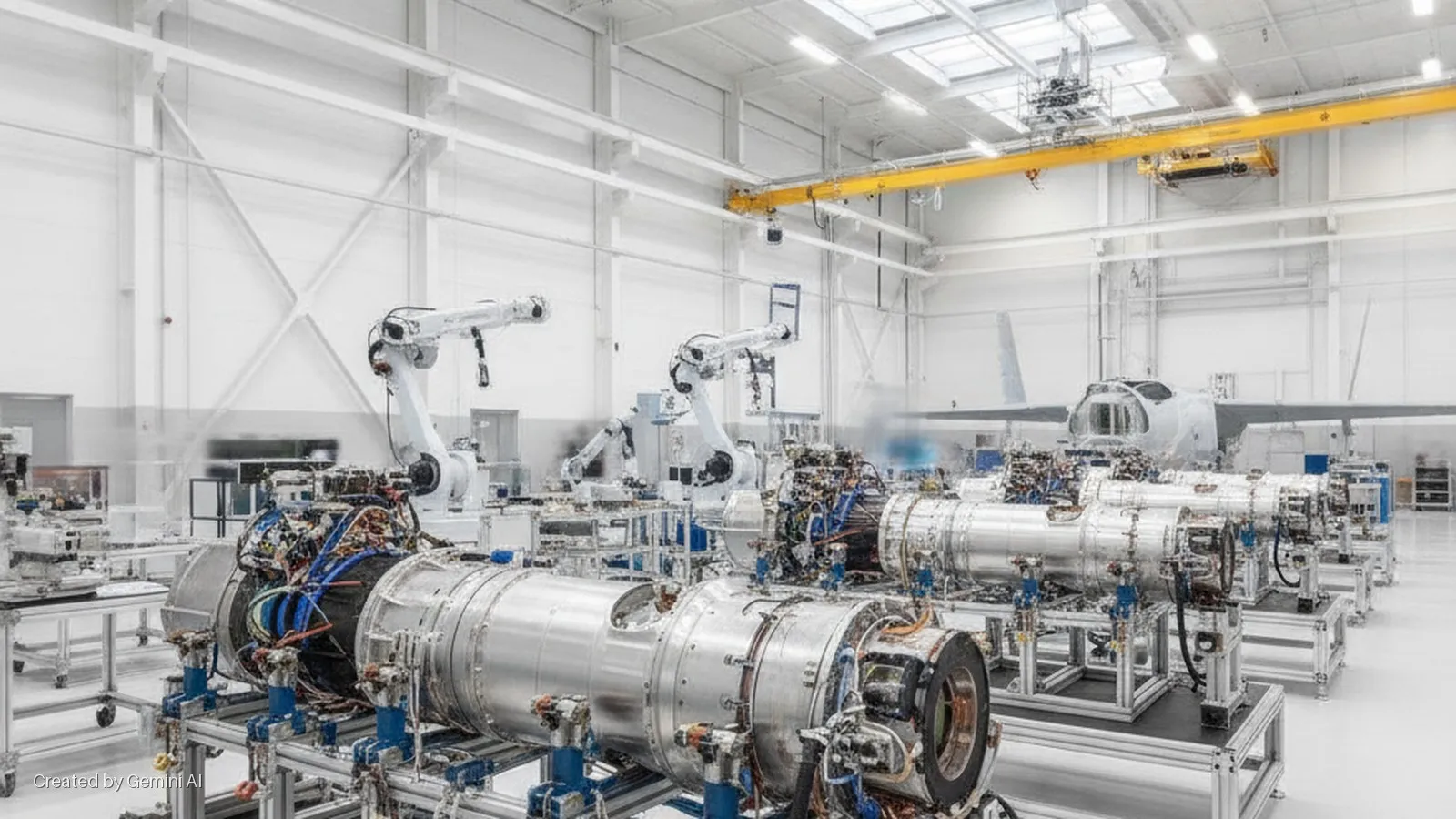
GE Aerospace has agreed to acquire Consolidated Precision Products (CPP), a Cleveland-based manufacturer of highly engineered castings for commercial and military aviation, in an $11.75 billion deal that ranks as one of the largest aerospace supply-chain acquisitions of the decade. The transaction, expected to close in the second half of 2027 subject to regulatory clearance, will be financed with $7 billion in cash and the remainder in new debt. The sellers are private equity firms Warburg Pincus and Berkshire Partners, who have jointly owned CPP since transforming it into what the company describes as one of the world's largest producers of investment and precision sand castings.
The strategic logic is blunt. Commercial aviation is running at near-peak order books, aftermarket services demand is outpacing pre-pandemic highs, and defence procurement for advanced engine platforms is accelerating simultaneously. CPP supplies super alloy, titanium, aluminium, magnesium and steel castings across a customer roster that spans commercial narrowbodies, regional jets, military aircraft, helicopters and industrial gas turbines. With roughly 6,600 employees across more than 20 facilities, it is a scaled industrial platform, not a niche specialist. GE Aerospace has been a CPP customer for over fifteen years, meaning the integration risk is lower than a cold acquisition, though the price tag at approximately 26 times 2027 EBITDA before synergies reflects that scarcity premium.
Vertical integration as supply-chain defence
The deeper significance of this deal is what it signals about the architecture of aerospace supply chains in the post-globalisation era. The casting segment has long been a bottleneck in engine production: super alloy investment casting is capital-intensive, technically demanding, and subject to long qualification cycles. During the post-Covid ramp, both GE Aerospace and its rival Safran flagged casting capacity as a binding constraint on engine delivery rates. By absorbing CPP outright, GE Aerospace is effectively converting a shared supply bottleneck into a proprietary asset, a move with direct read-across for competitors still reliant on the same pool of independent foundries.
GE Aerospace chairman and CEO H. Lawrence Culp Jr. framed the rationale in operational rather than financial terms, citing the company's FLIGHT DECK lean-manufacturing system as the mechanism for driving "higher output" and integrating "design and manufacturing to bring engine technologies to market faster." That language points toward next-generation engine platforms where airfoil geometry and materials are becoming genuine differentiators. Locking in casting capacity now positions GE Aerospace to control the manufacturing readiness timeline for those platforms rather than negotiating it with outside suppliers.
Capital allocation and defence-industrial ripple effects
The deal's financing structure merits attention from macro investors. GE Aerospace says there is no change to its existing capital allocation plans, implying the $11.75 billion is being absorbed without dividend or buyback sacrifice. Priced at approximately 18 times 2027 EBITDA including expected net synergies, the multiple is aggressive by industrial standards but defensible if the company's own engine order book provides a captive revenue floor for CPP's output.
The defence angle extends the strategic picture further. CPP manufactures castings for weapon systems and military aircraft alongside its commercial work. As NATO members accelerate procurement budgets and the US Department of Defense pushes for resilient domestic supply chains under its defence-industrial base initiatives, a vertically integrated GE Aerospace-CPP entity sits in a stronger position to bid on long-cycle military programmes where casting qualification is itself a barrier to entry. Independent precision casters serving only defence primes face renewed pressure: a tier-one engine manufacturer internalising casting capacity changes the competitive dynamics for the entire supply tier. For investors with cross-sector exposure spanning aerospace, defence procurement and industrial private equity, this transaction is a clear signal that the era of lean, outsourced aerospace supply chains is giving way to a more integrated, strategically guarded model.