
South Korea lifts GMT stake to $110m in next-gen telescope race
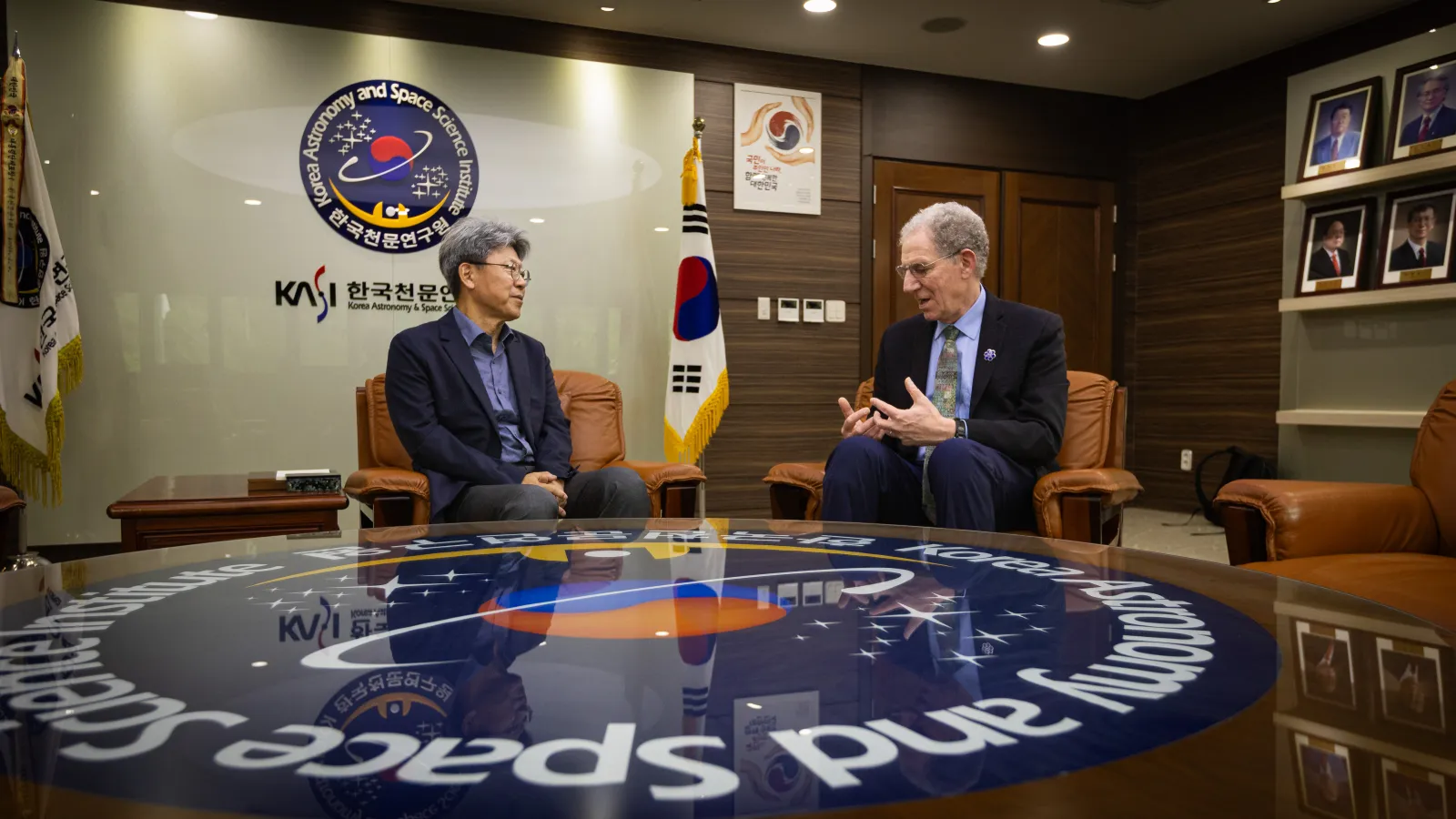
South Korea's Korea Astronomy and Space Science Institute (KASI) has increased its total commitment to the Giant Magellan Telescope (GMT) to nearly $110 million, cementing Seoul's position as the third-largest partner in one of the most consequential ground-based astronomy projects of the century. The additional funding arrives at a strategically sensitive moment: the international consortium, which includes 16 universities and research institutions spanning the US, Australia, Brazil, Israel and Taiwan, has elected to privately underwrite the US National Science Foundation's Major Facilities Final Design Phase rather than wait on federal appropriations. That phase began in June 2025 and is scheduled to conclude in 2027.
The decision to bypass the NSF funding queue is not incidental. It reflects a wider pattern in big-science infrastructure: state-backed institutions and international consortia are increasingly moving to self-fund critical path milestones rather than absorb the delays that come with government budget cycles. For South Korea, the calculus is explicit. KASI's renewed investment is part of Seoul's long-term strategy to secure access to the next generation of "extremely large telescopes" (ELTs), observatories that will carry five times the light-collecting area and up to 200 times the resolution of today's leading instruments.
Seoul's deep-tech science diplomacy in action
KASI's contribution is not a passive financial stake. The institute is an active engineering partner on two of the GMT's flagship instruments: G-CLEF, a high-resolution spectrograph designed to detect and characterise Earth-like exoplanets orbiting nearby stars, and GMTNIRS, a near-to-mid-infrared spectrograph targeting the formation of the earliest galaxies and planetary systems. Building these instruments in-house cultivates exactly the precision-engineering and astrophysics workforce that South Korea's new civilian space agency, the Korea AeroSpace Administration (KASA), will need as it scales its own space science programme in the coming decade.
"KASI's additional investment comes at a critical time in the project's history," said Taft Armandroff, board chair of the Giant Magellan Telescope, noting that the institution has shaped the observatory's direction since joining in 2009. The GMT is sited in Chile's Atacama Desert, a location that the Chilean ambassador to Seoul notes will account for roughly 75% of global astronomical observation capacity within a decade, largely because of the altitude, atmospheric stability and perpetually dark skies that no alternative site can replicate.
The convergence angle: science infrastructure as geopolitical capital
For the cross-sector strategist, the GMT story is best read as a chapter in a larger geopolitical narrative: the race among mid-sized science powers to anchor themselves inside the infrastructure that will define the next era of discovery. South Korea's position mirrors the logic driving sovereign wealth into AI compute clusters and biomanufacturing hubs. Controlling access to the GMT's observation time gives KASI-affiliated researchers, and by extension South Korean universities and industry partners, early-mover advantage on discoveries that will eventually feed into fields well beyond pure astronomy: exoplanet atmospheric chemistry informs astrobiology and, indirectly, synthetic biology research agendas; deep-universe spectroscopy generates datasets that stress-test AI signal-processing models at scales no terrestrial experiment can match.
The consortium model itself is a structural innovation worth watching. With 16 institutions across nine countries privately funding a phase that would normally require an NSF budget line, the GMT is piloting a capital-allocation architecture that could become a template for other big-science projects where sovereign-funded partners want to accelerate timelines beyond what any single government can deliver. For macro investors tracking where scientific soft power is being built, the GMT's partner list reads like a map of the countries positioning for the next cycle of deep-tech leadership: the US, South Korea, Australia, Brazil, Israel and Taiwan all have skin in the game, and the funding dynamics suggest that position is being actively contested.
The GMT is targeted for completion in the 2030s. The NSF Final Design Phase conclusion in 2027 will be the next meaningful signal of whether the private-funding model is holding and whether the consortium can maintain the critical path without federal support.