
NewOrbit secures first commercial VLEO launch slot for 2028
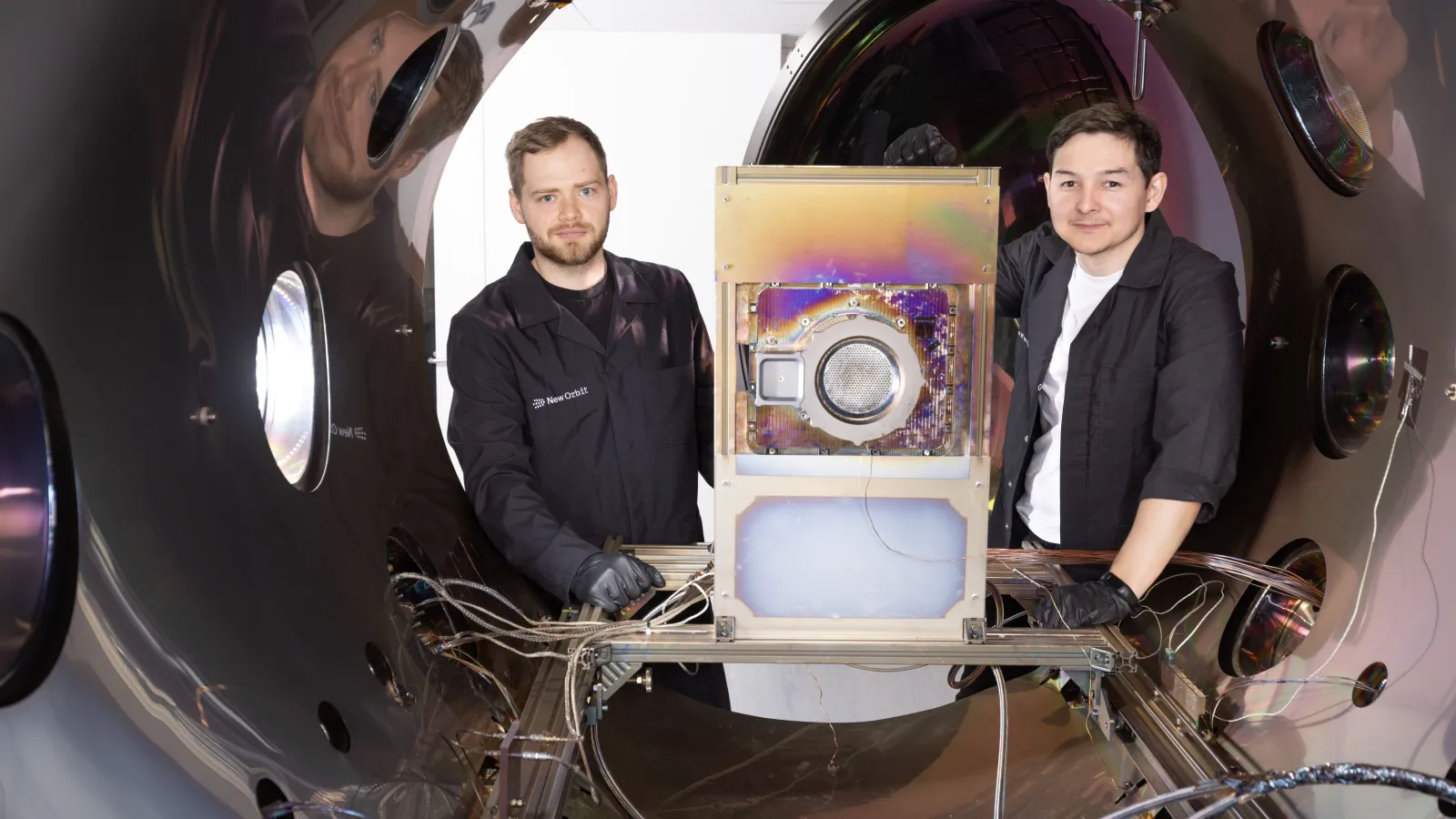
NewOrbit, the Reading-based satellite manufacturer, has confirmed a Q3 2028 launch slot for NEO-1, its debut spacecraft and the first commercial satellite designed to sustain operations in Very Low Earth Orbit (VLEO), the band of space sitting between 200 and 300 km above Earth. The slot was secured through Paris-based launch broker RIDE!, with Japanese optics specialist Genesia Corporation announced as the mission's first payload customer. Two further customers have signed ahead of the launch, with additional names expected soon.
The milestone follows NewOrbit's oversubscribed $18.5 million Series A, led by Voyager Ventures, earlier this summer. The fundraise and the confirmed launch slot together mark a substantive shift: from concept to contracted commercial mission in a segment of orbital space that has, until now, existed outside the reach of private enterprise.
The physics case for VLEO
The engineering challenge at these altitudes is considerable. Atmospheric drag, atomic oxygen erosion and aerodynamic torque have historically made sustained operations below 300 km impractical for anything beyond experimental missions. Only two spacecraft have ever managed it: ESA's GOCE gravity-mapping satellite, which held its orbit for more than four and a half years, and JAXA's SLATS "Tsubame" platform, which holds the Guinness World Record for lowest orbital altitude by an Earth observation satellite at 167.4 km. NewOrbit has now appointed four senior GOCE engineers to its technical advisory board, including mission scientist Dr Mark Drinkwater and propulsion manager Dr Michael Fehringer, giving the company arguably the deepest concentration of operational VLEO expertise ever assembled on a single commercial programme.
The commercial case rests on resolution economics. An instrument producing 50 cm ground resolution from 500 km would, the company says, deliver close to 25 cm from NEO-1's operating orbit with no redesign. For Earth observation operators under pressure to squeeze more performance from smaller, cheaper hardware, that trade-off is significant. The rideshare model means payload developers can access VLEO without designing their own spacecraft, removing a capital barrier that has kept the altitude band largely off-limits to commercial actors.
Genesia's involvement is particularly telling. The Japanese firm built the telescope that imaged Earth from Tsubame's record-low altitude, giving it rare verified heritage at exactly the orbital regime NEO-1 targets. That Genesia has moved from JAXA-adjacent heritage work to a commercial rideshare booking signals a broader shift: capabilities that were once the preserve of government space agencies are migrating into commercial supply chains.
Convergence implications: from space to connectivity and defence
The strategic significance of NEO-1 extends beyond Earth observation. NewOrbit's own documentation cites direct-to-device communications as a primary application for VLEO assets, alongside high-resolution imagery. Satellites operating at 200 to 300 km require less transmit power to reach ground-level devices, reducing the infrastructure burden for mobile network operators seeking to extend coverage via non-terrestrial networks. That positions VLEO as a potential enabler for the next generation of satellite-to-smartphone connectivity, a market where operators including AST SpaceMobile and Starlink's direct-to-cell offering currently work from considerably higher altitudes.
The defence and intelligence read-across is equally direct. Sub-metre resolution imagery from smaller, lower-cost platforms widens the pool of actors capable of persistent surveillance from orbit. As sovereign and commercial demand for timely geospatial intelligence grows, VLEO assets could compress the cost of high-resolution tasking in ways that conventional constellations operating above 500 km cannot match. For defence procurement offices and the investors backing dual-use space technology, NEO-1's progress will be a data point to watch well before its 2028 launch date.
NewOrbit's Thames Valley manufacturing facility is scheduled to open in 2027, giving the programme roughly a year of production runway before the planned lift-off. The company is backed by Voyager Ventures, Lifeline Ventures and Atlantic.vc.