
Firefly Aerospace wins NASA payload processing contract at Vandenberg
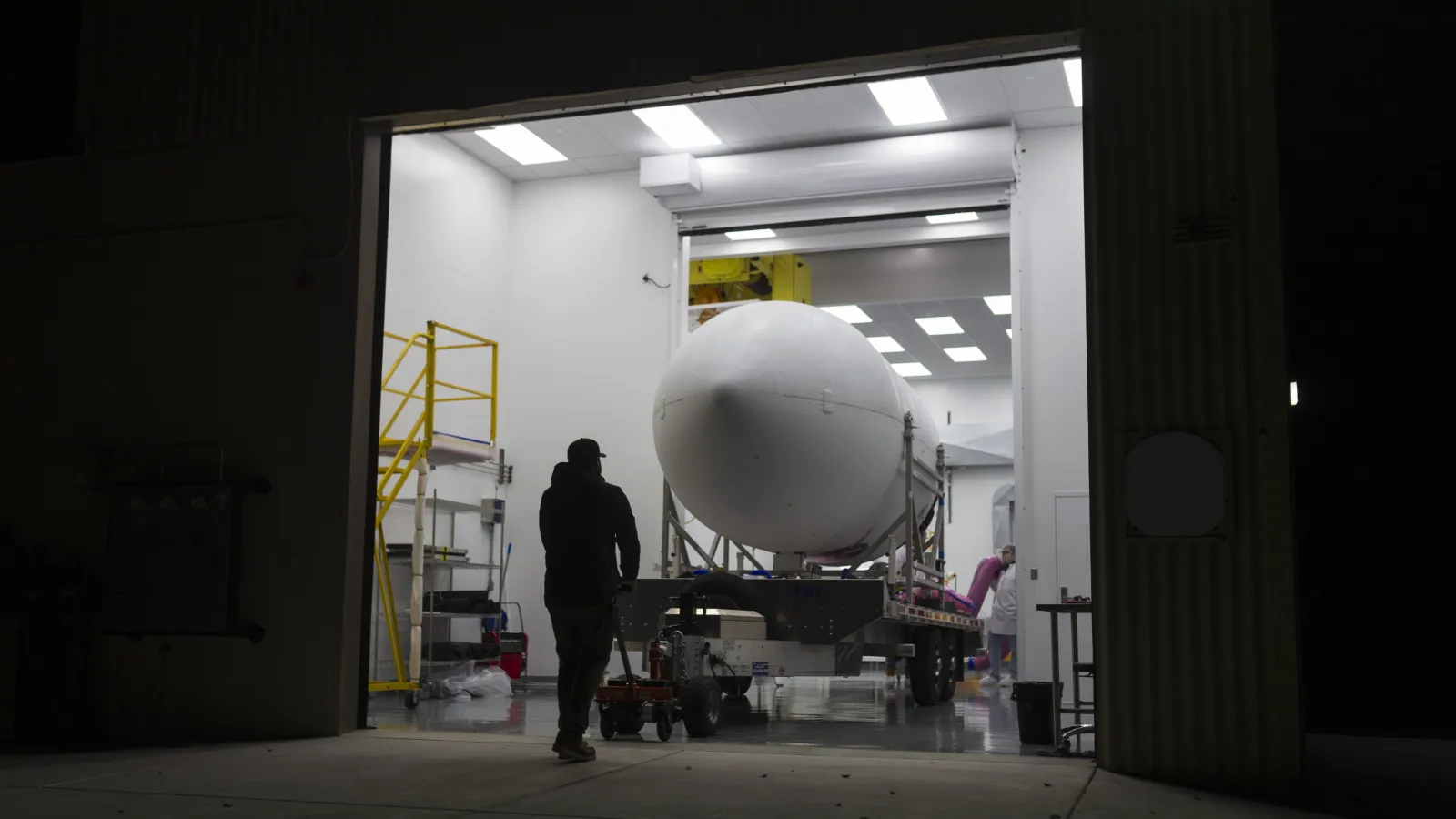
Firefly Aerospace, the Cedar Park, Texas-based launch and space systems company listed on Nasdaq as FLY, has been awarded a Spacecraft Processing Operations Contract by NASA, making it eligible to compete for task orders providing payload processing facilities and services at Vandenberg Space Force Base (VSFB) in California. The announcement underscores a structural shift in how NASA is sourcing its ground-side logistics, moving away from government-operated facilities and towards commercially available infrastructure operated by launch providers themselves.
The contract covers a range of pre-launch services, including payload processing, propellant fuelling, integration, and encapsulation. Firefly's commercially operated Payload Processing Facility sits within half a mile of its Space Launch Complex 2 at the northern end of VSFB, positioning it to offer a near-seamless end-to-end service: payloads arrive, are prepared, and roll directly to the pad. The facility is equipped with an ISO 8 cleanroom, airlock, storage, and fuelling infrastructure capable of handling small and medium-size payloads, including hypergolic spacecraft, which require specialist handling due to the toxicity of their propellants.
Ground infrastructure as the new space bottleneck
Adam Oakes, Firefly's Vice President of Launch, noted that "reliable access to space depends on more than rockets, it depends on the infrastructure that gets payloads ready to fly." The observation is significant at a moment when the West Coast launch cadence is accelerating. Vandenberg serves as the primary US departure point for polar and sun-synchronous orbits, routes that are disproportionately important to Earth observation, weather, and signals-intelligence satellites. As launch vehicle availability has expanded, particularly for small and medium lift, payload processing throughput has emerged as a real scheduling constraint. Firefly's move to commercialise its own facility directly addresses that choke point.
The award builds on existing ties between Firefly and NASA. The agency's Quicksounder and INCUS satellites are already manifested on Firefly's Alpha rocket, giving NASA visibility into the company's operational reliability before this broader infrastructure relationship was formalised.
Convergence: from launch provider to space infrastructure platform
The strategic read-across here extends beyond a single contract. Firefly's trajectory, from launch vehicle developer to lunar lander operator to now a certified ground-infrastructure provider for NASA, mirrors the platformisation trend visible in other deep-tech sectors. Just as hyperscalers moved from compute to networking to physical data-centre operations, leading space companies are consolidating vertically across the full mission stack. This matters for capital allocators watching the space economy: the margin profile of recurring ground-services contracts differs substantially from the lumpy, execution-risk-heavy revenue of individual launch campaigns.
For the broader defence and sovereign-space customer base, the commercial payload processing model also signals a quiet but consequential shift in how government agencies are managing cost and schedule risk. By contracting commercial operators for ground processing rather than maintaining government-owned facilities, agencies like NASA can treat processing capacity as a variable cost, scaling it to launch cadence rather than fixed infrastructure spend. That logic, already familiar in cloud computing and logistics, is now migrating into the physical infrastructure of orbital access.
Firefly's positioning at VSFB also carries geopolitical relevance. As the US continues to expand its West Coast launch capability, the concentration of allied and US government payloads at Vandenberg makes the resilience and redundancy of processing facilities a quiet national-security consideration, one that benefits providers able to offer certified commercial alternatives to government-run infrastructure. Investors tracking the convergence of defence procurement reform, commercial space economics, and infrastructure privatisation will find this contract a modest but telling data point in that longer arc.