
Firefly Aerospace extends Lockheed deal for 25 Alpha launches to 2031
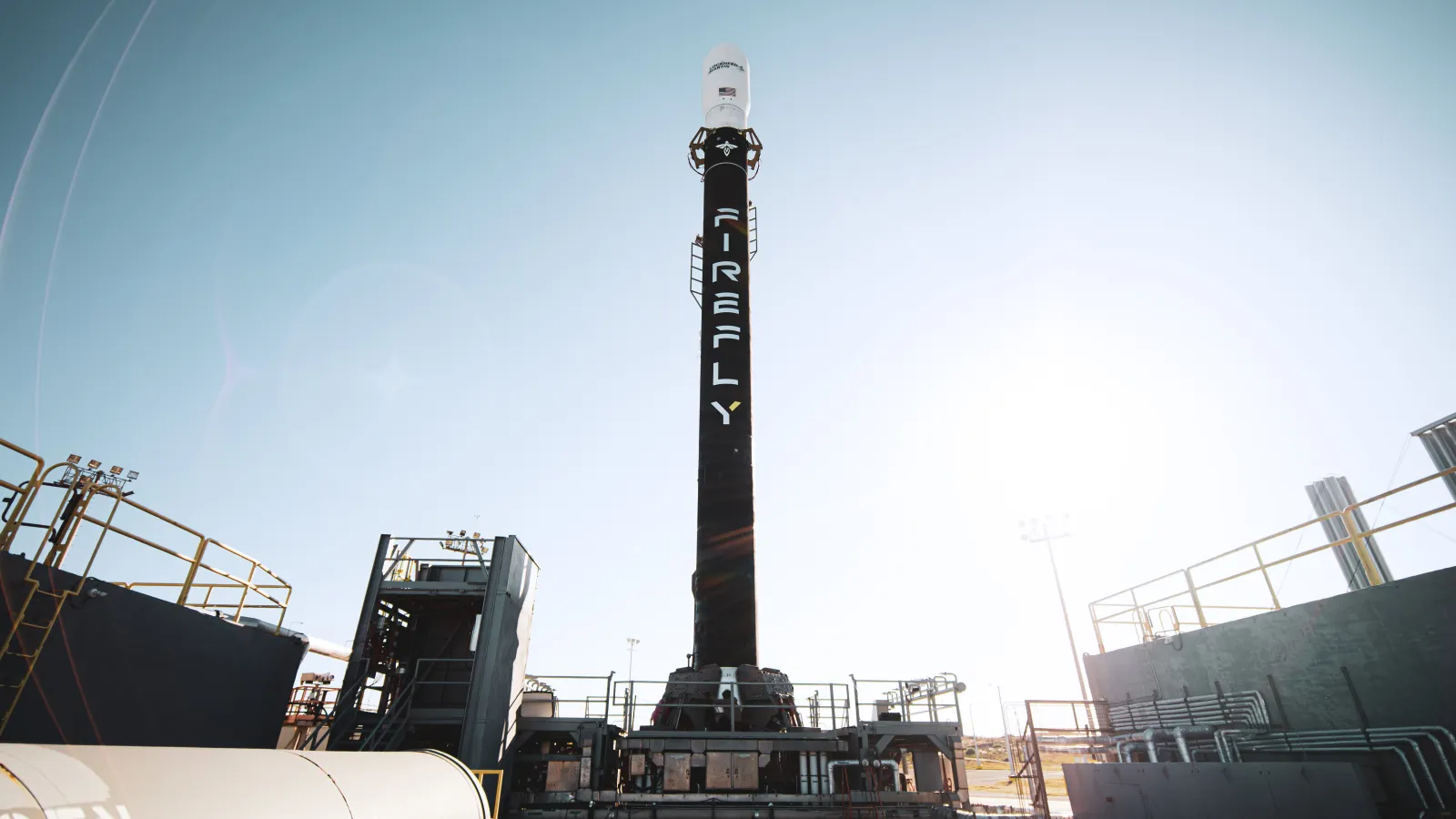
Firefly Aerospace (Nasdaq: FLY) has extended its multi-launch agreement with Lockheed Martin through 2031, securing up to 25 flights aboard its upgraded Alpha Block II rocket configuration. The deal, announced from Firefly's Cedar Park, Texas base, comes as the small-to-medium lift launch market faces a structural supply squeeze: dedicated payload capacity in the 1,000 kg class is constrained, and launch site diversity remains limited across Western commercial providers.
The Alpha Block II upgrade is central to the logic of the extension. Firefly says the new configuration improves manufacturability and reliability while enabling a higher production rate, allowing the company to respond to short-notice mission requirements. Jason Kim, Firefly's CEO, noted that "payload capacity is scarce and launch site diversity is limited," framing Block II as a direct answer to a gap the incumbent market is failing to fill.
Defence demand reshapes the small-lift calculus
Beyond commercial satellite delivery, the agreement explicitly covers national security missions, hypersonic testing support, and tactically responsive space access, a category that has grown sharply in strategic priority since the conflict in Ukraine demonstrated the operational value of rapid orbital deployment. The inclusion of hypersonic testing as an application is notable: this sits at the intersection of defence procurement and space infrastructure, and it signals that Firefly is positioning Alpha Block II as a dual-use asset rather than a purely commercial workhorse.
A third dimension of the partnership adds further strategic weight. Firefly, Lockheed Martin, and Seagate Space are jointly developing sea-based launch capabilities using Seagate's Gateway offshore platform. Maritime launch infrastructure is rare and operationally significant: it allows orbital inclination flexibility unachievable from fixed land sites, and removes dependency on a small number of congested launch complexes such as Vandenberg and Cape Canaveral. The Pentagon's interest in mobile, survivable launch infrastructure has grown alongside its broader push for resilient space logistics, making the Gateway collaboration a defence-relevant investment as much as a commercial one.
Capital and convergence across the launch economy
The Firefly-Lockheed extension sits within a broader restructuring of the launch services industry that investors and defence procurement officials are watching closely. SpaceX's Falcon 9 dominates medium-lift, but dedicated small-lift, where scheduling control and direct orbit insertion matter most, remains fragmented. Rocket Lab (Electron) and Firefly (Alpha) are the credible Western incumbents in this class; Relativity Space has pivoted away from Terran 1; and ABL Space suspended operations in 2023. The net effect is that the addressable market for assured, responsive small-lift has contracted to two serious commercial players.
For investors straddling defence-tech and space equity, the implications are direct. Firefly's Nasdaq listing gives public market exposure to a segment of the space economy that has historically been accessible only through defence prime contractors or private venture rounds. As government customers, both US and allied, accelerate demand for tactically responsive space and on-orbit logistics, the launch-services layer of the stack becomes a chokepoint with pricing power. The extension of a named anchor contract through 2031 provides a revenue visibility signal that is uncommon in a sector accustomed to single-mission awards.
Geographically, the sea-launch angle also carries longer-term significance. Fixed Western launch sites are geographically constrained and, in a peer-adversary threat environment, increasingly viewed as strategic liabilities. Mobile offshore launch capability, combined with a responsive rocket that can be readied within approximately 24 hours, Firefly claims this record from a previous commercial mission, offers a qualitatively different posture for allied defence planners thinking about orbital resilience in a contested environment.
The next test of that posture will be operational: Alpha Block II's flight cadence through 2027 will determine whether Firefly can sustain the production rate its agreements now require.