
Maven Robotics lands $100m Series A as Gulf capital backs physical AI
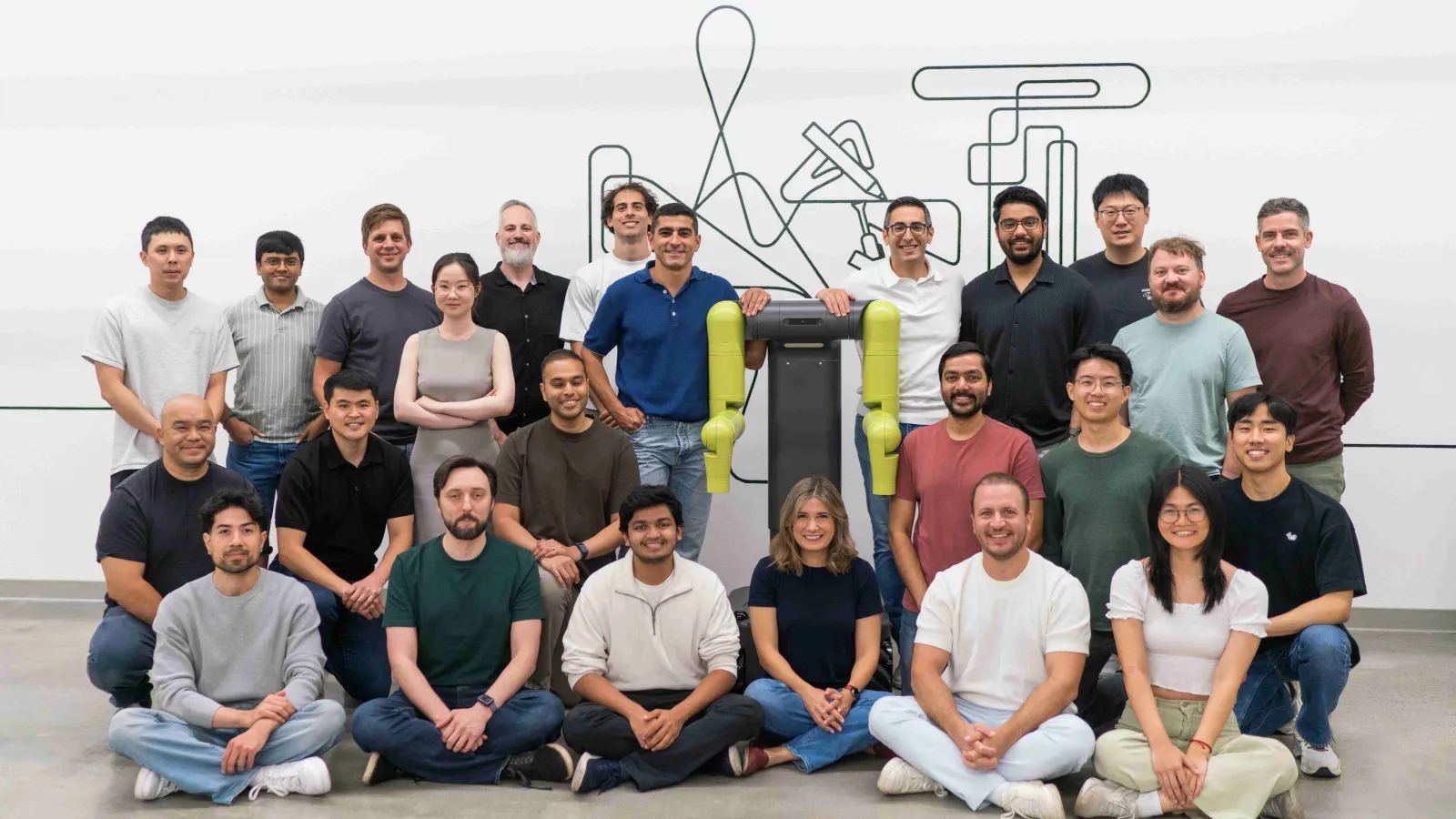
Maven Robotics, a Santa Clara-based industrial robotics company founded in 2024, has closed a $100 million Series A led by Abu Dhabi investors Shorooq and Presight, a G42-affiliated applied AI firm listed on the Abu Dhabi Securities Exchange. The round also drew in RoboStrategy, LocalGlobe, Vine Ventures and XTX Ventures, and was executed through the Presight–Shorooq AI and Bedaya Funds. The deal is notable not just for its size at the seed-to-Series-A stage, but for what it signals about the geography of frontier-tech capital: Gulf sovereign-adjacent investors are now writing cheques directly into the hardest layer of the AI stack, the physical one.
Maven builds wheeled, dual-armed robots designed to handle mixed-case palletising and tote management in logistics and manufacturing environments. The company says its machines already run up to sixteen hours a day at customer sites, with reported reliability above 99 per cent. The $100 million will fund a fleet of 250 third-generation units, with a fourth-generation design already in development. Maven's founders draw on backgrounds in autonomous systems and AI, and the company claims to have solved a critical bottleneck in physical AI: the data pipelines that allow hardware to learn continuously from real-world operation, rather than controlled lab conditions.
Gulf capital meets physical AI
The investment sits at a telling intersection of two macro trends Disrupts has tracked across sectors. First, the Gulf's AI ambitions are maturing beyond data centre construction and model training into applied deployment, particularly in industries where physical infrastructure and operational reliability matter as much as algorithmic performance. G42, through its Presight vehicle, brings not just capital but access to compute infrastructure and enterprise relationships across the UAE ecosystem. For a robotics company that needs to deploy at scale quickly, that network is arguably as valuable as the funding itself.
Second, the round reflects a broader shift in where serious robotics capital is being allocated. Warehouse automation has attracted a wave of well-funded competitors, but the market for mixed-case palletising alone is cited by Maven as an $80 billion addressable opportunity, a figure the company has not independently verified through a named third-party source. The wider warehouse automation market runs into the tens of billions further still. With labour costs rising across the US, Europe and parts of Asia, the economic case for autonomous materials handling is tightening in ways that make this a capital-efficient moment to scale.
"The first wave of AI reshaped how we work with information; the next will reshape how the physical economy runs, and that is a far larger prize," said Bilal Baloch, Partner at Shorooq. The framing is deliberate: Shorooq is positioning this not as a robotics bet but as a physical-AI bet, backing companies that move artificial intelligence from software into operational infrastructure.
Cross-sector second-order effects
The convergence angle here extends beyond logistics. Industrial robotics deployments of this kind have direct implications for manufacturing competitiveness, a pressure point already acute given US-China supply-chain tensions and the ongoing reshoring debate. If physical AI systems can reliably substitute for manual labour in distribution and light manufacturing at the economics Maven is targeting, it changes the calculus for nearshoring decisions across automotive, consumer electronics and pharmaceutical supply chains. Companies weighing factory locations increasingly need to model not just labour costs but the pace of autonomous-system deployment in competing geographies.
For Gulf states, the strategic logic is equally clear. The UAE is building a position not merely as a host of AI infrastructure, but as a node from which portfolio companies can scale globally. Hamza Derbas, Maven's chief executive and co-founder, acknowledged as much, describing the region as "a node from where we can take our robots global." That framing reflects a deliberate ambition: to route US deep-tech companies through Abu Dhabi's ecosystem on their way to international markets, particularly across MENA and Asia, where Shorooq has on-the-ground presence. Whether that routing advantage proves durable as the physical-AI market matures is the question investors in this round are ultimately betting on.