
Innovo and Dubai PropTech Hub unite to test construction tech at scale
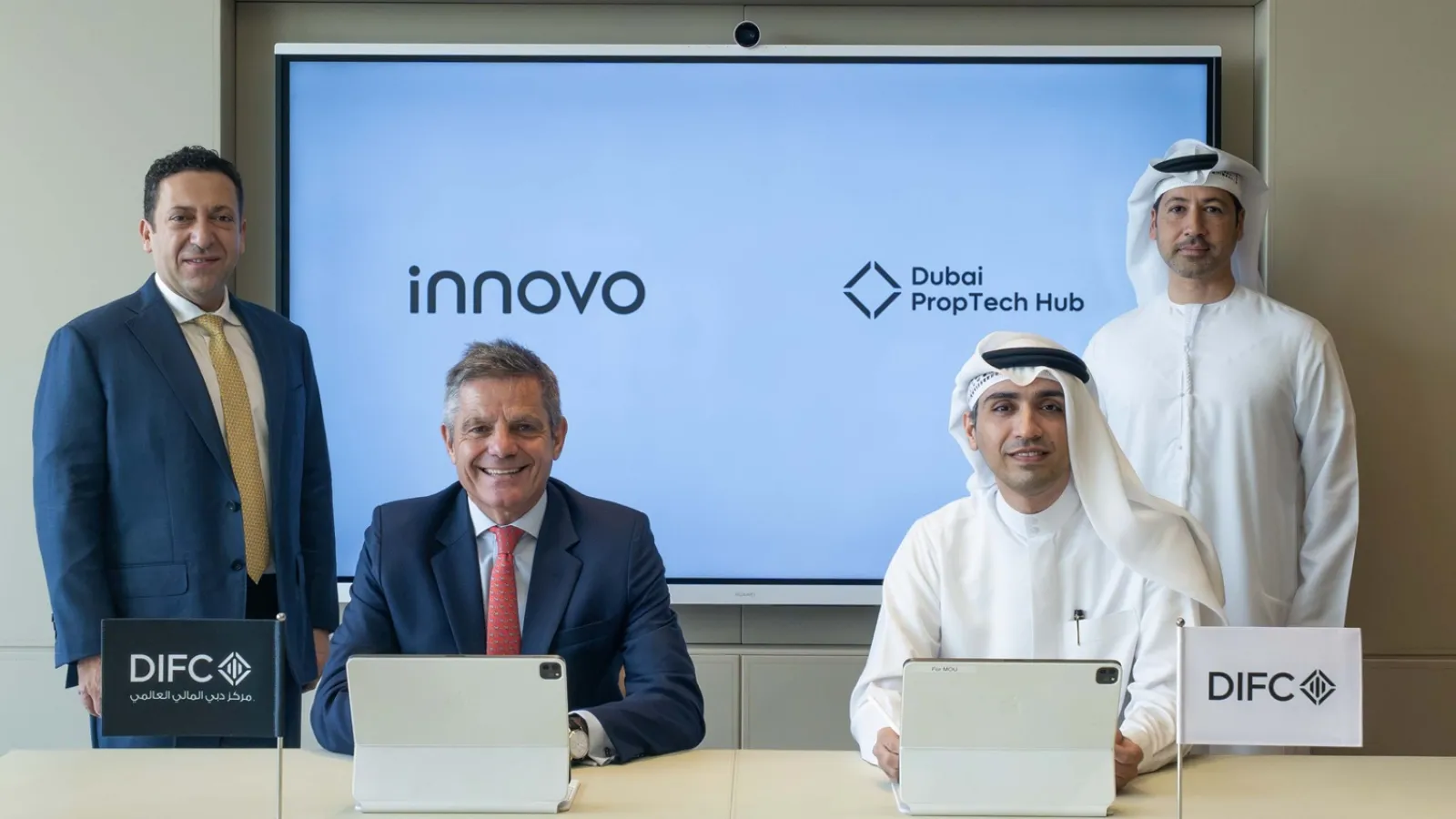
Innovo Group, the London-headquartered construction firm with a portfolio spanning four continents, has formalised a strategic partnership with Dubai PropTech Hub, an initiative of the Dubai International Financial Centre (DIFC), to pilot and scale construction-technology innovations across live project environments. The agreement, signed at DIFC, gives startups enrolled in the Hub's Global Landing Pad programme direct access to Innovo's 130-plus active projects, ranging from luxury residential developments to transport infrastructure, as a real-world proving ground.
The deal arrives at a moment when the UAE's construction sector is carrying significant economic weight. According to the press release, the industry contributes approximately 9.2 per cent of UAE GDP, making it a primary target for the government's D33 economic agenda and the Real Estate Sector Strategy 2033. Dubai PropTech Hub itself has set an explicit target: support more than 200 PropTech startups and attract over USD 300 million in investment by 2030.
From sandbox to site
What distinguishes this partnership from a standard innovation-lab arrangement is the offer of live construction access rather than controlled sandbox testing. Half of the participants in the Hub's inaugural Global Landing Pad cohort are working on pre-construction and construction challenges, the release states, with technologies spanning artificial intelligence, robotics, digital twins, automation, sustainable materials and new methodologies. Innovo's site access collapses the gap between proof-of-concept and commercial deployment, a bottleneck that has historically slowed proptech adoption relative to fintech or healthtech.
Bishoy Azmy, CEO of Innovo Group, framed the opportunity in structural terms: "The construction industry is at a critical innovation juncture. As governments across the region advance ambitious infrastructure and urban development agendas, the industry must rethink how the built environment is designed and delivered."
The partnership also carries an explicit export ambition. By testing innovations against Innovo's UAE projects and then deploying them across its offices in Abu Dhabi, Toronto, Cairo and Luanda, the collaboration is designed to carry Dubai-incubated proptech into Global South markets, where a disproportionate share of future urbanisation is expected to occur over the next two decades.
Convergence read-across
For investors tracking cross-sector capital flows, the construction-technology space represents an underappreciated collision point. Robotics and digital-twin platforms developed for smart-building applications share underlying infrastructure with industrial automation and, increasingly, with defence-adjacent sensing technologies. Sovereign and quasi-sovereign vehicles, including DIFC's own institutional ecosystem of 592 wealth and asset management firms, are well positioned to co-invest in proptech startups that can demonstrate construction-validated performance rather than lab metrics alone.
The broader Gulf proptech buildout also has implications for energy and sustainability capital. Next-generation construction methodologies, particularly those incorporating sustainable materials and data-driven delivery models, feed directly into regional net-zero commitments and green-bond issuance programmes that GCC sovereigns are scaling in parallel. A startup that proves its sustainable-materials technology on an Innovo site in Dubai has a credible data set to attract both development-finance institutions and green-infrastructure funds.
The MoU framework is structured rather than merely aspirational: it includes customised licensing options, purpose-built workspace at DIFC, and a commercialisation support programme. Whether it generates the $300 million investment flow the Hub targets by 2030 will depend on the quality of startups the Global Landing Pad attracts and the speed at which live-site pilots convert to contracted deployments. The next visible milestone to watch is the Hub's second Global Landing Pad cohort selection and any Innovo project-level announcements that follow.