
Grova awards $1bn West Cairo contract in Egypt real-estate push
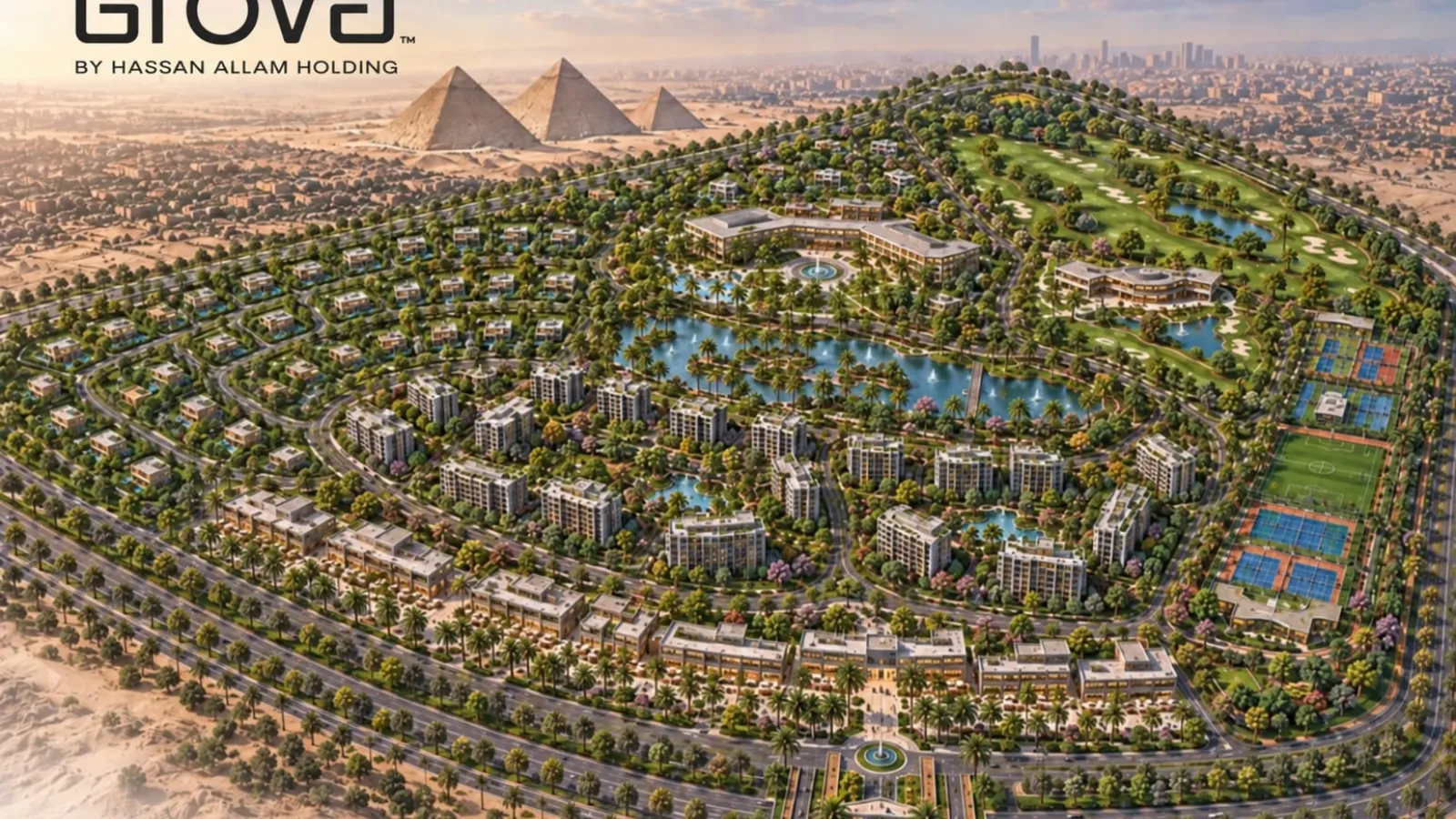
Grova Developments, the real estate arm of Egyptian conglomerate Hassan Allam Holding, has awarded a USD 1 billion construction contract to its sister company, Hassan Allam Construction, to deliver Grova Westfields in the Sheikh Zayed district of West Cairo. The 303-acre mixed-use scheme will comprise a 150-key five-star hotel, branded residences, luxury villas and apartments, with masterplanning and architectural design led by UK-headquartered practice Broadway Malyan. The deal is being executed through a strategic partnership with the Egyptian Kuwaiti Company for Real Estate Development, underscoring the cross-border Gulf capital dimension of what might otherwise read as a domestic construction story.
The scale of the contract, equivalent to roughly a third of Hassan Allam Holding's publicly stated USD 10 billion project backlog, positions Grova Westfields as the group's most capital-intensive residential-hospitality convergence play to date. Phase One of the group's East Cairo scheme, Grova EastHills, sold out entirely, providing demand validation for the westward expansion. The project's location is deliberate: Sheikh Zayed sits on the corridor connecting Sphinx International Airport and the Grand Egyptian Museum to the Pyramids, a route that Egyptian authorities and international tourism operators have identified as a priority hospitality zone ahead of anticipated visitor-number growth.
Integrated delivery as a competitive differentiator
Hassan Allam, Chairman and CEO of Hassan Allam Holding, framed the contract as an expression of the group's vertically integrated model. "Drawing on more than 90 years of experience delivering major projects, we can shape every stage of a development, from the initial vision through to the long-term experience of its residents," he said. That integration, spanning development, construction, landscaping and facilities management within a single holding structure, is increasingly the proposition Gulf and North African developers are deploying to compress delivery timelines and protect margin against materials-cost volatility, a dynamic that has dogged large-scale residential projects across the region since 2022.
The hospitality layer is strategically significant. Branded residences, which sit at the intersection of real estate and hospitality brand licensing, have become one of the fastest-growing luxury asset sub-classes across the Middle East and North Africa. Developers from Dubai to Riyadh have used five-star hotel anchors to justify premium residential pricing and attract internationally mobile buyers who value the serviced-living proposition. Grova Westfields' inclusion of a branded-residence component alongside conventional apartments suggests the developer is targeting exactly this buyer profile: regional high-net-worth individuals and diaspora investors for whom Cairo's improving infrastructure and relative affordability versus Dubai or Riyadh represents a compelling entry point.
MENA capital flows and the regional growth picture
The deal sits within a broader reallocation of Gulf-linked construction capital toward Egypt. Egyptian Kuwaiti Company's co-investment role is a visible thread in a wider pattern: Kuwaiti sovereign and quasi-sovereign vehicles have consistently backed large-scale Egyptian real estate through successive cycles of currency pressure and interest-rate adjustment, treating the market as a long-duration strategic position rather than a short-cycle trade.
Grova's simultaneous launch of Noor Khuzam, a residential community in Riyadh, indicates that Hassan Allam Holding is executing a twin-market strategy: anchoring its development credentials in Egypt while establishing a foothold in Saudi Arabia's Vision 2030-driven housing and hospitality build-out. For cross-sector investors tracking GCC-to-MENA capital corridors, the two moves together suggest the group is positioning to capture sovereign-adjacent demand in both the world's fastest-growing major construction market and its most populous Arab economy. The next signal to watch is whether Grova moves to an external capital raise, whether project-level sukuk or a broader equity event, to fund the pipeline beyond the group's own balance sheet.