
Development Bank of Wales backs £7m North Wales property push
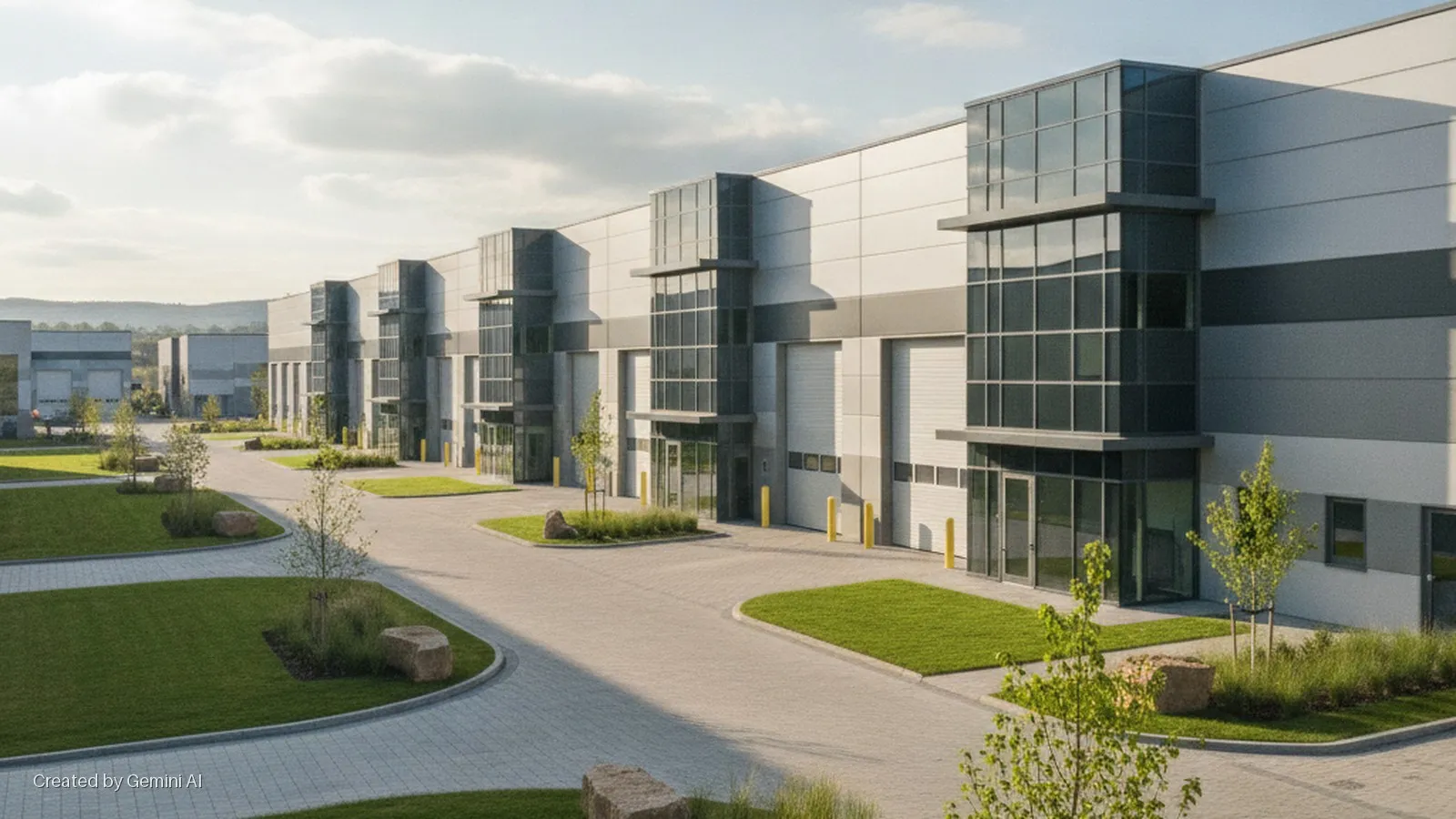
The Development Bank of Wales has committed almost £7 million from its Wales Commercial Property Fund to four industrial and commercial development projects across North Wales, backing K&C Group, Vectorex, Hillcliff Holdings and Lingar Holdings in schemes spanning Kinmel Bay, Conwy and Bangor.
Together, the four projects will deliver approximately 67,000 sq ft of modern commercial space across 32 units, adding light industrial, manufacturing, warehousing and flexible office accommodation to a region where, the Development Bank says, demand for quality employment space is running ahead of supply.
Four projects, one regional signal
At Tir Llwyd Enterprise Park in Kinmel Bay, K&C Group is receiving a £2 million package comprising an £830,000 loan and a £1.12 million grant to build almost 17,000 sq ft of light industrial units. The group, which combines Pure Developments and K&C Construction, has now secured Development Bank backing for five separate projects since 2018, spanning residential and commercial schemes across North Wales.
In Conwy, Vectorex has secured £1.2 million to develop almost 21,000 sq ft of industrial space at Conwy Morfa Enterprise Park. The project marks the contractor's first time developing a commercial scheme on its own account rather than for a client, a transition the company says the fund's backing made possible.
In Bangor, two schemes are advancing at Parc Bryn Cegin, one of Gwynedd's designated strategic employment sites. Hillcliff Holdings is receiving £2.4 million to construct almost 19,000 sq ft across eight units, having acquired the site from the Welsh Government in early 2025 with planning consent already in place. Separately, Lingar Holdings is using £1.3 million from the fund to deliver a 10,000 sq ft first phase of a broader four-phase scheme that could ultimately provide around 40,000 sq ft of flexible industrial accommodation.
Nicola Crocker, Property Fund Manager at the Development Bank of Wales, said: "These four projects show how targeted funding can help unlock commercial developments that might otherwise struggle to proceed, creating the space businesses need to grow while supporting construction supply chains and strengthening local economies."
Public capital as a supply-chain lever
The broader context for these awards sits in a structural gap that many of the UK's peripheral regions share: private developers in markets outside major urban centres frequently find that speculative commercial development is unbankable on conventional terms alone. The Wales Commercial Property Fund, which offers loans of between £250,000 and £5 million with terms of up to five years, bridges that gap by blending public loan and grant capital to de-risk early-stage delivery.
Since its establishment in 2017, the Development Bank has deployed £34 million specifically into commercial property, generating more than 411,000 sq ft of space. Its broader portfolio now exceeds £2 billion under management and has invested over £1 billion across more than 5,000 Welsh businesses and developers, a level of public finance activity that has, the bank reports, unlocked an additional £680 million in private sector co-investment.
For cross-sector strategists, the read-across here is less about individual assets and more about the mechanics of regional industrial policy. As nearshoring and supply-chain diversification pressures push manufacturers and logistics operators to reconsider their footprints across the UK and Europe, the availability of flexible, sub-10,000 sq ft industrial units in well-connected secondary markets becomes a meaningful input variable. North Wales, with access to the M53 and M56 corridors and proximity to Liverpool and Manchester, sits within reach of significant logistics and light-manufacturing demand. Whether public-subsidy-dependent supply can scale to meet any such demand surge without crowding out private capital remains an open question for regional policymakers and investors alike.