
Quantinuum and UWA partner to build Australia's quantum-AI workforce
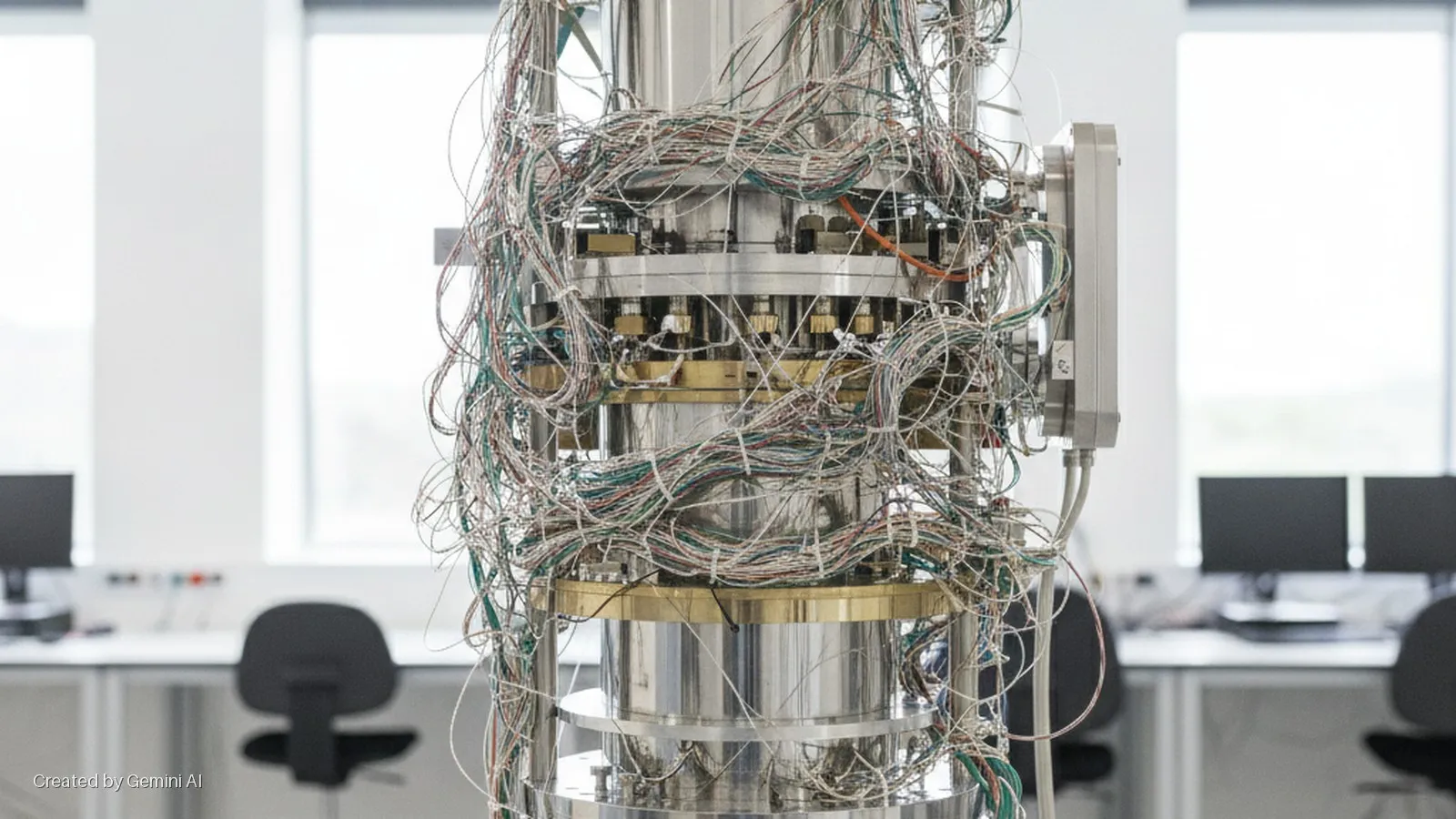
Quantinuum, the NASDAQ-listed trapped-ion quantum computing company, has signed a Memorandum of Understanding with The University of Western Australia (UWA) to expand access to advanced quantum systems, develop quantum talent, and accelerate hybrid applications that combine quantum computing, artificial intelligence, and high-performance computing (HPC). The deal positions Australia's west coast as a node in an emerging global quantum-AI infrastructure race, at a moment when sovereign governments are treating quantum capability as a strategic asset rather than a long-horizon research curiosity.
Under the agreement, UWA-affiliated researchers, students and entrepreneurs will receive cloud-based access to Quantinuum's full-stack platform, including Helios, the company's latest-generation trapped-ion system, which Quantinuum describes as the most accurate commercial quantum computer available by two-qubit gate fidelity. The two organisations also intend to explore a university-wide quantum computing applications centre designed to bring together academic, industry and government stakeholders around high-value use cases in critical minerals, energy, agriculture and healthcare.
Workforce as strategic infrastructure
The talent dimension of the deal is as significant as the hardware access. Quantinuum will open its Q-Net community and Startup Partner Programme to UWA participants, creating pathways from undergraduate training through to commercial venture development. This mirrors a pattern visible elsewhere in the quantum landscape: partnerships structured less around licensing revenue and more around seeding an ecosystem that eventually generates enterprise customers and government contracts.
For Australia, the timing is deliberate. Canberra has articulated an explicit national quantum strategy, and Western Australia's critical minerals endowment gives the state a direct industrial motivation to pursue quantum-accelerated materials simulation. Quantum computing's near-term commercial case in this sector rests on its potential to model molecular interactions in ore processing and battery chemistry at a fidelity that classical HPC cannot replicate efficiently, a claim the industry is still working to validate at commercial scale.
The convergence angle: where quantum meets capital allocation
The broader significance of the Quantinuum-UWA deal sits at the intersection of three converging forces. First, the hybrid quantum-AI-HPC architecture it prioritises reflects an industry-wide recognition that near-term quantum advantage will not arrive as a standalone replacement for classical compute, but as an accelerant layered on top of it. That framing matters to enterprise buyers across energy, pharmaceuticals and financial services who are sizing up whether to build internal quantum capability or wait for a managed cloud offer to mature.
Second, the geography is not incidental. Western Australia's critical minerals sector feeds global battery supply chains, and any quantum-enabled improvement in extraction or processing efficiency would have direct implications for the energy transition and for the sovereign-industrial strategies of nations competing to control battery materials. Cross-sector capital, including infrastructure funds and sovereign wealth vehicles aligned to the energy transition, is beginning to track quantum milestones alongside more conventional deep-tech indicators.
Third, the university-anchor model Quantinuum is deploying in Perth is part of a wider playbook it is running across multiple geographies, with facilities in the US, UK, Germany, Japan, Qatar and Singapore. Each anchor partnership seeds a local talent pool and a government-adjacent stakeholder network. For investors evaluating Quantinuum's post-IPO trajectory, these MOUs represent optionality on future enterprise and government revenue rather than near-term contracted income. The MOU is explicitly non-binding, and Quantinuum's own forward-looking disclosures note that definitive agreements, the applications centre and commercially viable outcomes are all contingent on factors that remain unresolved.
Petra Andrén, chief executive of Quantum Australia, captured the underlying logic: "Access to the best capabilities, both here and internationally, will help translate those strengths into economic and community benefit."
The harder question, which this partnership does not yet answer, is when hybrid quantum-AI workflows cross the threshold from research demonstration to production-grade deployment in the sectors Australia is betting on. That inflection point will determine whether the talent and infrastructure being seeded now converts into durable competitive advantage, or whether it remains a capability hedge against a transition that arrives on someone else's timeline.