
EliseAI launches Apollo agentic AI for multifamily property ops
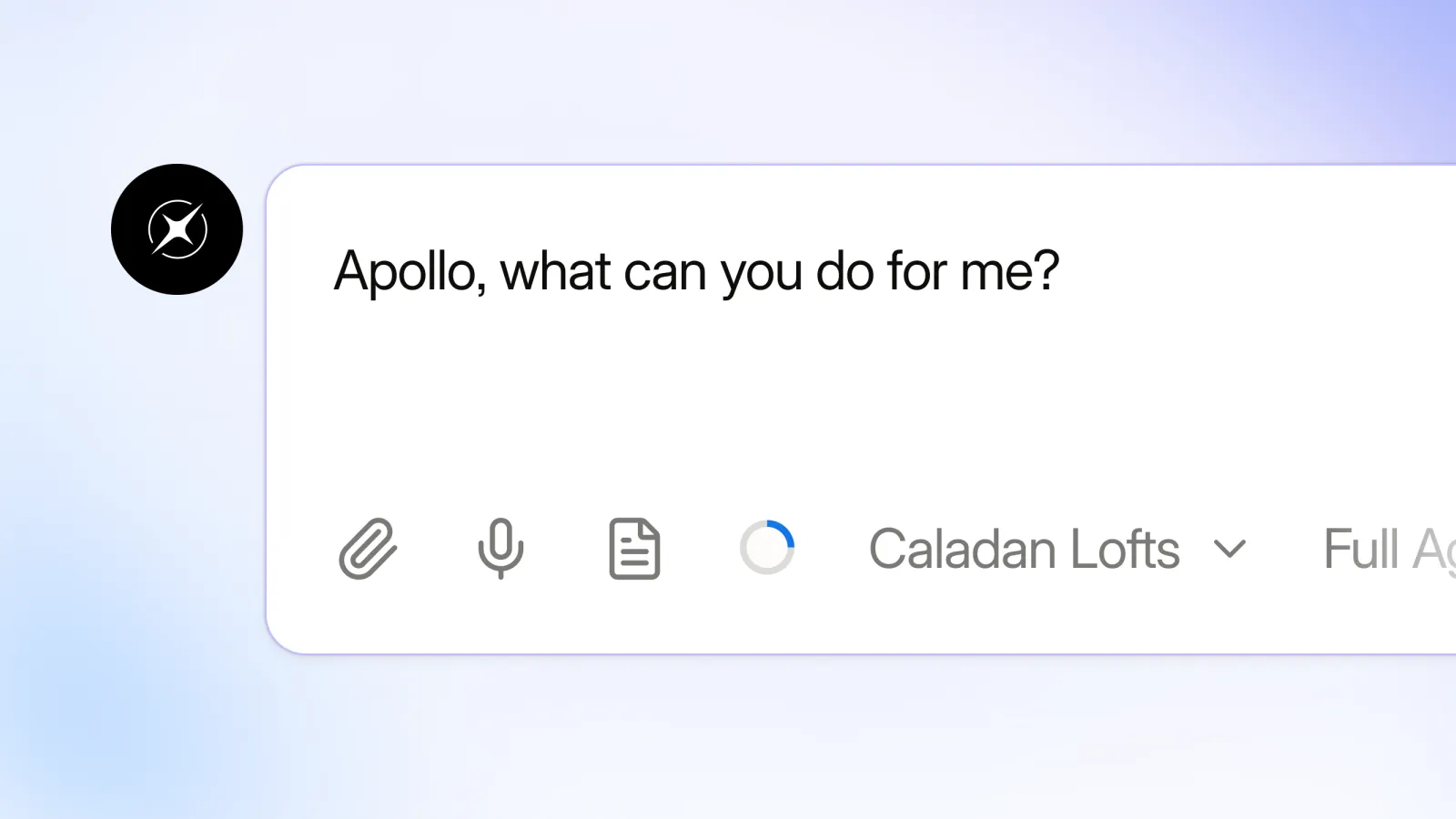
EliseAI, a New York-based proptech company that says it automates complex housing and healthcare systems, has unveiled Apollo, its first agentic AI product designed to act across every operational role within a multifamily property business. The launch signals a broader shift in how AI is being embedded into real-estate operations: less as a reporting layer and more as a decision-executing colleague.
Unlike conventional property-management software, which surfaces data through dashboards and leaves action to human staff, Apollo is positioned as an instruction-following agent. A leasing agent can direct it to reschedule a sick colleague's tours; a maintenance technician can query it for recurring unit faults before they escalate. The company says Apollo works within the existing Elise platform rather than as a bolted-on tool, inheriting each user's permissions and data context automatically.
From dashboard to doer
Minna Song, co-founder and CEO of EliseAI, framed the distinction plainly: "Every property team already has a dozen dashboards and reports telling them what happened. Apollo tells you what to do next, and then does it."
The claim is architecturally significant. Most enterprise AI deployments in real estate to date have been retrieval or summarisation tools, surfacing lease data, flagging maintenance backlogs, generating renewal offer letters. An agent that takes real action across a live platform, within permission boundaries, represents a meaningful step up in operational autonomy. EliseAI says Apollo has been tested against thousands of real-world scenarios spanning onboarding, leasing inquiries, maintenance emergencies and renewal conversations, and is designed to acknowledge the limits of its own knowledge rather than fabricate answers.
The company also operates in healthcare administration, a detail absent from the Apollo launch copy but present in its corporate description. That dual-sector footprint is worth noting: the same agentic architecture being deployed across multifamily leasing workflows could, in principle, be extended to patient-flow or clinical-admin tasks where similar fragmentation problems exist.
The agentic property stack and its capital context
Apollo arrives as the broader category of agentic AI attracts significant attention from enterprise software investors. The thesis, that AI systems should not just advise but act, is being pursued across verticals, from autonomous coding agents in software development to procurement bots in logistics. In real estate specifically, the fragmentation of legacy tooling (separate platforms for leasing, maintenance, resident engagement, and reporting) creates a natural wedge for an integrated agent that can operate across all of them without middleware translation.
For cross-sector capital allocators, the multifamily AI stack is becoming a distinct investment sub-theme within the broader proptech cycle. The sector went through a significant valuation reset between 2022 and 2024, but enterprise SaaS models serving large property managers, where switching costs are high and workflow integration is deep, have held up comparatively well. EliseAI does not disclose revenue or funding details in this release, but its expansion to offices in San Francisco, Boston, Chicago and Toronto alongside its New York headquarters suggests a scaling posture consistent with late-stage venture or growth-equity backing.
The geopolitical read-across is subtler but present. As US multifamily supply remains constrained and rental demand structurally elevated, operators are under margin pressure to do more with smaller teams. Apollo's value proposition maps directly onto that labour-cost dynamic: not replacing leasing agents outright, but compressing the number of staff-hours required per unit managed. If the product performs as described at scale, it represents a meaningful input into property operating economics at a moment when cap-rate compression has made cost-efficiency a primary lever for returns.
EliseAI has not announced pricing or a general availability date for Apollo beyond the current early-access cohort. The next signal to watch is whether large institutional property managers, whose unit counts would most benefit from agent-level automation, begin adopting the platform in volume.