
Proto Hologram patents compact display as enterprise holography grows
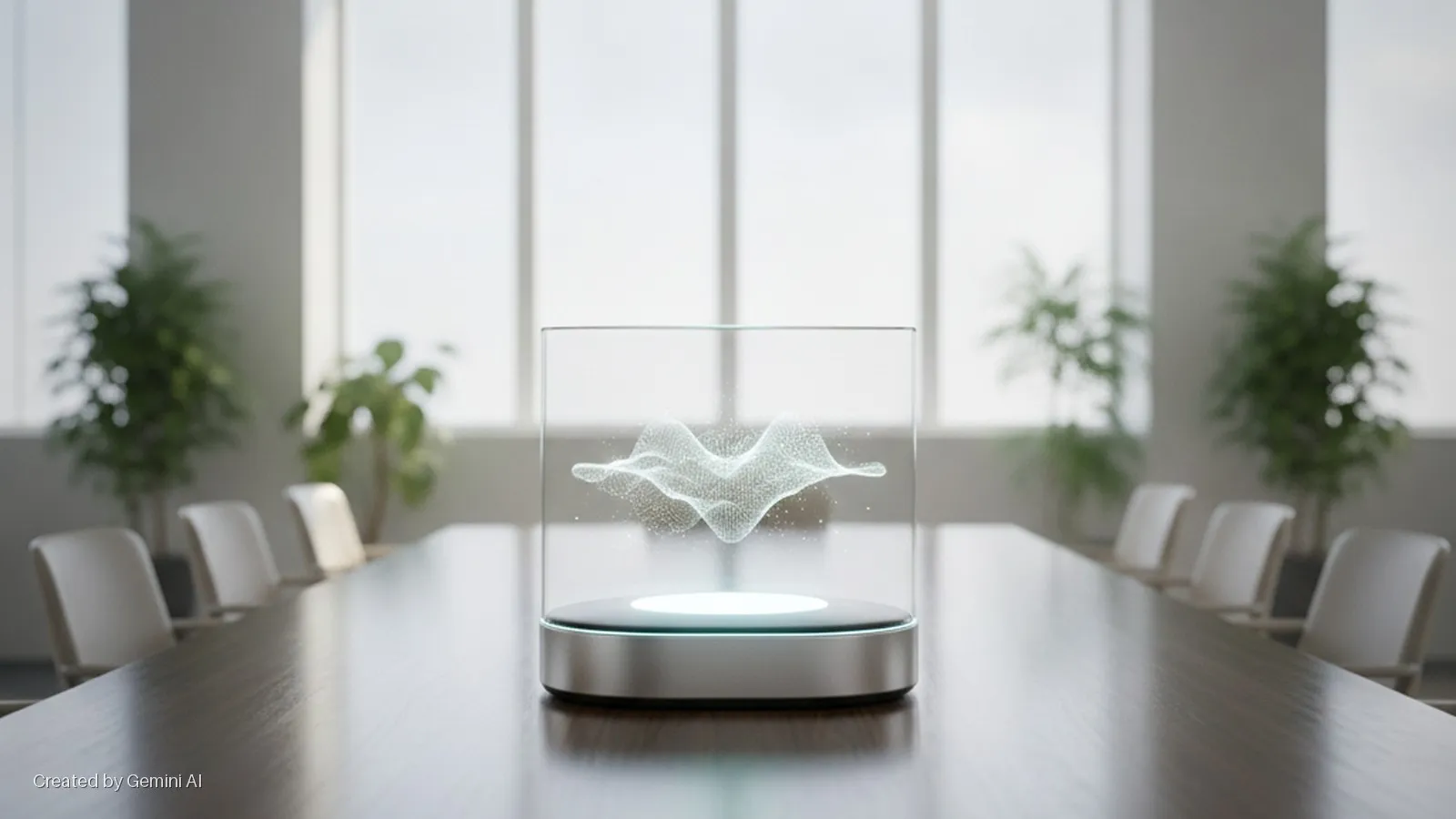
Proto Inc., the Los Angeles-based hologram communications and spatial computing company, has been awarded US Design Patent No. D1,134,257 S by the United States Patent and Trademark Office, covering the industrial design of its Proto M desktop holographic display. The grant adds to an existing utility patent on Proto's core display and image-capture method and extends the company's IP recognition into Canada and Mexico.
The Proto M is a compact, self-contained unit designed to bring real-time holographic telepresence into environments where the company's full-size Epic and Luma systems are impractical. It runs on Proto's proprietary operating system and, according to the company, supports what it describes as embodied AI alongside live holographic presence. A successor model, the M2, is already in commercial circulation.
From novelty to repeatable enterprise infrastructure
What the patent announcement reveals, beneath the IP formality, is how far holographic telepresence has moved from trade-show spectacle. Proto says dozens of Fortune 500 clients use its hardware on a repeat basis across healthcare, retail, finance, education, and entertainment. Named deployments include Christie's, MIT, Target, and SoftBank, alongside sports leagues and Hollywood studios. That breadth of vertical penetration matters: it suggests the company is not dependent on a single sector's appetite, which is a meaningful distinction in an enterprise hardware category where procurement cycles are long and switching costs are high.
"Securing this design patent for our smaller form factor is a major milestone," said Doug Barry, co-founder and CFO/COO of Proto Inc. "It allows us to open new markets, unlock entirely new use cases, and rapidly scale our business."
The design patent itself is a defensive instrument as much as a commercial one. In a category where the underlying display physics are becoming more widely understood, locking down the industrial design of a successful form factor limits the ability of competitors to produce near-identical hardware targeted at Proto's installed base.
The convergence angle: spatial compute meets enterprise distribution
The broader significance for cross-sector strategists is less about the patent and more about the infrastructure layer it represents. Holographic telepresence sits at the intersection of several converging hardware and software trends: the maturing of real-time rendering pipelines originally built for gaming, the proliferation of edge compute capable of running inference locally, and the post-pandemic reconsideration of what physical presence actually requires in an enterprise context.
Proto's deployment in healthcare and education is particularly worth watching. Both sectors are under sustained pressure to extend high-quality service delivery without proportionate increases in physical footprint or specialist headcount. A credible, repeatable holographic presence layer changes the economics of specialist consultations, remote teaching, and high-stakes client interactions in ways that video conferencing, despite its ubiquity, has not fully addressed.
For investors allocating across the media, retail, and enterprise software stacks, the category raises a structural question: as spatial computing hardware commoditises, where does durable margin accumulate? Proto's emphasis on its proprietary operating system and software platform suggests it is positioning the hardware as a distribution mechanism for a stickier software and services layer, a model that mirrors the trajectory of other enterprise device categories. Whether the company's IP portfolio is deep enough to defend that position as larger players with greater compute and distribution resources enter the space remains the key strategic uncertainty.
The filing date of February 2023 and the grant in July 2026 also illustrate the extended timeline of US patent prosecution, a structural friction that affects all hardware-adjacent deep-tech companies seeking to use IP as a competitive moat in fast-moving markets.