
Zand and Circle link Dirham and USDC stablecoins in UAE corridor
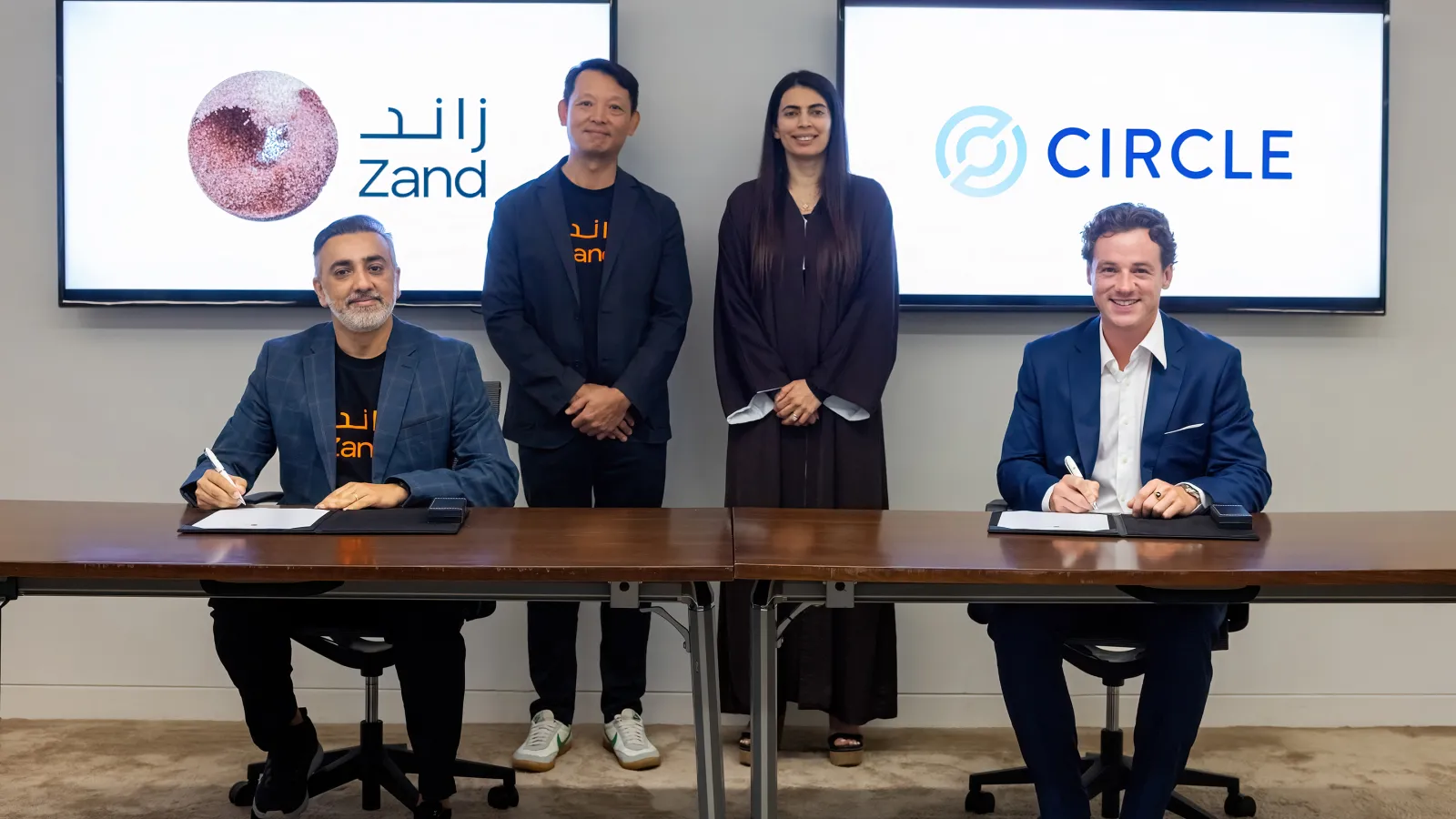
Zand, the UAE's Central Bank-licensed digital bank, has announced a partnership with Circle Internet Group to integrate USDC support alongside its own Zand Dirham stablecoin, creating what the bank describes as a seamless corridor for moving value across digital financial ecosystems. The move positions Zand at the intersection of regulated Islamic-world finance and the dollar-denominated stablecoin infrastructure that underpins a growing share of global institutional settlement.
The practical scope of the tie-up spans payments, treasury operations, trading, and cross-border transactions. Eligible businesses will be able to hold and move both stablecoins within applicable UAE regulatory frameworks, with each instrument fully reserved on a 1:1 basis against its underlying fiat currency. The Zand Dirham stablecoin is already described as the UAE's first fully regulated multi-chain Dirham-backed stablecoin on public blockchains, while USDC, issued by Circle (NYSE: CRCL), is among the most widely held regulated dollar stablecoins globally.
Regulated rails and sovereign strategy
The announcement is as much a geopolitical statement as a product launch. The UAE's Digital Economy Strategy targets a doubling of the digital economy's contribution to non-oil GDP by 2032, and stablecoin infrastructure sits near the top of the instruments Abu Dhabi and Dubai are deploying to reach that target. Zand's backing reflects this institutional intent: investors include a ruling-family Abu Dhabi investment arm, Franklin Templeton, and the Aditya Birla Group, alongside prominent Gulf business figures Mohamed Alabbar and Yusuff Ali. A BBB+ Fitch rating gives the bank a credibility floor that pure-play crypto institutions cannot match.
Circle's managing director for the Middle East, Turkey, Africa and Pakistan, Dr Saeeda Jaffar, framed the deal in systemic terms: "The continued evolution of regulated stablecoin ecosystems reflects growing demand for more efficient ways to support payments, settlement, and treasury operations." That framing is deliberate. Circle has spent the past two years emphasising regulatory compliance as its primary differentiator, a strategy that paid off with its NYSE listing and is now generating institutional partnerships across GCC markets where licensing regimes are maturing faster than in many Western jurisdictions.
Cross-sector capital implications
For the macroeconomic investor, the significance extends well beyond payments plumbing. The linking of a sovereign-adjacent fiat-backed stablecoin with the leading dollar stablecoin creates a programmable bilateral corridor between Dirham and dollar liquidity pools. That has direct read-across to Gulf trade finance, where paper-based letters of credit remain dominant and digitisation of settlement could materially compress counterparty risk and float costs for importers and exporters across South Asia, East Africa, and the broader Arab world.
There is also a competitive dynamic worth watching. Bahrain, Saudi Arabia, and Singapore are all advancing their own central bank digital currency and regulated stablecoin frameworks. The Zand-Circle pairing effectively sets a reference architecture: a licensed commercial bank acting as the regulatory anchor for multi-chain stablecoin issuance, interoperable with the global dollar stablecoin standard. If this model gains traction, it accelerates pressure on legacy correspondent-banking networks and on the correspondent fees that underwrite a significant portion of traditional international banking revenue.
Industry forecasts cited in the release suggest the stablecoin market could exceed one trillion dollars in 2026, driven by institutional adoption and the expansion of programmable financial services. The company says that figure reflects broader structural demand rather than speculative volume. Whether or not that threshold is reached this calendar year, the direction of capital allocation is clear: institutional-grade blockchain rails are moving from proof-of-concept into production infrastructure, and the Gulf is positioning itself as a primary governance jurisdiction for the assets that run on them.
The next test for the corridor will be adoption metrics from corporate treasury clients and the pace at which Gulf regulators extend the framework to cover additional asset classes beyond stablecoins.