
Policybazaar.ae embeds insurance inside UAE vehicle gateway
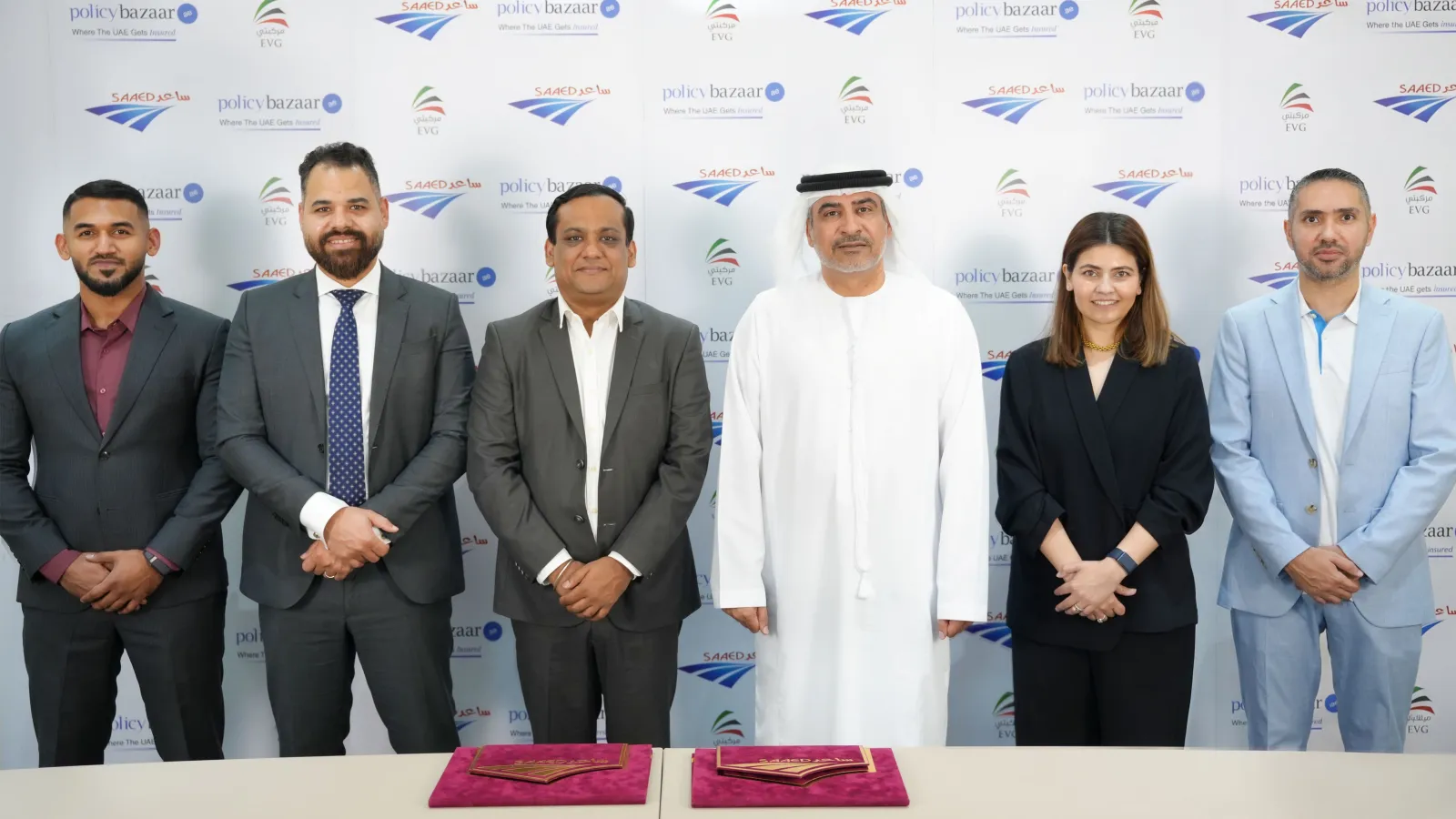
Policybazaar.ae, the UAE's largest insurance marketplace and the first international venture of India-listed PB Fintech, has signed a distribution partnership with SAAED for Traffic Systems LLC, operator of the Emirates Vehicles Gate (EVG). The tie-up will embed motor insurance quotation, payment and policy issuance directly inside the EVG platform, turning a vehicle-registration gateway used by millions of UAE motorists into a live insurance channel without redirecting users to a separate system.
The practical ambition is narrow but strategically significant: rather than treating insurance as a downstream step that follows registration, the integration places it at the moment a vehicle enters or moves through the official digital ecosystem. Policybazaar.ae says the EVG connection is expected to go live within weeks, at which point users will be able to move from vehicle verification to a bound insurance policy inside a single session.
Embedded finance meets government infrastructure
The partnership illustrates a pattern gaining traction across the Gulf: private-sector financial-services players securing distribution inside government-operated digital platforms rather than competing for attention on the open web. For Policybazaar.ae, which already aggregates more than 400 products across motor, health, life, travel and SME insurance from over 35 insurers and banks, EVG adds a captive, high-intent distribution surface. Every vehicle registration or renewal event is, by definition, an insurance trigger.
Neeraj Gupta, Chief Executive Officer of Policybazaar.ae, framed the logic plainly: "Insurance should be as seamless as the digital services people already use every day, not a separate errand bolted onto life. By integrating with SAAED's Emirates Vehicles Gate, we will connect vehicle and driver verification straight through to real-time quotation, payment and policy issuance, inside the same digital ecosystem the EVG already powers for millions of UAE customers."
Cross-sector read-across: the platform economy for regulated products
The broader significance of this deal runs beyond insurance. EVG's stated trajectory is expansion from a vehicle-registration platform into a comprehensive digital gateway for services UAE motorists rely on. Insurance is positioned as the first private-sector category to move natively inside it, but the template is replicable: roadside assistance, fleet telematics, connected-vehicle data services and eventually mobility financing could follow the same embedded model.
For the fintech and insurtech capital community, the deal underscores where distribution leverage now sits in the GCC. Building a direct-to-consumer brand online remains expensive; anchoring inside a government-licensed platform with mandatory user touchpoints is structurally more efficient. Investors tracking Gulf embedded-finance plays, whether in insurance, payments or lending, will note that the regulatory environment in the UAE is actively enabling this kind of public-private integration as part of its broader digital-economy strategy.
There is a geopolitical layer worth flagging for cross-sector strategists. The UAE has positioned itself as the region's testbed for digital-government services, with the Emirates ID, digital-wallet infrastructure and now vehicle-gateway expansion serving as components of a unified digital-citizen architecture. Partnerships of this type, where a regulated private marketplace plugs into sovereign digital rails, are a replicable model that other Gulf states, and potentially emerging markets further afield, are watching closely. PB Fintech's decision to use the UAE as its first international market was a deliberate bet on that regulatory openness, and this latest move reinforces the thesis.
The immediate commercial question is scale velocity. Policybazaar.ae does not disclose EVG's active-user figures, and SAAED has not published transaction volumes for the platform, so the revenue impact of the integration remains unquantifiable from the outside. What is clear is that the structural shift, collapsing vehicle ownership, registration and insurance into a single continuous digital transaction, represents a meaningful change to how a mandatory financial product reaches consumers in one of the Gulf's most digitalised economies.