
Syntropic and UNIGRID target 1GWh sodium-ion US push in 2027
Syntropic Power and UNIGRID Inc. have announced a commercial partnership to deploy sodium-ion battery storage across North America, with a target of 1 gigawatt-hour of installed capacity by 2027. The deal brings together Syntropic, a Cary, North Carolina-based energy storage systems company, and UNIGRID, a University of California San Diego spinout, around a sodium chromium oxide (NCO) cell chemistry the companies say is independently validated and meaningfully distinct from the sodium-ion variants currently dominant among Chinese manufacturers.
The timing is pointed. North America's grid is absorbing two simultaneous demand shocks: electrification of transport and heat, and the runaway power appetite of AI data centres. Utility-scale storage is no longer a clean-energy amenity, it is load-balancing infrastructure. That shift has made chemistry differentiation, thermal safety, and supply-chain provenance strategic variables rather than engineering footnotes.
Independent validation as competitive signal
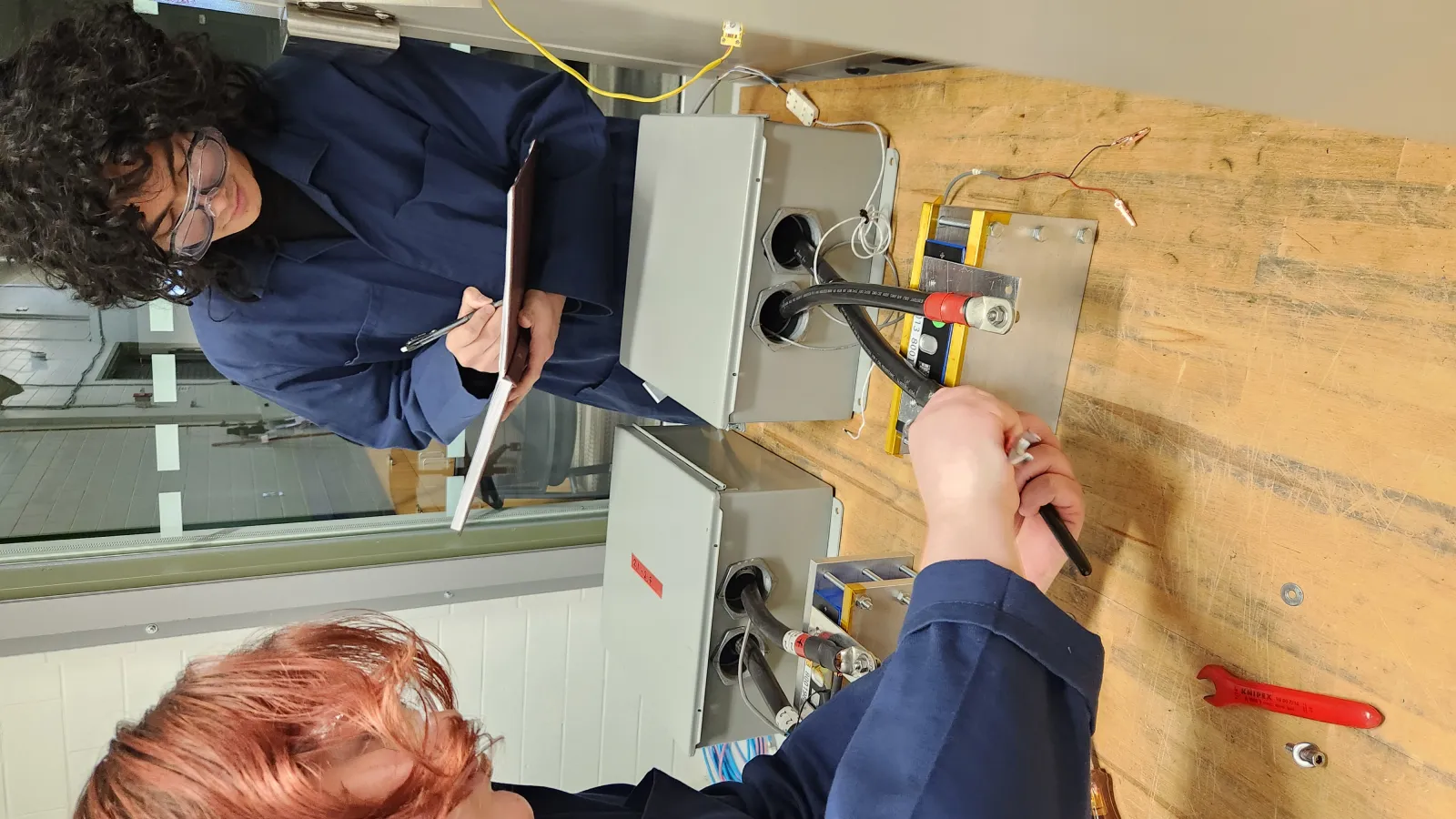
Syntropic commissioned the Rochester Institute of Technology Battery Development Center, an ISO 17025-accredited laboratory, to characterise UNIGRID's 70Ah and 210Ah NCO prismatic cells. RIT's results for the 210Ah format showed discharge capacity of 216 to 218Ah against a 210Ah nameplate, round-trip energy efficiency at or above 97.9% at cell level, and only 2.3% capacity loss across a tenfold increase in charge rate. Cycle life testing conducted by UNIGRID separately achieved more than 1,000 full depth-of-discharge cycles with capacity retention above 99%.
Notably, the cells exhibited endothermic behaviour during charging, absorbing heat rather than generating it, and remained thermally stable under RIT abuse testing. That property underpins GridSpan, Syntropic's modular DC platform for large-scale stationary applications, which is engineered to operate without active mechanical cooling even at grid-scale charge and discharge rates. Eliminating active cooling reduces both capital cost and a significant failure point in field deployments.
"UNIGRID's NCO chemistry combines high round-trip efficiency, high power capability, strong cycle life performance and distinctive thermal safety behaviour," said Matt Huber, CTO of Syntropic Power, "providing the foundation for a GridSpan platform designed to operate without active cooling."
The product suite spans from Tenet, a wall-mounted residential and virtual power plant unit, to GridSpan configurations supporting storage durations from roughly 20 minutes to 20 hours, a range that covers both fast-response frequency regulation and multi-hour energy arbitrage.
Supply chain geopolitics and the FEOC constraint
The partnership carries an explicit geopolitical dimension. Syntropic is targeting a non-FEOC-aligned supply pathway, meaning components sourced outside countries designated as Foreign Entities of Concern under US energy and defence procurement rules, principally China, by the end of 2027. The companies plan US module assembly and integration, with a longer-term objective of domestic NCO cell manufacturing.
That objective speaks directly to a structural pressure reshaping the global battery industry. Chinese manufacturers, led by CATL and BYD, dominate lithium-iron-phosphate and are rapidly scaling their own sodium-ion lines using NFM and NFPP cathode chemistries. The US Inflation Reduction Act and its FEOC provisions are designed to redirect procurement away from that supply chain, but credible non-Chinese alternatives at scale remain scarce. A domestically assembled sodium-ion system built on an independently validated, non-Chinese chemistry addresses that gap, if the companies can execute the 1GWh deployment target on schedule.
For cross-sector investors, the story sits at a convergence that is becoming a capital theme in its own right: AI-driven power demand is creating grid stress that accelerates the commercial case for advanced stationary storage, which in turn is drawing sovereign and institutional capital into battery chemistry and domestic manufacturing capacity. The IRA's tax credit architecture means that US-assembled systems with non-FEOC supply chains attract incentives that can materially shift project economics, a dynamic that is pulling energy-storage investment decisions out of pure engineering evaluation and into regulatory arbitrage territory.
UNIGRID's academic origin and the RIT validation programme give the partnership a credibility layer that pure commercial announcements lack. Whether the 1GWh target and the US cell-manufacturing pathway arrive on the stated 2027 timeline will be the first substantive test of that credibility.