
Volatus Aerospace joins Canada's Defence Drone Initiative supplier pool
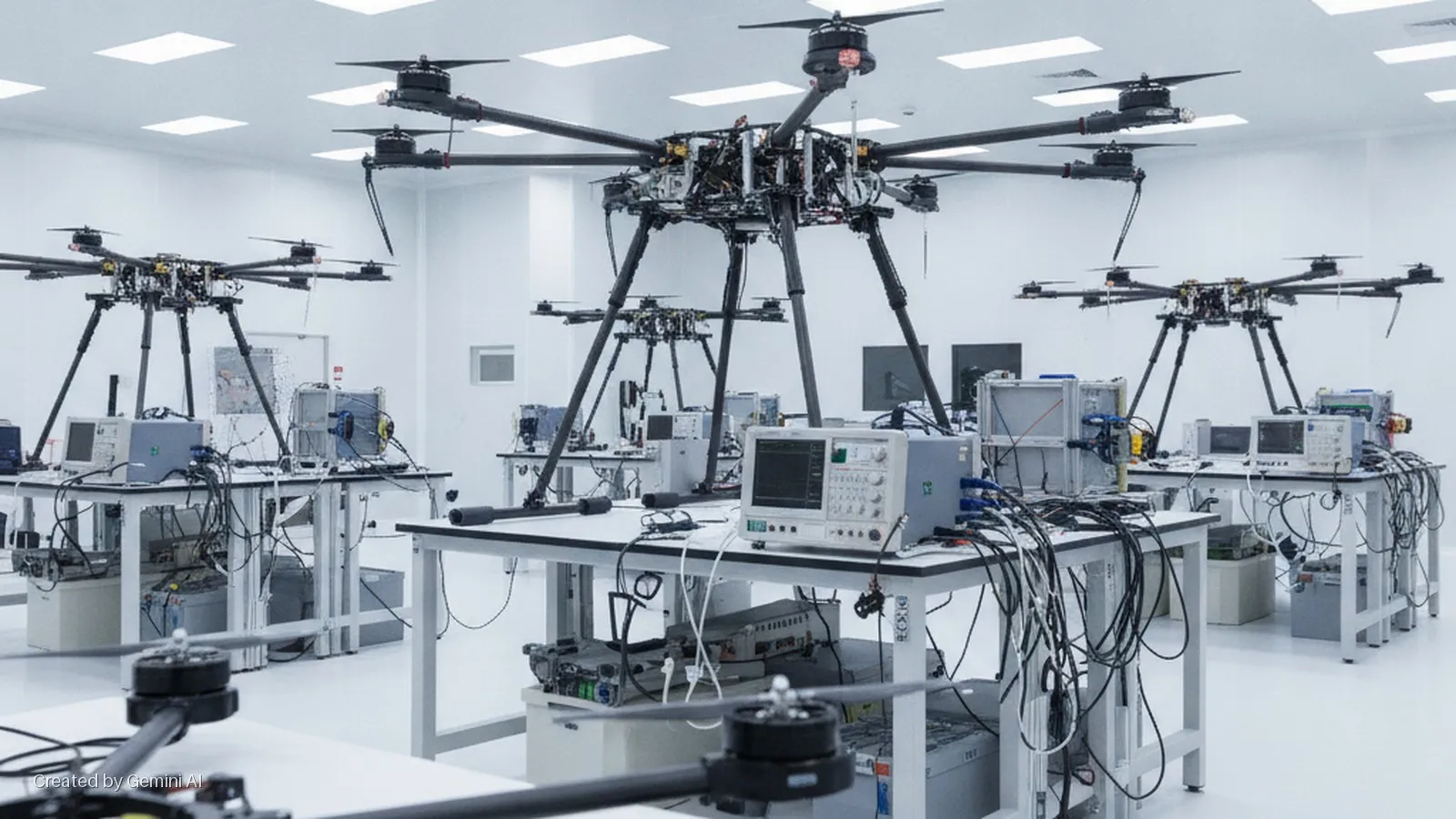
Volatus Aerospace (TSX: FLT), the Mirabel-based uncrewed and autonomous systems company, has been selected as a pre-qualified supplier under the Government of Canada's Defence Drone Initiative (DDI) Marketplace, a procurement framework launched in July 2026 to accelerate the development, testing and production of autonomous systems for the Canadian Armed Forces and the Canadian Coast Guard.
The qualification does not award a contract or guarantee revenue. It places Volatus inside a curated supplier pool from which the federal government will issue future competitive tenders, a distinction the company was careful to make in its announcement. Still, pre-qualification in a sovereign defence programme is a meaningful industrial signal: it signals that the government has assessed Volatus's manufacturing infrastructure, operational credentials and technology stack as meeting the threshold for national-security procurement.
Building a domestic drone supply chain
The strategic context matters. Canada has historically relied on allied suppliers, primarily US and Israeli manufacturers, for uncrewed aerial systems. The DDI represents a deliberate effort to cultivate domestic industrial capacity, a priority that has sharpened as NATO members race to demonstrate credible drone production capability in the wake of the Ukraine conflict's demonstration of attritable UAS at scale.
Volatus operates an Innovation and Manufacturing Hub in Mirabel, Quebec, and an Operations Control Centre in Vaughan, Ontario. The company describes its ambition as building an end-to-end Canadian capability: development, manufacture, integration and operation of advanced uncrewed systems, all under one national industrial umbrella. Chief Executive Glen Lynch framed the DDI qualification in those terms: "Canada is building greater sovereign capacity in uncrewed and autonomous systems, and Volatus has been investing in the technology, manufacturing infrastructure, operational expertise and partnerships required to contribute to that objective."
Convergence of defence and digital sovereignty
For cross-sector strategists, the Volatus story is one node in a broader reordering of Western defence-industrial supply chains. The drive to qualify domestic drone suppliers sits alongside parallel moves in semiconductors, satellite communications and autonomous software stacks, all areas where governments have concluded that dependence on foreign industrial capacity carries unacceptable strategic risk. In Canada's case, the calculus is complicated by proximity to the United States: Canadian firms must simultaneously credibly serve NATO needs, attract allied co-investment, and demonstrate sufficient indigenous capability to satisfy Ottawa's sovereignty concerns.
The capital landscape around defence autonomy is expanding rapidly. European and North American venture and growth funds have significantly increased allocations to defence-tech since 2022, and sovereign-adjacent procurement programmes like the DDI function as a form of non-dilutive validation capital for smaller players: a pre-qualification from a G7 government carries weight in subsequent commercial fundraising. For Volatus, listed on the TSX and OTCQX, the DDI entry signals to institutional investors that its technology has cleared a government security-threshold review, a data point that is difficult to replicate through commercial contracts alone.
The broader question for the sector is speed. Drone warfare and autonomous logistics have compressed the time between prototyping and operational deployment to an extent that traditional defence procurement cycles struggle to accommodate. The DDI's stated goal of accelerating development-to-production timelines suggests Ottawa is aware of this tension. Whether the Marketplace's competitive-tender architecture can actually deliver that pace, or whether it defaults to familiar slow-roll procurement rhythms, will determine whether pre-qualified suppliers like Volatus can convert supplier-pool status into operational programme wins before faster-moving allied equivalents erode the opportunity.