
Orqa U.S. lands $38m DoW contract in drone onshoring push
Orqa U.S., a joint venture between Croatian UAV manufacturer Orqa and US defence IT services firm By Light Professional IT Services, has secured a $38 million contract under the US Department of War's Drone Dominance Gauntlet II programme. The award covers manufacture of the company's MRM2 indoor drone system and its associated ground control platform, and is the largest single contract the company has received since its formation.
The win marks a significant step-up from Orqa U.S.'s prior engagement with the programme: an earlier $1.5 million award that resulted in the delivery of 240 systems. The company placed second globally in the close-quarters segment of the Gauntlet II competition, against eight other selected participants.
From allied technology to American production
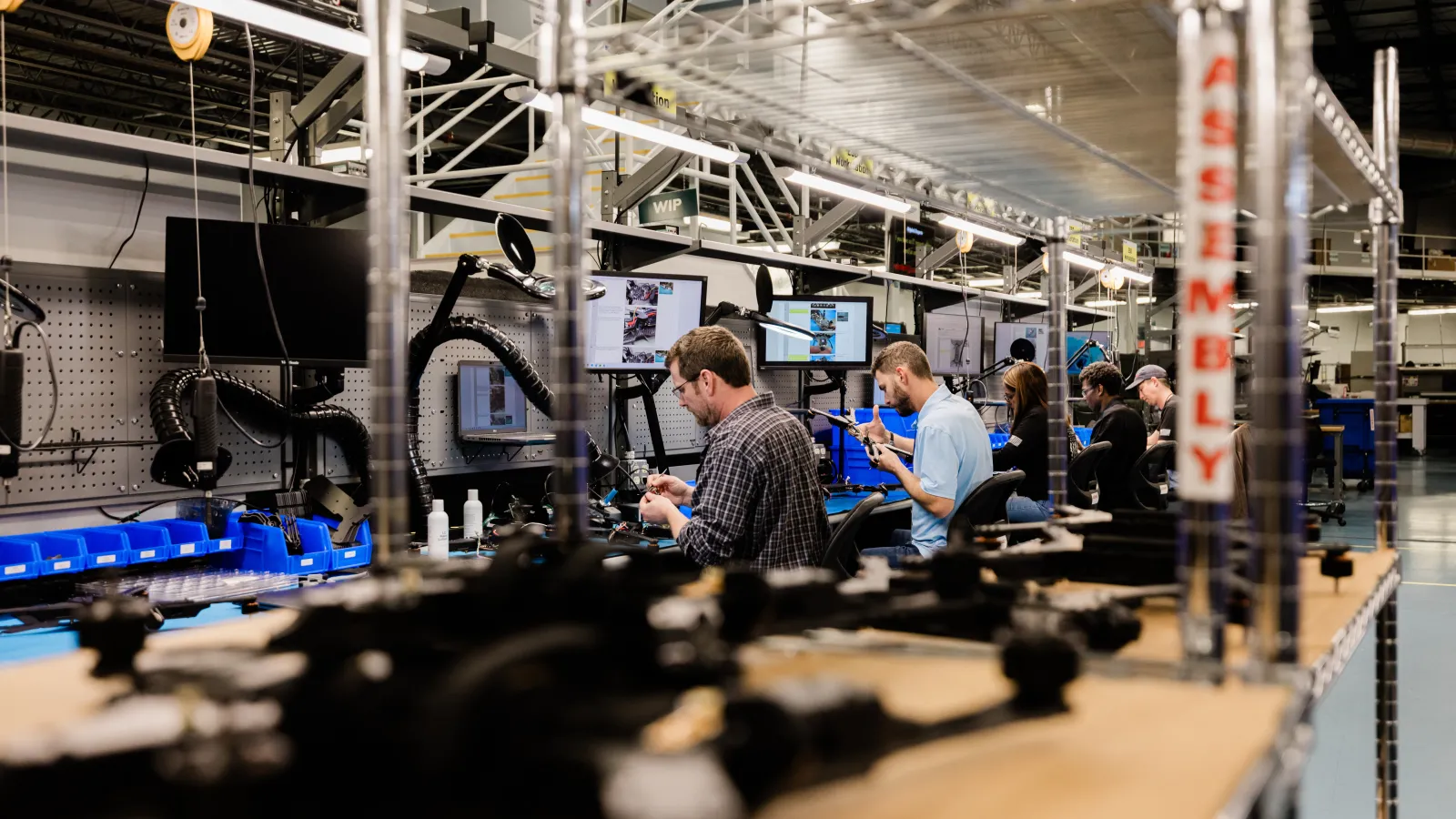
Manufacturing will take place at By Light's 180,000-square-foot facility in Port Orange, Florida, which the company says is equipped for UAS assembly, advanced manufacturing, testing and quality control. The MRM2 system features an 8-inch indoor drone designed for demanding operational environments, including close-quarters combat. Orqa, the Croatian parent, claims all key components are designed and built in-house with no Chinese-sourced critical parts, a specification that has become increasingly central to US government procurement criteria in the unmanned systems sector.
"Placing second globally in the close-quarters competition and now being selected for this award is an important milestone for Orqa U.S.," said Charles Phillips, Chief Executive Officer of Orqa U.S. "It shows that proven drone technology, combined with the ability to onshore and manufacture in the United States, can meet the needs of the U.S. Government."
The broader onshoring calculus
The Orqa U.S. award sits within a wider, accelerating push to reduce the US military's dependence on foreign-sourced unmanned systems, particularly those with Chinese supply-chain exposure. That push has intensified since the passage of successive National Defence Authorisation Acts that tightened restrictions on Chinese-made drones and components. The Gauntlet II programme is one of several Pentagon-linked mechanisms designed to stress-test and certify compliant alternatives at scale.
For cross-sector investors, the story is as much about reshoring economics as it is about hardware. Bringing allied drone technology into domestic production requires not just manufacturing floor space but the full industrial stack: synthetic training environments, live-fire testing ranges, cybersecurity compliance frameworks and supply-chain audit capability. By Light's background in cyber and warfighter training platforms means Orqa U.S. can pitch itself as a full-spectrum integrator rather than a component supplier, a positioning that broadens the addressable contract base beyond straight manufacture.
The geopolitical read-across is equally significant. Orqa's parent company serves customers across more than 50 markets, including 24 NATO member states. The US entity's success in a competitive government programme validates a model that other allied-nation drone manufacturers are likely to study: establish a US-controlled subsidiary, anchor manufacturing to American soil, and pursue certification through structured DoD competition rather than direct lobbying. As European defence budgets expand in response to sustained NATO pressure on the 2% of GDP commitment, the appetite for similar allied-technology-to-domestic-production structures will grow on both sides of the Atlantic.
For capital allocators with exposure to the defence-tech stack, the near-term question is whether the Gauntlet II awards translate into longer-term programme-of-record contracts, the more durable, higher-margin revenue stream that institutional investors in the sector require. At $38 million, the current award is meaningful but modest by major defence programme standards. The more consequential signal is whether Orqa U.S. can use Gauntlet II performance to position itself on follow-on procurement cycles as the DoW scales its unmanned systems inventory.