
Northrop Grumman expands Utah ICBM campus for Sentinel deterrence push
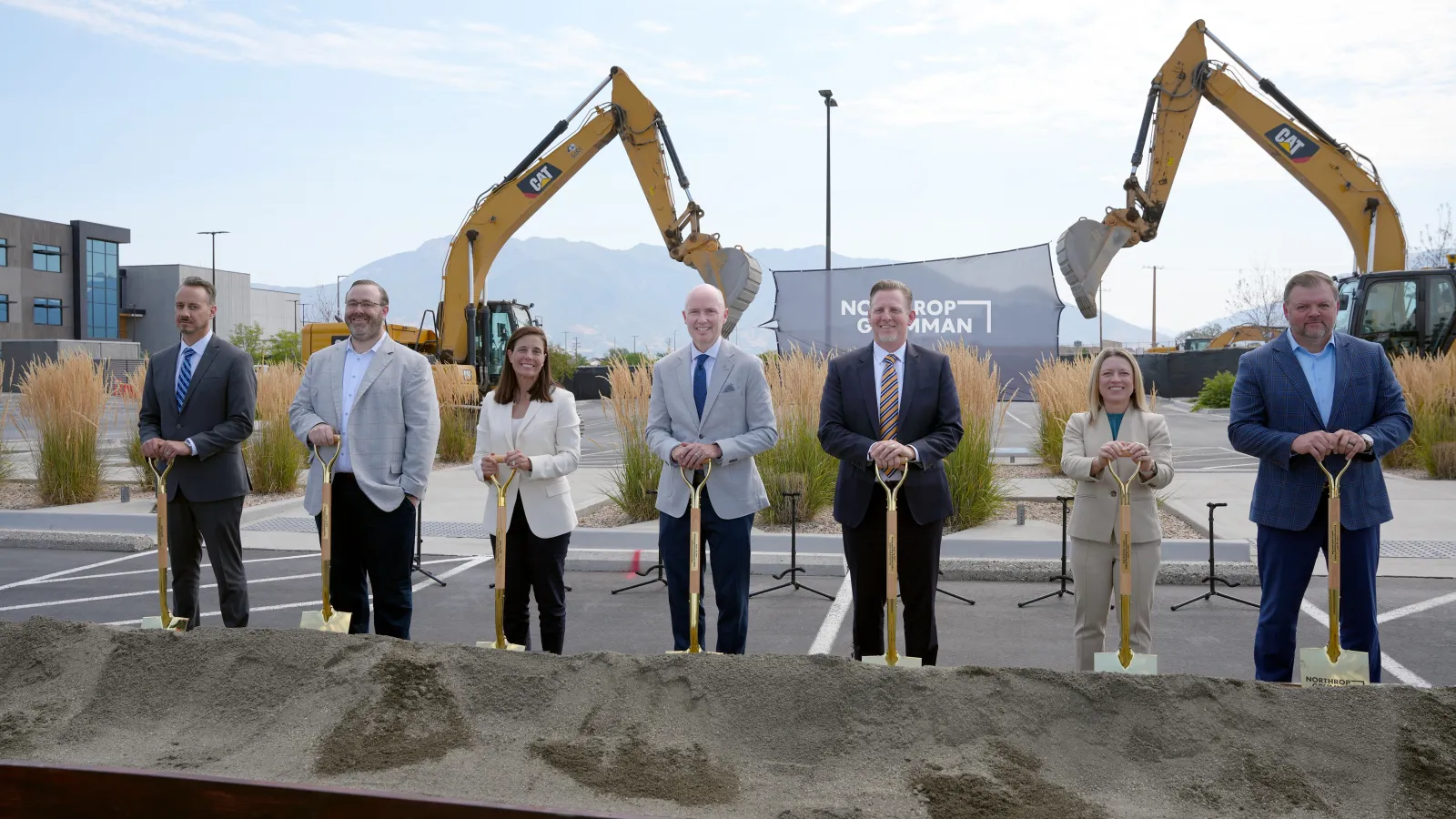
Northrop Grumman has broken ground on a new building at its Roy Innovation Center (RIC) in Utah, the company's purpose-built campus for developing the US Air Force's Sentinel intercontinental ballistic missile programme. The expansion brings the site to six buildings totalling more than 1.1 million square feet, with capacity for over 5,000 employees. Completion is targeted for 2028, and the broader Sentinel programme is on track to deliver initial operational capability to the Air Force by the early 2030s.
The move is as much a statement of industrial commitment as it is a construction milestone. Northrop says it has invested $13.5 billion in infrastructure and research and development over the past five years, including $2 billion directed specifically at solid rocket motor capacity, the propulsion technology that underpins both ballistic missiles and orbital launch vehicles. That dual-use spending line is where the story gets strategically interesting.
Sentinel and the nuclear modernisation spend cycle
Sentinel is the Pentagon's programme to replace the ageing Minuteman III ICBM fleet, a recapitalisation effort that represents one of the largest single-platform contracts in US defence history. Northrop is the prime contractor, and the Utah campus is its operational centre of gravity for the work. The groundbreaking comes as the broader US nuclear triad modernisation, covering land-based missiles, submarine-launched systems, and bomber delivery, accelerates under sustained bipartisan pressure to match perceived Chinese and Russian force developments.
Ben Davies, Northrop's corporate vice president for defence systems, pointed to Utah's proximity to Hill Air Force Base and its engineering talent base as key factors in the expansion. "This groundbreaking symbolises our longstanding commitment to the state and reinforces our investment in national security and local prosperity through an enduring presence that will support multiple missions for decades to come," he said. The economic footprint is already substantial: the company directly employs more than 11,000 people in Utah and, according to its own commissioned study, supports over 46,000 jobs statewide, contributing more than $12.4 billion to the state economy.
Cross-sector read-across: solid rockets and the space launch industrial base
The $2 billion solid rocket motor investment deserves attention from anyone tracking the commercial space launch market. Solid rocket motors are a shared industrial resource: the same production lines, materials supply chains, and specialist workforce that support Sentinel also feed into launch vehicles used by NASA and commercial operators. As Northrop scales Sentinel production, it is simultaneously expanding capacity that competes for, and potentially constrains, propellant, composite casings, and motor assembly slots available to the broader launch industry.
For sovereign and institutional investors watching the US space economy, this concentration matters. A handful of prime contractors effectively control solid rocket motor supply in the United States. Northrop's Utah build-out deepens that position. Investors in launch-vehicle startups relying on solid propulsion, or in the satellite operators that depend on timely launch slots, are exposed to the scheduling and pricing dynamics that flow from this single campus.
The wider capital picture reflects a period of elevated defence-industrial spending across NATO-aligned economies. European governments have sharply increased their own missile and strategic deterrence procurement budgets since 2022, creating a parallel demand signal that is drawing sovereign and private capital into the defence-industrial complex at a rate not seen since the early Cold War. Northrop's Utah expansion is a US-anchored data point in what is now a global re-armament investment cycle, one where the boundary between strategic deterrence infrastructure and space launch infrastructure is, by design, deliberately blurred.