
HII Watcher sUSV clears DoD autonomy test, eyes production
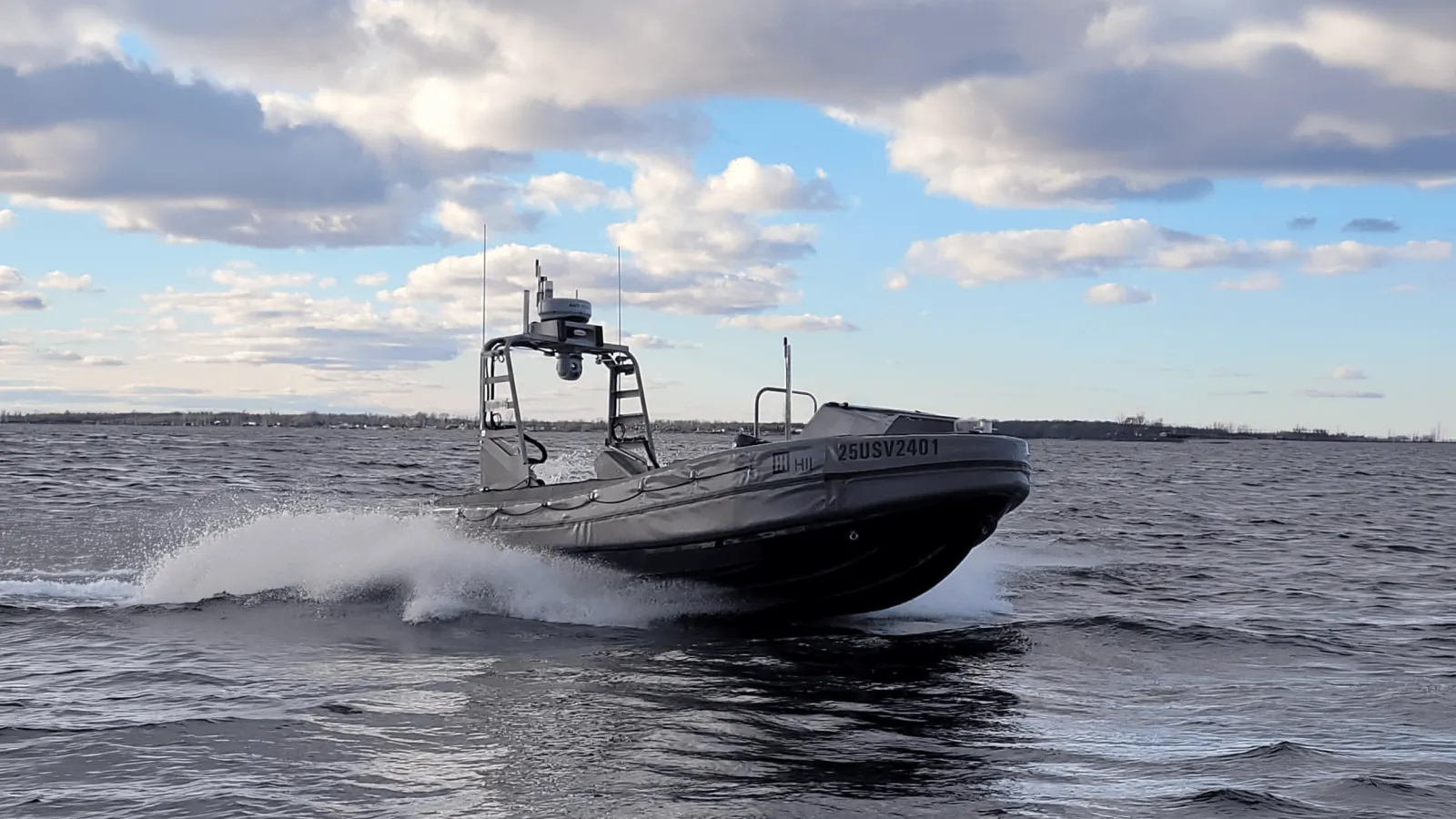
HII, America's largest shipbuilder, and Canadian boatbuilder MetalCraft Marine have cleared a pivotal milestone in the push to deploy autonomous surface vessels at scale within US naval operations. The US Defence Innovation Unit (DIU) has formally recognised the successful completion of HII's PRIME prototype project, confirming that the Watcher small Unmanned Surface Vessel (sUSV) met all key technical objectives and is now eligible for transition to production under Other Transaction Authority agreements.
The Watcher is built on HII's ROMULUS-25 hull, a high-speed interceptor capable of carrying payloads up to 1,000 pounds and operating at ranges of up to 1,000 nautical miles. It is powered by HII's Odyssey Autonomous Control System (ACS), a modular open-architecture platform that handles navigation, mission planning, and edge-based decision-making without requiring a crew aboard. Two vessels were delivered and completed at-sea testing in December 2025 under a US Marine Corps contract, running through a battery of government-led autonomy assessments, seakeeping trials, and degraded-environment evaluations.
From prototype to fleet
The DIU's formal memorandum to HII described the Watcher's demonstrated ability to "autonomously transit hundreds of miles through contested waterspace, loiter in an assigned operating area while monitoring for maritime surface threats, and then sprint to interdict a noncooperative, maneuvering vessel." That language is notable for its operational specificity: this is not a technology demonstration in benign waters, but a system validated against live interdiction scenarios.
Duane Fotheringham, president of HII's Unmanned Systems group, described the milestone as consistent with the company's broader strategy of accelerating the journey "from concept to operational capability." The PRIME programme itself attracted 116 competitive solution briefs before HII was selected, suggesting significant industry-wide appetite for the unmanned surface vessel market as navies look to extend fleet reach without expanding crewed ship counts.
HII's position in autonomous maritime systems now spans three platform families: the Watcher and ROMULUS-25 surface vessels, the REMUS family of unmanned underwater vehicles (deployed by the US Navy and allied partners for mine countermeasures and seabed operations), and the Odyssey ACS software layer that ties them together into a coordinated multi-domain network. The convergence of surface, subsurface, and software autonomy into a single vendor ecosystem is a structural shift in how naval procurement works, and a direct challenge to legacy prime contractors that supply crewed vessels alone.
The wider autonomy arms race
For cross-sector investors and defence-procurement watchers, the Watcher's production clearance is one data point in a rapidly expanding autonomous-systems market that stretches well beyond the US Navy. Allied navies in Europe and the Indo-Pacific are facing identical pressure: sustain maritime presence across contested waterspace while governments resist the political and fiscal cost of expanding crewed fleets. Autonomous surface vessels, priced and designed for expendability, offer a structural answer.
The capital dynamics are shifting accordingly. Defence-tech venture investment in uncrewed maritime systems has accelerated since Russia's use of USVs in the Black Sea demonstrated their asymmetric utility in peer-on-peer conflict. Traditional defence primes like HII are now competing with venture-backed entrants, and the DIU's PRIME programme, which deliberately ran a full and open competition, reflects Washington's intent to keep that competitive pressure alive rather than default to incumbent contractors.
There is also a dual-use read-across worth tracking. Odyssey ACS's modular open-systems architecture is explicitly designed to port autonomy across vehicle types, which means the same software stack that guides a naval interceptor could, in a commercial variant, underpin autonomous port-security vessels, offshore energy-asset protection, or maritime logistics craft. Whether HII elects to pursue those adjacencies, or keeps Odyssey firmly within the defence perimeter, will be a strategic signal worth watching as the production contract negotiations unfold.