
Firestorm Labs 3D-prints drones at sea, reshaping naval logistics
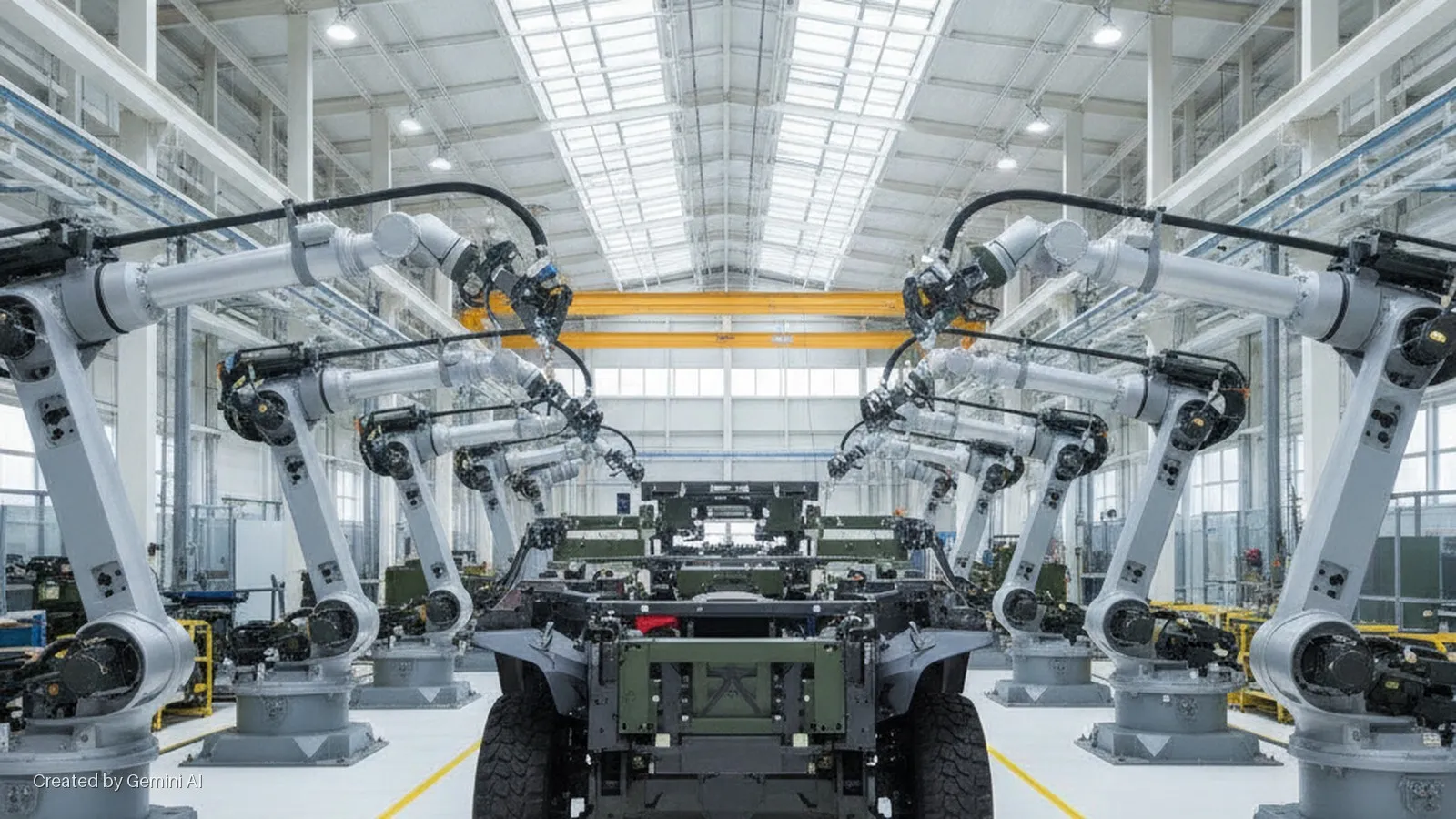
Firestorm Labs, a San Diego-based defence technology company, has demonstrated on-demand manufacturing of unmanned aerial systems and mission-critical components aboard a moving US Navy vessel, a capability that reframes how allied fleets could sustain combat readiness across the vast distances of the Indo-Pacific.
The company's xCell containerised manufacturing platform produced more than 1,000 parts over two weeks aboard the USS Essex, operating in sea states peaking at force 5 with 12-foot waves. The demonstration was conducted as part of the Naval Postgraduate School's CAMRE distributed advanced manufacturing network, facilitated by FLEETWERX, and fed directly into RIMPAC 2026 exercises in Hawaii.
Manufacturing at the point of need
Three outputs illustrate the strategic range of the capability. First, Firestorm designed and printed an Apache helicopter rotor droop stop to protect the aircraft during the first-ever Army-Navy at-sea Apache flight operations with rotors mounted. The stakes were material: a main rotor assembly costs around $500,000, and a single blade strike runs $230,000 per blade across four blades. Second, working from a sailor's sketch, the team produced three variants of a vacuum adapter for inflatable life-preserving units, a part for which no existing solution was known. Third, and most operationally significant, the team printed and assembled 12 Squall FPV quadcopters aboard ship, then flew them at RIMPAC as a red-cell adversary force during a Counter-UAS exercise alongside Marines from the 3rd Light Armored Reconnaissance Battalion.
Beyond those headline items, Firestorm fulfilled more than 20 crew-requested parts: deck tie-down gauges, reverse-engineered valve handwheels, a non-conductive EOD digging knife, a Starlink deployment mount, and assorted cable and door hardware. Each was broken, lost, or simply unavailable at sea.
"The Indo-Pacific logistics problem is real, and most of the answers on offer live in a pitch deck," said Dan Magy, Firestorm's CEO. "We printed flight-ready aircraft and the parts a crew actually needed, in the conditions they'd actually face. That's what manufacturing at the edge looks like when it works."
The supply-chain convergence angle
The backdrop is stark. Of the roughly 290 ships in active US Navy service, only around a third are deployed at any given time; the rest are in training or undergoing repairs. China's navy has grown to approximately 400 vessels supported by hundreds of dedicated supply ships. The asymmetry in forward logistics is a recognised vulnerability across allied defence planning.
Expeditionary additive manufacturing directly attacks that vulnerability. Parts printed on deck are parts that do not need to be flown, convoyed, or shipped across contested waters, compressing resupply timelines from days or weeks to hours while keeping the vessel on station. The implications extend well beyond the US Navy. Allied partners operating under RIMPAC's coalition framework, including Australian, Japanese, and South Korean naval forces, face identical extended-logistics challenges across the Indo-Pacific theatre.
The convergence angle for cross-sector strategists is equally significant. Additive manufacturing was long positioned as a factory-floor efficiency play. The USS Essex demonstration repositions it as a forward-deployed strategic asset, one that sits at the intersection of defence procurement reform, autonomous systems proliferation, and supply-chain resilience. Defence primes and allied governments are now watching whether containerised manufacturing can be integrated into acquisition doctrine, not merely showcased at exercises. For capital allocators tracking dual-use deep-tech, the question is whether platforms like xCell accelerate a broader shift in defence spending away from large, centralised arsenals toward distributed, regenerative production capacity closer to the point of conflict.