
BiomX takes 10% stake in Motomea to bolster drone propulsion testing
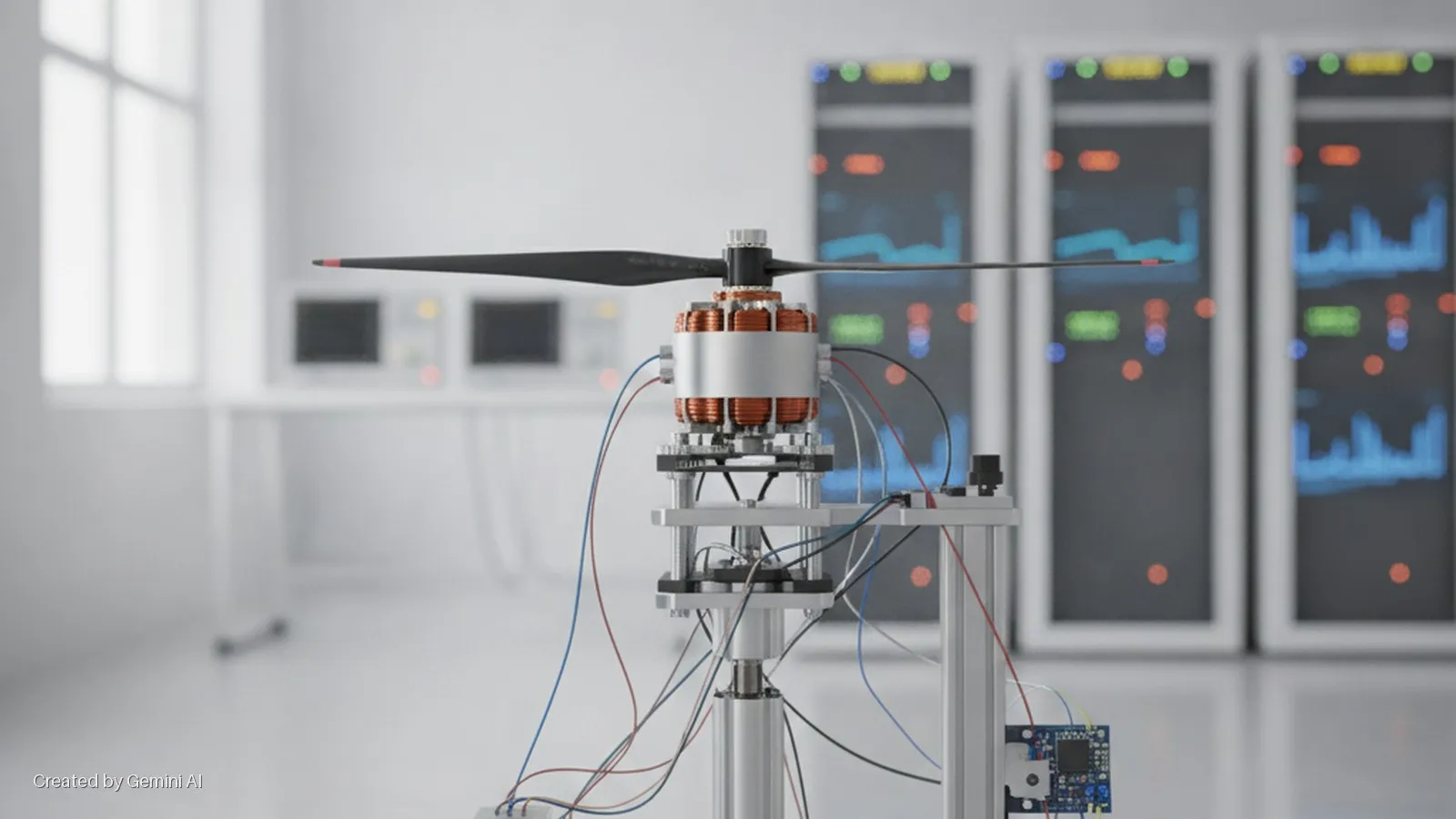
BiomX, the Israel-based defence technology company listed on NYSE American, has acquired a 10% stake in Motomea, a developer of electric motor testing and validation systems with operations spanning Israel and India. The deal, structured as $50,000 in cash plus 1.3 million restricted BiomX shares subject to regulatory and NYSE approval, also grants BiomX an option to acquire a controlling interest, with any full purchase price pegged to two times Motomea's 2027 net revenue or four times its 2028 EBITDA. The pairing is a telling signal of where defence-technology investors are now placing bets: not on the drones themselves, but on the unglamorous engineering infrastructure that makes them reliable.
Motomea's core technology is a patented inertial dynamometer system that stress-tests electric motors across variable speeds, loads and thermal conditions without the conventional mechanical load used in traditional test rigs. The company says its systems measure torque, power, efficiency, vibration and electrical performance throughout a motor's development and production lifecycle. With more than 25 years of experience across aerospace, automotive, energy and industrial clients, Motomea already counts major Israeli defence original equipment manufacturers among its customers.
Propulsion as the UAV bottleneck
Electric propulsion has become the critical performance variable in unmanned aerial systems. Flight endurance, payload capacity, manoeuvrability and failure risk all trace back to motor quality, making pre-integration validation a strategic asset rather than a commodity service. As drone platforms proliferate across both military and civilian markets, the demand for rigorous, repeatable propulsion testing is scaling faster than the supply of specialist capability. BiomX's entry into this space reflects an investment thesis that the value in the UAV ecosystem will increasingly accrue to enablers, particularly those controlling the quality-assurance layer, rather than to platform manufacturers alone.
"Motomea brings BiomX a highly specialised engineering capability in an area that is central to modern unmanned systems," said Michael Oster, BiomX's chief executive. "Its expertise in testing and validating electric propulsion complements the technologies already within our portfolio and expands our technical capabilities across our Detection, Analysis and Response strategy."
Cross-sector and geopolitical read-across
The geographic dimension of the deal deserves close attention. Motomea's Indian subsidiary, Mea Motomova India, gives BiomX an immediate commercial foothold on the subcontinent at a moment when India is accelerating indigenous drone production under its Atmanirbhar Bharat (self-reliance) industrial policy. India's defence procurement trajectory, combined with a government push to reduce dependence on Chinese drone components, has opened a significant market for Israeli defence-technology exporters. For cross-sector investors, this pairing of Israeli AI-enabled threat detection with Indian-market propulsion validation infrastructure illustrates the emerging pattern of mid-cap defence-tech firms assembling modular, multi-geography capability stacks rather than pursuing single-platform bets.
There is also a broader capital-allocation story here. The UAV and autonomous systems sector has drawn substantial sovereign and institutional investment over the past two years, but much of that capital has targeted the visible platform layer. The BiomX-Motomea deal suggests that sophisticated defence-tech acquirers are now moving down the supply chain into testing, validation and quality assurance, sectors that carry lower headline risk and stickier customer relationships. For investors monitoring dual-use technology flows, the option structure is particularly notable: BiomX retains the right to convert a nominal $50,000 minority position into a controlling stake based on audited performance metrics, a low-risk mechanism for acquiring validated capability without committing full acquisition capital upfront.
BiomX's broader portfolio is built around UAV detection, tracking and counter-drone response, meaning Motomea's propulsion-validation expertise slots into a vertically integrating strategy that spans the full threat-and-response cycle of unmanned systems. Whether the option to acquire control is exercised will depend on Motomea's 2027 and 2028 financials, but the strategic logic of ownership is already visible.