
Skyborne Technology moves DART drone airship toward FAA flight testing
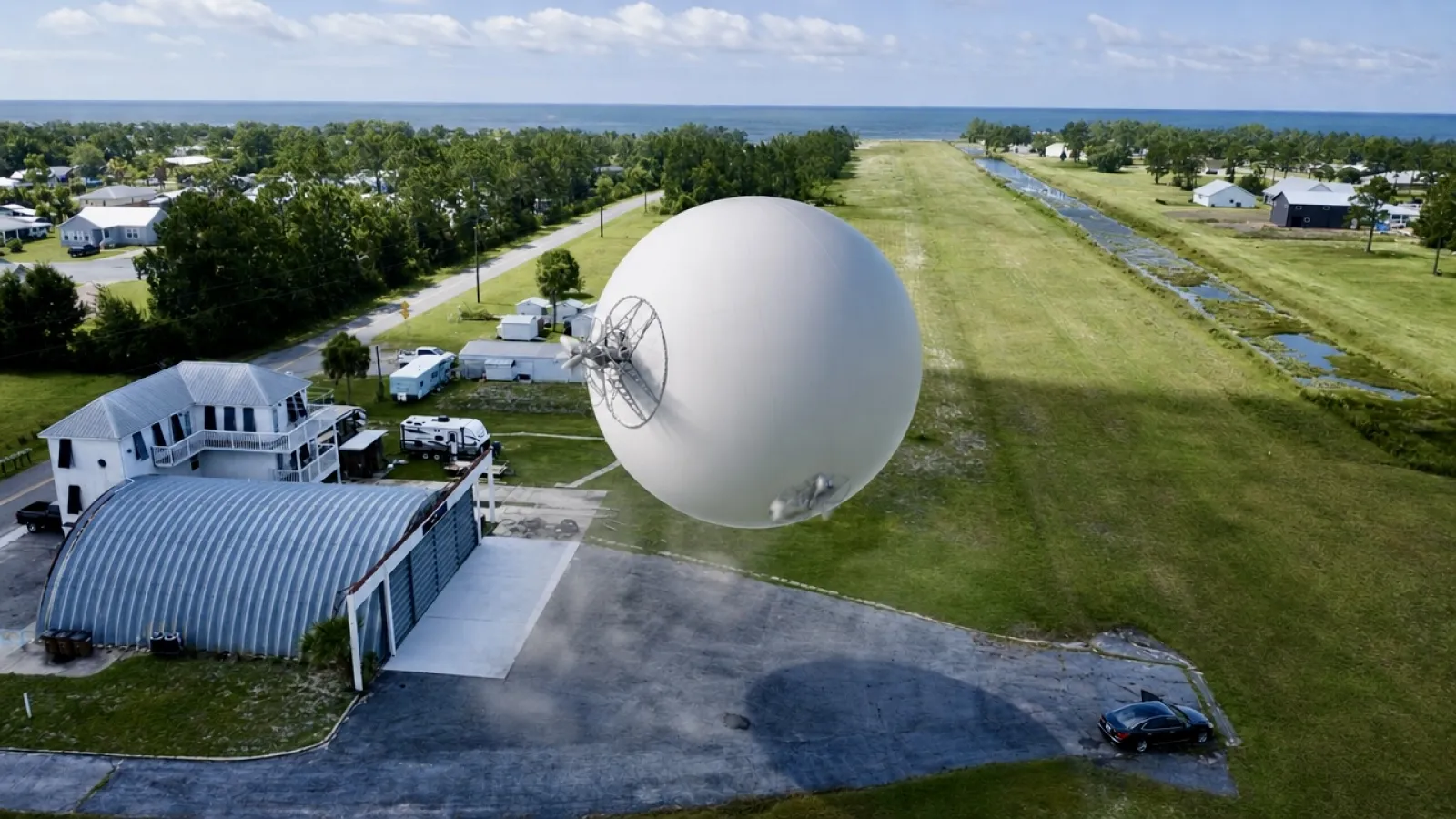
Skyborne Technology, the UAV Corp subsidiary trading on the OTC market under the ticker UMAV, has completed the initial logistical step toward flight testing its DART drone airship, relocating all primary components from its manufacturing site in Wewahitchka, Florida, to a company-owned hangar and airstrip in Port St. Joe (A51). The move sets the stage for a weight and balance analysis to be observed and certified by an FAA Designated Airworthiness Representative, with the company seeking an FAA Experimental Certification for the platform.
The principal bottleneck is now helium supply. The company says a regional order of sufficient volume could take three to six weeks to fulfil, after which scheduling with the airworthiness representative can be finalised. While the milestone is procedural rather than technical, FAA Experimental Certification is a prerequisite for any meaningful commercial or government procurement pathway, making the certification clock relevant to investors monitoring the programme's timeline.
AI Payload and Flight Control Integrations
Alongside the certification advance, Skyborne Technology confirmed two technology partnerships intended to define the DART's sensor and autonomy stack. Waivtec, whose AI-driven optical systems will serve as a preferred payload option across Skyborne's aerial platforms, is positioned to give the airship a wide-area surveillance capability the company describes as unmatched in its class. AutoBridge AI will be embedded in the drone's flight control systems and will act as the data-fusion layer, combining inputs from onboard and offboard sensors and secondary drone platforms. The combination is oriented toward real-time situational awareness for front-end operators, a capability set with clear relevance to disaster relief, border monitoring, precision agriculture, and military reconnaissance missions.
The company also confirmed ongoing collaboration with Xeriant, a materials technology firm whose advanced composites are being developed for low-earth, near-space, and space-adjacent applications. Xeriant recently passed the NFPA 286 fire safety test and received a Class A rating under ASTM E84, the highest classification available, demonstrating no combustion and no smoke generation. Its DUREVER nanomaterial line, including the NexBoard composite panel and NexPatch fire-resistant compound, is being evaluated for integration into UAV's airship and drone structures, where weight, durability, and fire resistance are critical trade-offs.
Convergence and Capital Context
The DART programme sits at a relatively early stage for a publicly traded entity, and the source material offers limited financial detail beyond OTC listing and micro-cap classification. That said, the technology stack being assembled points to a broader pattern worth noting for cross-sector observers. Lighter-than-air UAV platforms, once treated as niche or legacy concepts, are attracting renewed interest as persistent-surveillance requirements grow in both defence and civil contexts. Their endurance advantage over rotary or fixed-wing drones, combined with lower energy draw, makes them relevant to contested-logistics and long-dwell intelligence missions where battery-constrained quadcopters fall short.
The AI sensor-fusion layer being built in via AutoBridge is also emblematic of a wider convergence: the migration of inference workloads from centralised cloud infrastructure to the tactical edge. Embedding AI decision-making directly into flight control systems reduces dependence on low-latency ground links, a capability increasingly valued in both military and disaster-response environments where communications infrastructure may be degraded.
For capital markets, the story is modest in scale but directionally aligned with a well-funded macro theme. US defence procurement interest in uncrewed persistent-surveillance platforms has grown substantially since 2022, and allied governments are following suit. Small-cap and micro-cap UAV developers are increasingly positioning themselves as acquisition targets or subcontractors for prime defence contractors, rather than standalone programmes. Whether Skyborne's DART platform reaches the scale required to attract that kind of strategic interest will depend substantially on what the forthcoming FAA flight-test data shows.
The company says it will keep stakeholders updated on test event dates once the helium delivery schedule is confirmed.