
OPPO launches Enco Clip2, Enco Air5 and Pad 5 in Saudi Arabia
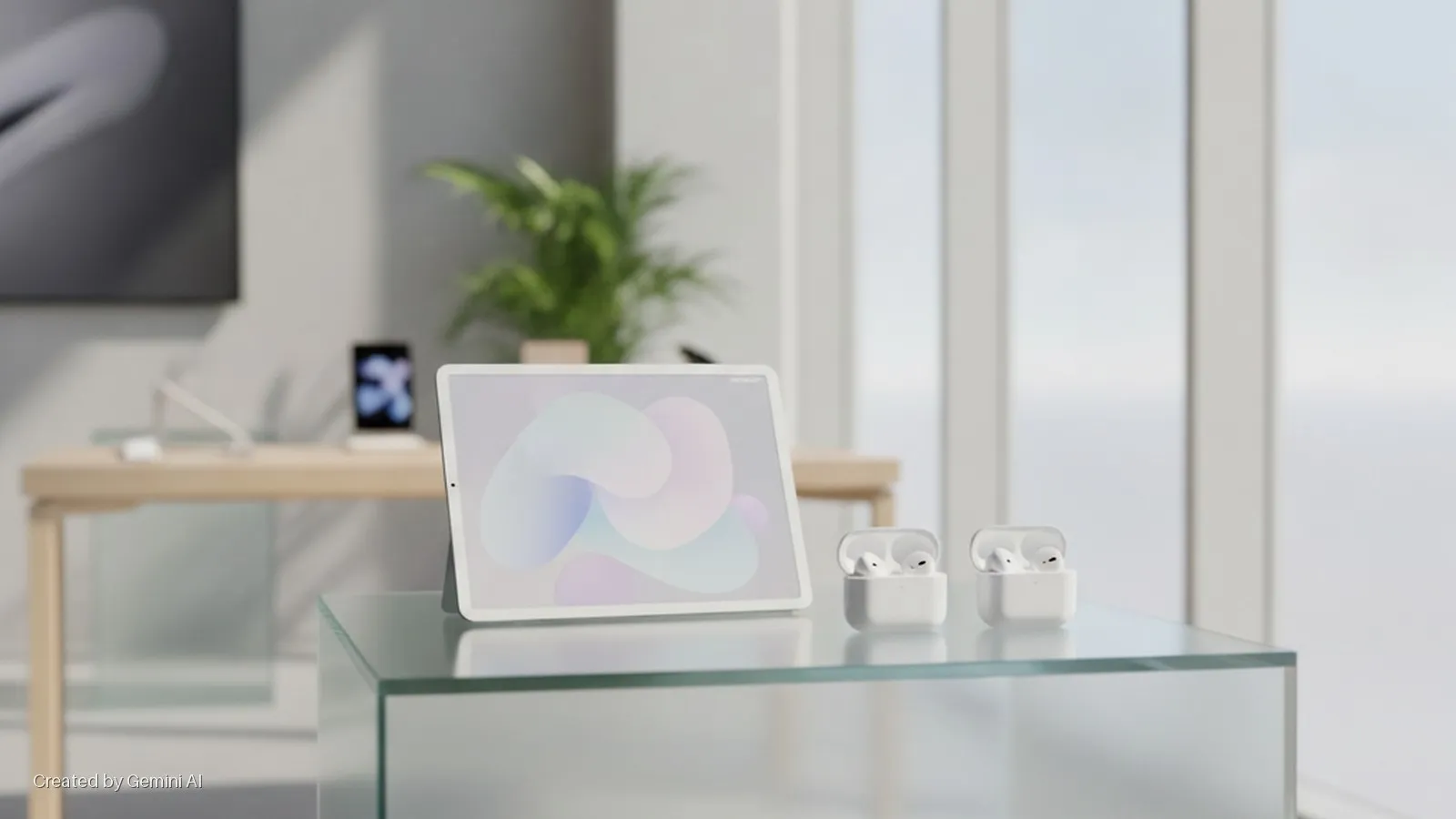
OPPO has announced the simultaneous launch of two new earbuds and a refreshed tablet in Saudi Arabia, pitching the trio as a cohesive smart ecosystem rather than standalone hardware updates. The Enco Clip2 open-ear earbuds, Enco Air5 in-ear buds, and the Pad 5 Matte Display Edition tablet are now available via OPPO's Saudi storefront, with wider regional rollouts to follow.
The launches are squarely consumer-facing, but they carry a strategic signal worth reading at the ecosystem level: OPPO is doubling down on cross-device integration as the primary differentiator in a Middle East consumer-electronics market where Samsung, Apple and emerging Chinese brands are competing intensely for premium and near-premium spend.
Audio: comfort and noise-cancellation as the twin bets
The Enco Clip2 targets the open-ear segment with a shape-memory nickel-titanium arc designed for all-day comfort, a dual-DAC audio architecture, and a sound profile tuned in partnership with Danish audio house Dynaudio. The collaboration is notable: Dynaudio's involvement moves OPPO beyond commodity audio positioning and aligns it with a brand more commonly associated with high-end home speakers and in-car audio systems. The earbuds carry an IP55 rating and connect via Bluetooth 6.1 with LHDC 5.0 codec support.
The Enco Air5 takes a different approach, prioritising noise cancellation and battery endurance. OPPO says the Air5 delivers up to 52 dB of noise reduction depth across a frequency range of up to 5,000 Hz, alongside 54 hours of total battery life when the charging case is included. The company adds that a three-microphone array, combined with an AI call-noise-reduction model, is engineered to maintain call clarity in winds of up to 20 km/h. These are lab-measured figures, and real-world performance will vary, as OPPO's own footnotes acknowledge.
Tablet: matte display and AI productivity tools
The Pad 5 Matte Display Edition leads with a 12.1-inch 2.8K panel treated with nano-etching that the company says reduces ambient light interference by 97% and improves clarity by 22%. TÜV Rheinland certification for reflection-free performance and eye-care compliance gives the display claims independent validation, which is more than most mid-market tablets offer. A 10,050 mAh battery is rated for over 15 hours of continuous video playback.
The AI productivity suite, built around the optional OPPO Pencil 2R stylus, includes real-time handwriting refinement, AI-generated meeting summaries with role-based transcription, mind-map generation from documents, and formula calculation from handwritten input. These features are incremental rather than transformative compared with what Apple's iPad with Apple Intelligence or Samsung's Galaxy Tab AI suite already offers, but they represent a meaningful step up for OPPO's own installed base.
Cross-device connectivity is positioned as the ecosystem glue: the tablet can automatically share a paired OPPO phone's mobile data without a manual hotspot, and it supports file transfers to and from Apple iPhone and iPad, a deliberate move to reduce switching friction for users who mix Android and iOS devices.
Market positioning and competitive read-across
The Gulf consumer-electronics market is an instructive test bed for OPPO's ecosystem ambitions. Saudi Arabia's Vision 2030 programme has accelerated household disposable income growth and technology adoption rates among younger demographics, and Chinese device brands have gained meaningful share from Apple and Samsung in the sub-premium tier over the past two years.
What is less certain is whether integrated ecosystem lock-in, OPPO's stated strategy, translates in a market where brand loyalty remains fluid and consumers frequently mix hardware from multiple vendors. The AI productivity features on the Pad 5, while competitive, rely on OPPO's ColorOS and cloud services for their deepest functionality, creating a dependency that may deter the cross-ecosystem buyer OPPO is simultaneously courting with its iPhone-compatible file-transfer feature. That tension between openness and lock-in is one every major device platform is navigating, and OPPO's Saudi launch does not resolve it so much as illustrate it in a new geography.