
ADX opens live market data to ChatGPT and Claude in MENA first
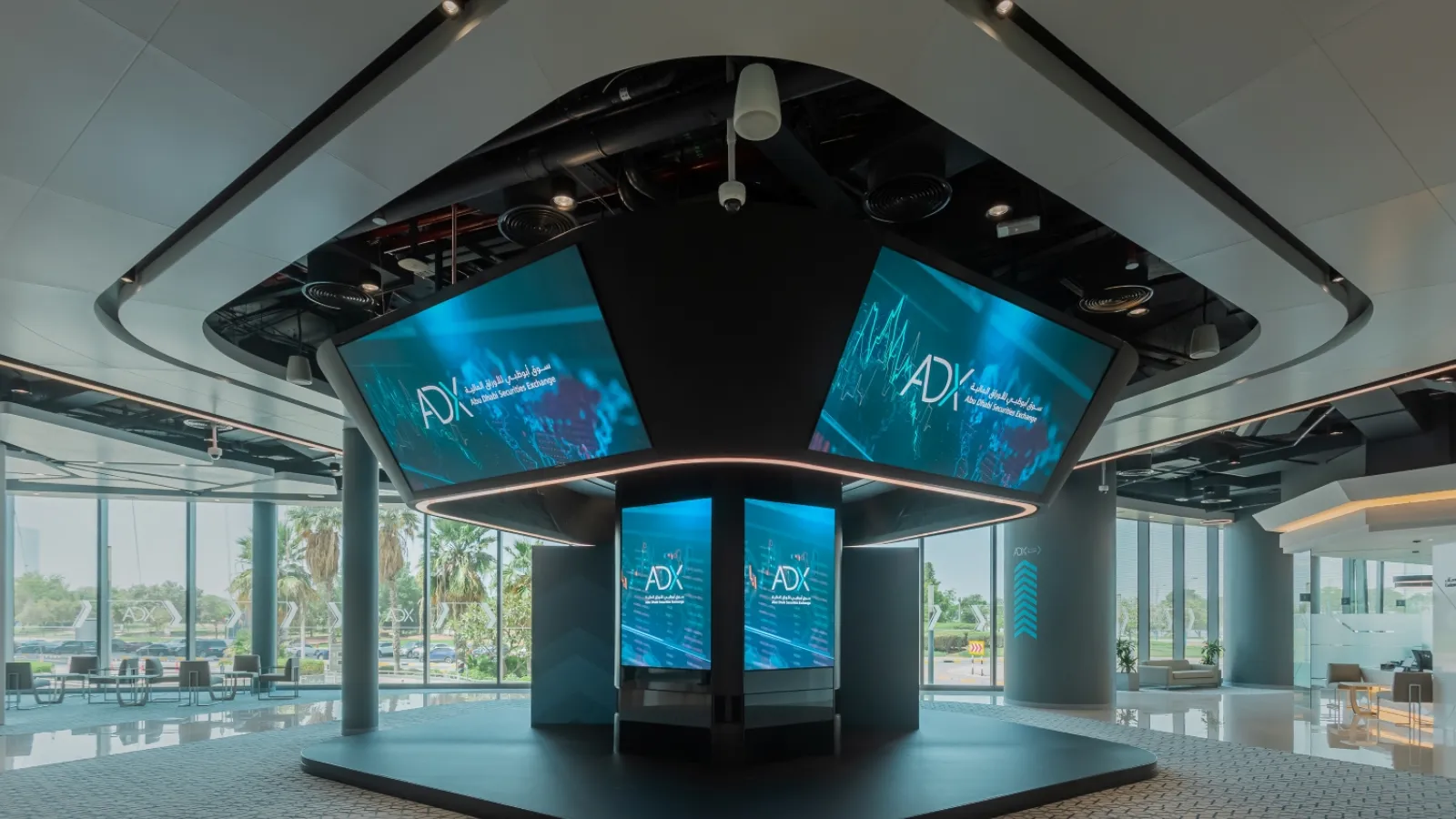
The Abu Dhabi Securities Exchange (ADX) has become the first stock exchange in the Middle East and North Africa to pipe its live market data directly into conversational AI platforms, including ChatGPT and Claude. The move, announced on 13 August 2026, removes the terminal and API layer that has historically kept real-time exchange intelligence behind a wall of technical complexity, and places it within reach of anyone willing to type a natural-language prompt.
The mechanism is a Model Context Protocol (MCP) server, a standardised interface that allows AI assistants and agentic workflows to authenticate against official ADX data sources and query them on demand. Available data includes per-symbol order book depth, bid-ask spreads, retail-versus-institutional flow breakdowns, XBRL-formatted financial disclosures, and full index constituent data. Four subscription tiers are offered, from a free entry point to AED 49.99 per month, with each tier governed by limits on refresh frequency, historical depth and concurrent connections.
Democratising market intelligence
Abdulla Salem Alnuaimi, Group Chief Executive Officer of ADX, positioned the launch explicitly within Abu Dhabi's broader ambition to build a knowledge-based, AI-enabled economy: "By removing technical barriers that once required a specific setup, everyone now has live access to ADX data through simple prompts. We believe this will contribute to greater market transparency, wider financial participation, and a more accessible investment ecosystem."
The practical implications differ significantly across user segments. Retail investors gain the ability to interrogate complex, real-time market data through interfaces they already use daily, without needing a Bloomberg terminal or brokerage data feed. Institutional investors, by contrast, gain low-latency, source-grade order book visibility surfaced through agentic workflows that can be embedded into proprietary research stacks. Fintech developers and brokers sit in the middle: the MCP layer provides a clean, governed data contract on which white-label AI trading assistants or custom analytics tools can be built.
The convergence angle: agentic finance meets sovereign capital markets
ADX's move sits at the intersection of two powerful macro currents. The first is the accelerating push by Gulf sovereign economies to position themselves as AI infrastructure hubs. Abu Dhabi has committed substantial sovereign capital to AI infrastructure through vehicles such as MGX, and the UAE's national "Towards the Next 50" agenda explicitly targets a high-value, technology-enabled economy. Routing official exchange data into frontier AI models is a logical extension of that strategy: it embeds ADX data into the workflows of the next generation of investors and builders, wherever they are based.
The second current is the structural shift in how financial data is consumed globally. The dominant terminal model, Bloomberg, Refinitiv, FactSet, has persisted for decades because aggregating, normalising and distributing exchange data at low latency is genuinely hard. The emergence of standardised AI-native protocols such as MCP changes the distribution economics without requiring the exchange to rebuild its core infrastructure. ADX is, in effect, treating the conversational AI layer as a new distribution channel, in much the same way exchanges treated the internet in the late 1990s.
For capital markets infrastructure globally, the question this raises is sequencing: ADX is first in MENA, but the underlying protocol is open and exchange-agnostic. If large-capitalisation exchanges in London, New York or Singapore adopt comparable MCP integrations, the competitive moat of proprietary terminal ecosystems narrows further. That carries second-order implications for the data-licensing revenues that underpin the business models of incumbent market data vendors, a segment worth tens of billions of dollars annually. Agentic finance, where AI models execute multi-step research and order workflows without human intervention at each step, amplifies the stakes: the exchange that controls the authoritative data feed in an agent's context window gains structural influence over the decisions that agent makes.
ADX's timing reflects a deliberate effort to lead rather than follow on this transition. Whether other regional and global exchanges move quickly to match the integration, or whether data-licensing incumbents lobby for tighter API governance, will determine how far the democratisation narrative travels beyond Abu Dhabi.