
QuantumScape and Honda unite on solid-state battery platform
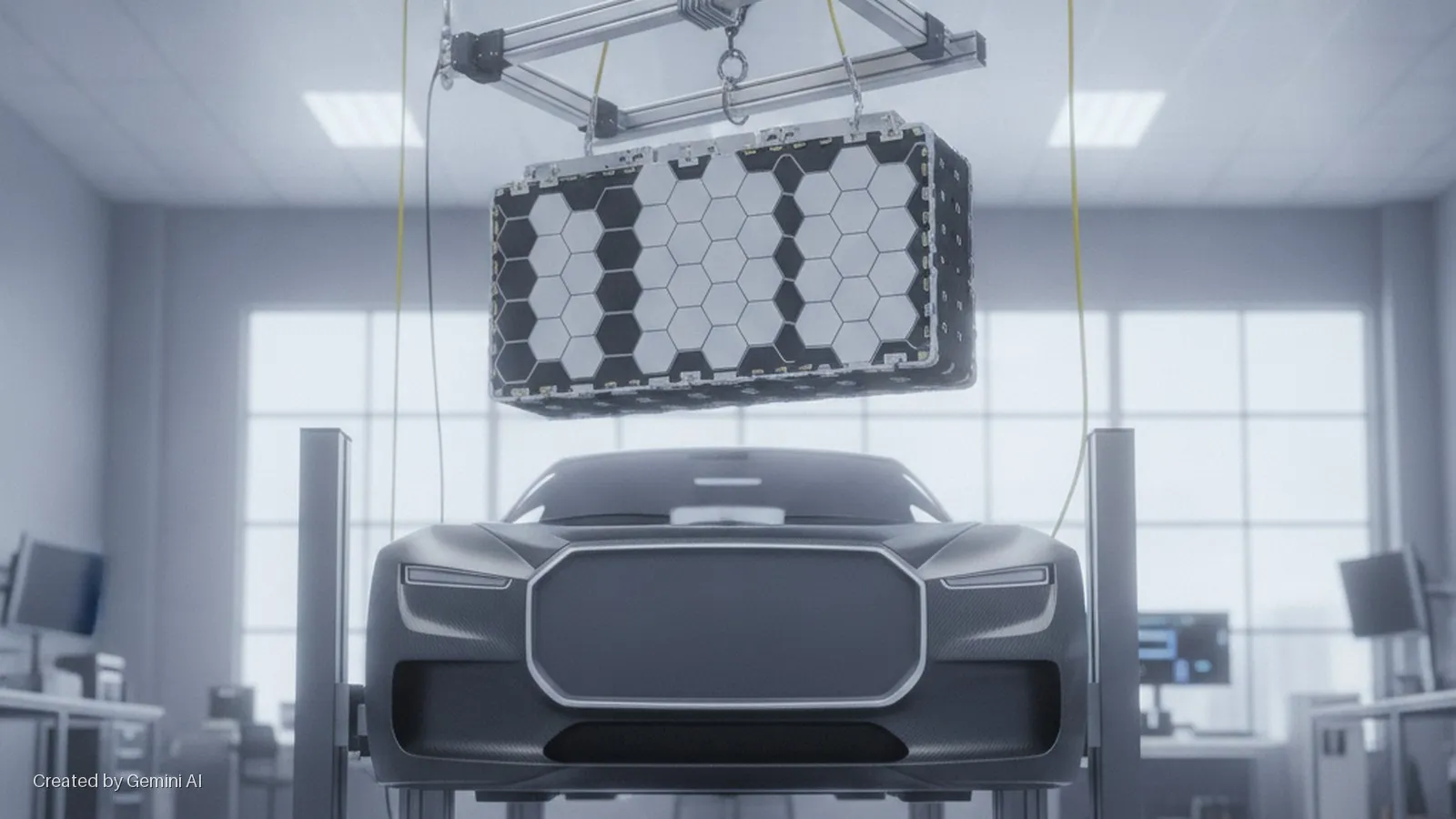
QuantumScape (NASDAQ: QS), the San Jose-based solid-state battery developer, has entered a joint research agreement with Honda R&D, the R&D subsidiary of Honda Motor, marking a significant step in the race to commercialise next-generation energy storage for the automotive era and potentially well beyond it.
The deal follows a completed technology evaluation in which Honda subjected QuantumScape's lithium-metal platform to what QuantumScape CEO Dr. Siva Sivaram described as "one of the most rigorous assessments of our technology to date." That evaluation included hands-on technical study and competitive benchmarking across standard industry tests. The multi-year joint programme will focus on both battery development and the associated manufacturing processes needed to move from laboratory validation toward scalable production.
What the agreement signals
Honda's COO for its Research Centre of Excellence, Atsushi Ogawa, noted that QS technology "demonstrated compelling and unique advantages" during assessment, adding that the company sees potential across "a range of applications, including automotive." That framing is deliberate: solid-state batteries carry implications for motorcycles, power equipment, aviation-adjacent mobility, and stationary grid storage, not just passenger EVs. Honda's product portfolio spans all of these categories, making the breadth of Ogawa's language strategically significant.
For QuantumScape, the agreement represents a further validation of its separator-based solid-state architecture at a moment when the company is working to demonstrate that its chemistry can survive the transition from prototype cells to high-volume manufacturing. The company counts Volkswagen among its earlier strategic partners, meaning Honda's entry adds a second major global OEM to its development ecosystem. Solid-state battery development has a long history of promising results at small scales that prove fiendishly difficult to replicate at volume; Honda's involvement in the manufacturing process design is therefore as important as the chemistry work itself.
The convergence angle: energy storage as infrastructure
The QuantumScape-Honda tie-up is not merely an automotive story. Solid-state batteries, if they achieve the energy density and safety improvements their proponents project, would constitute a foundational infrastructure shift across multiple sectors simultaneously.
For the energy sector, higher-density storage changes the economics of grid-scale renewables integration, compressing the land and capital required per megawatt-hour stored. For aerospace and defence, where weight-per-energy is mission-critical, solid-state cells could unlock electrification of platforms that lithium-ion cannot reach. For the broader digital economy, the same chemistry improvements that extend EV range can eventually address the power-density constraints of data-centre uninterruptible power systems, where battery backup is an increasingly large capital line item as AI workloads inflate power draw.
Capital markets are tracking this convergence closely. The solid-state battery space has attracted sovereign wealth participation (Saudi Arabia's Public Investment Fund has backed battery infrastructure plays across the Gulf), corporate venture arms from OEMs, and dedicated climate-tech funds. QuantumScape itself is publicly listed, meaning the Honda agreement will be read as a real-world validation signal by investors pricing the stock on commercialisation probability rather than laboratory metrics alone.
The forward-looking question is timeline. Neither company has disclosed milestones, volumes, or commercial production targets in this announcement, and the joint programme remains at the research and process-development stage. The gap between a successful multi-year research agreement and a battery cell in a production vehicle has historically been wide in this sector. What the Honda agreement does confirm is that at least one major global OEM, after a rigorous independent evaluation, believes QuantumScape's platform is worth sustained co-investment in that journey. For cross-sector investors watching the energy storage space, that is a meaningful, if carefully bounded, signal.